
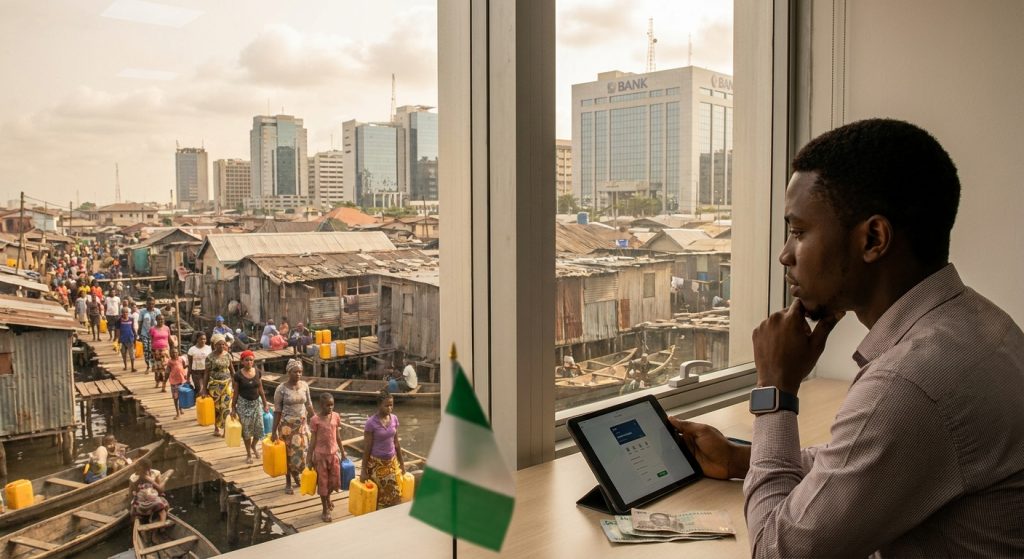
TL;DR: Lagos’s Water Scarcity – A Looming Financial Burden and National Crisis in 2026
Lagos residents in 2026 face an escalating water crisis, paying exorbitant prices – often 10-20 times official rates – for a basic necessity. This article reveals how this financial strain on households and businesses is a direct consequence of decades of underinvestment and mismanagement in water infrastructure, mirroring Nigeria’s broader development challenges. We delve into the true cost of water, the systemic failures, and the ripple effects on health, economy, and social equity. Crucially, we analyze the financial sector’s role, regulatory gaps, and propose actionable solutions for the Lagos State Government, financial institutions, and citizens to navigate this critical issue in 2026 and beyond.
Direct Answer
Lagos residents pay heavily for water in 2026 primarily due to a severe deficit in public water infrastructure, leading to reliance on expensive private alternatives. Official Lagos Water Corporation (LWC) rates are significantly undercut by market prices, with a 25-liter jerrycan from a private borehole costing ₦100-₦250, and 10,000-liter tanker deliveries ranging from ₦15,000-₦35,000. Sachet water, perceived as safer, can cost up to ₦100,000 per cubic meter. This forces households to spend between ₦5,000 and ₦50,000+ monthly on water, diverting funds from essential needs. The crisis is exacerbated by rapid urbanization, environmental degradation (like 2026 dredging activities impacting the lagoon), and governance issues, making it a microcosm of Nigeria’s broader infrastructure woes.
The Unseen Bill: How Lagos Residents Pay Heavily for Water in 2026
For millions of Lagosians in 2026, access to clean, potable water is not a right, but a luxury with a steep price tag. The city’s chronic infrastructure deficit has created a parallel, unregulated water market where residents pay significantly more than official rates, diverting critical funds from other essential needs. This financial burden is particularly acute for low-income households, who often spend a disproportionate percentage of their earnings simply to stay hydrated and maintain basic hygiene.
Consider the average household expenditure on water in 2026. A low-income household, perhaps in areas like Makoko or Ajegunle, without access to piped water, can easily spend between ₦5,000 and ₦15,000 monthly. This money goes towards purchasing 25-liter jerrycans from private borehole vendors, often at ₦100 to ₦250 per can. This translates to an astonishing ₦4,000 to ₦10,000 per cubic meter (1000 liters). Middle-income families, relying on a mix of borehole water and occasional tanker deliveries, might see their monthly water bill climb to ₦10,000 to ₦30,000. Even high-income households, who might have private boreholes, still incur significant costs for electricity to pump water, maintenance, and supplementary bottled water, often exceeding ₦50,000 monthly.
This stands in stark contrast to the official Lagos Water Corporation (LWC) rates, which, as of Q1 2026, were typically in the range of ₦50-₦150 per cubic meter for residential connections. The market rates represent a staggering 10 to 200-fold increase over the LWC’s official tariffs, highlighting the severe disconnect between public provision and private reality. The most expensive option, sachet water (500ml), sold for ₦20-₦50, equates to an exorbitant ₦40,000-₦100,000 per cubic meter, making it a premium product for those seeking perceived safety.
This financial strain forces painful trade-offs. Families must choose between purchasing enough water for their daily needs and allocating funds for food, education, or healthcare. The cost of water is no longer just an expenditure; it’s a significant barrier to economic stability and human development.
Comparison Table 1: Lagos Water Costs: Official LWC Rates vs. Market Rates (2026)
| Water Source | Official LWC Rate (per 1000L) | Market Rate (per 1000L) | Cost Multiplier (Approx.) |
|---|---|---|---|
| Piped Water (LWC) | ₦50 – ₦150 | N/A (if unavailable) | N/A |
| Borehole Water | N/A | ₦4,000 – ₦10,000 | 27x – 200x |
| Tanker Water | N/A | ₦1,500 – ₦3,500 | 10x – 70x |
| Sachet Water | N/A | ₦40,000 – ₦100,000 | 270x – 2026x |
Community Spotlight: Makoko’s Water Burden
In Makoko, the famed floating community, piped water is a distant dream. Residents rely heavily on private borehole operators or vendors who bring water in canoes. A typical family of five in Makoko can spend upwards of ₦8,000 to ₦12,000 monthly on water, primarily from jerrycans. This represents a significant portion of their often-meager daily earnings, forcing them to compromise on nutrition and other basic necessities. The lack of access to safe, affordable water perpetuates a cycle of poverty and ill-health in this vibrant but underserved community.
Beyond the Tap: The Infrastructure Deficit Fueling the Crisis in 2026
The exorbitant cost of water in Lagos is a direct symptom of decades of systemic underinvestment and neglect in the city’s water infrastructure. With an estimated population between 17 and 21 million residents as of November 2026 (projecting into 2026), Lagos’s water supply system is critically overwhelmed and woefully inadequate to meet the demands of its rapidly growing populace.
The Lagos Water Corporation (LWC) historically claimed to supply 12.5 million people, but this figure starkly contrasts with the reality on the ground, where millions lack consistent access to potable piped water. The existing infrastructure is largely aging and dilapidated, with many pipes laid decades ago now corroded, leaking, or simply unable to handle the increased pressure from urban expansion. This leads to massive water losses even before it reaches consumers.
Rapid urbanization is a significant driver of this crisis. Lagos continues to expand at an unprecedented rate, with new settlements emerging faster than infrastructure can be planned or deployed. This unchecked growth outstrips the LWC’s capacity to extend its network, leaving vast swathes of the city reliant on unregulated private solutions.
Governance issues further exacerbate the problem. Allegations of corruption, mismanagement of funds allocated for water projects, and a lack of accountability have plagued the sector for years. This has resulted in poorly executed projects, abandoned initiatives, and a general erosion of public trust in the LWC’s ability to deliver on its mandate.
Environmental factors also play a crucial role. Pollution of natural water sources, such as the Lagos Lagoon and various rivers, by industrial waste and domestic sewage, complicates water treatment processes and increases operational costs for the LWC. Furthermore, current dredging activities in the Lagos Lagoon, observed as recently as April 2026, are raising concerns among environmentalists about their long-term impact on the lagoon’s ecosystem, potentially worsening water quality and availability for extraction. Climate change, with its unpredictable rainfall patterns and rising sea levels, adds another layer of complexity, threatening both freshwater sources and infrastructure.
Comparison Table 2: Projected Water Demand vs. Supply in Lagos (2026, 2026, 2030)
| Year | Estimated Demand (MGD) | Estimated Supply (MGD) | Gap (MGD) |
|---|---|---|---|
| 2026 | 795 | 210 | 585 |
| 2026 | 850 (Est.) | 220 (Est.) | 630 |
| 2030 | 980 (Est.) | 250 (Est.) | 730 |
Note: MGD = Million Gallons per Day. Figures for 2026 and 2030 are estimates based on historical growth rates and current infrastructure projects, highlighting the widening deficit.
The Ripple Effect: Economic, Health, and Social Consequences in 2026
The water crisis in Lagos is not merely an inconvenience; it is a multi-faceted disaster with profound economic, health, and social consequences that reverberate across all segments of society in 2026.
Economically, the high cost and unreliable supply of water significantly impact businesses. Industries, particularly those reliant on water for production like manufacturing, hospitality, and food processing, face increased operational costs due to having to source water from private vendors or invest in their own boreholes and treatment plants. This reduces their competitiveness, stifles growth, and can lead to higher prices for goods and services, ultimately passed on to consumers. Small businesses, in particular, struggle to absorb these additional expenses, leading to reduced profitability or even closures. The time spent by employees sourcing water also translates to lost productivity.
The health implications are perhaps the most dire. The reliance on unregulated private boreholes and vendors means water quality is often questionable, leading to a high prevalence of waterborne diseases such as cholera, typhoid, and dysentery. These illnesses place an immense burden on Lagos’s already strained healthcare system, leading to increased hospital admissions, medical expenses for families, and preventable deaths. Children are particularly vulnerable, with frequent bouts of illness affecting their attendance and performance in school. The Lagos State Ministry of Health continues to grapple with outbreaks, a direct consequence of inadequate access to safe water.
Socially, the water crisis deepens existing inequalities. Low-income communities, unable to afford expensive private water, often resort to unsafe sources, further exposing them to health risks. This creates a vicious cycle where poverty and poor health reinforce each other. The burden of water collection disproportionately falls on women and girls, who spend hours daily fetching water, often from distant or unsafe locations. This time spent impacts their education, economic participation, and overall well-being, perpetuating gender inequality.
Furthermore, the scarcity of water can lead to social unrest and conflicts, particularly in densely populated areas where competition for resources is fierce. Disputes over access to boreholes or queuing for water are not uncommon, highlighting the potential for broader security concerns if the crisis is not addressed. The psychological stress associated with constant water insecurity also takes a toll on residents’ mental health.
Financial Sector’s Role: Funding Solutions and Mitigating Risks in 2026
The financial sector in Nigeria, including commercial banks, development finance institutions, and fintech companies, has a critical role to play in addressing Lagos’s water crisis. Beyond offering traditional loans, innovative financial products and strategic investments are essential to bridge the infrastructure gap and mitigate the financial risks faced by residents and businesses.
Commercial Banks:
Nigerian commercial banks like Access Bank, Zenith Bank, and Guaranty Trust Bank (GTBank) can step up by providing project financing for large-scale water infrastructure development. This includes funding for new water treatment plants, pipe networks, and rehabilitation of existing facilities. Such projects, while capital-intensive, offer long-term returns and align with Environmental, Social, and Governance (ESG) investment mandates increasingly adopted by these institutions. Banks can also offer specialized loans to private water vendors for quality assurance upgrades, such as modern filtration systems and testing equipment, ensuring safer water delivery. For households, micro-loans could be tailored for installing household water purification systems or individual boreholes (where feasible and regulated).
Development Finance Institutions (DFIs):
Institutions like the Bank of Industry (BOI) and the African Development Bank (AfDB), often working with the Central Bank of Nigeria (CBN), are crucial for providing concessional financing, grants, and technical assistance. They can fund feasibility studies, pilot projects for innovative water solutions (e.g., rainwater harvesting at scale, decentralized treatment plants), and capacity building for LWC and local communities. Their long-term investment horizon and risk appetite make them ideal partners for complex, multi-year water projects.
Fintech Companies:
Fintechs like Paystack, Flutterwave, and even digital banks like Kuda Bank and OPay, can revolutionize payment and monitoring systems for water services. Imagine a prepaid water metering system managed by a fintech app, allowing users to pay for water digitally, track consumption, and report issues seamlessly. This could improve revenue collection for LWC, reduce corruption, and provide transparency for consumers. Fintechs could also facilitate crowdfunding for community-led water projects or provide digital wallets for micro-payments to local water vendors, enhancing financial inclusion and efficiency.
Insurance Companies:
Insurance providers such as Leadway Assurance and AIICO can develop specialized policies to protect households and businesses against water-related risks. This could include insurance for borehole failure, water damage from burst pipes, or health insurance specifically covering waterborne diseases. Such products would offer a financial safety net and reduce the economic burden on affected individuals.
Investment Funds:
Private equity and impact investment funds can be mobilized to invest in water technology startups, water recycling initiatives, and companies providing affordable water solutions. The SEC, through its regulatory framework, can encourage the listing of green bonds specifically for water infrastructure projects, attracting both local and international investors.
Table 3: Financial Products & Services for Water Sector Development (2026)
| Financial Institution Type | Product/Service | Target Beneficiary | Impact |
|---|---|---|---|
| Commercial Banks | Project Finance (Water Infra) | LWC, Private Developers | Large-scale infrastructure upgrade, increased supply |
| SME Loans (Water Vendors) | Borehole operators, Tanker services | Quality improvement, expanded reach | |
| Household Water Solutions Loans | Households | Access to purification systems, individual boreholes | |
| DFIs | Concessional Loans, Grants, Technical Assistance | LWC, Community Projects | Feasibility studies, pilot projects, capacity building |
| Fintech Companies | Digital Payment & Metering Systems | LWC, Consumers, Vendors | Revenue assurance, transparency, convenience, data for planning |
| Crowdfunding Platforms | Communities | Funding for local water initiatives | |
| Insurance Companies | Water-related Risk Insurance | Households, Businesses | Financial protection against damage, health risks |
| Investment Funds | Green Bonds, Impact Investments | Water Tech Startups, Infra Projects | Attract capital for sustainable water solutions, innovation |
Regulatory Gaps and Policy Imperatives for 2026
The current regulatory and policy landscape in Lagos and Nigeria as a whole is insufficient to effectively address the water crisis. Significant gaps exist, leading to unregulated practices, poor quality control, and a lack of accountability. Urgent reforms are needed in 2026 to create an enabling environment for sustainable water management.
Key Regulatory Gaps:
- Unregulated Private Water Market: A major gap is the lack of comprehensive regulation for private borehole operators, tanker services, and sachet water producers. While NAFDAC regulates packaged water, the vast majority of borehole and tanker water remains unchecked for quality, pricing, and operational standards. This exposes consumers to health risks and price gouging.
- Weak Enforcement of Standards: Even where regulations exist, enforcement by agencies like the Lagos State Environmental Protection Agency (LASEPA) and the LWC is often weak due to limited resources, capacity, and potential corruption.
- Outdated Water Sector Laws: Many existing laws governing water resources and supply are outdated and do not adequately address the complexities of a megacity like Lagos, including issues of groundwater management, wastewater treatment, and climate change adaptation.
- Lack of Integrated Water Resource Management: There’s a fragmented approach to water management, with different agencies responsible for various aspects (e.g., LWC for supply, Ministry of Environment for pollution, Ministry of Agriculture for irrigation). An integrated approach considering the entire water cycle is missing.
- Tariff Setting and Cost Recovery: The LWC’s tariff structure often does not reflect the true cost of water production and distribution, leading to underfunding and inability to maintain or expand infrastructure. Political interference often prevents cost-reflective tariffs.
Policy Imperatives for 2026:
- Strengthen Regulatory Framework for Private Operators: The Lagos State Government (LASG) must establish a robust regulatory body or empower an existing one to license, monitor, and set quality and pricing standards for all private water providers. This includes mandatory water quality testing, public disclosure of results, and clear pricing guidelines. BVN/NIN requirements could be integrated for licensing to ensure traceability and accountability.
- Invest in Infrastructure and Technology: A significant portion of the state budget, supplemented by private sector partnerships and DFI funding, must be allocated to rehabilitating old pipes, expanding the LWC network, and investing in modern water treatment technologies. This includes smart metering systems to reduce waste and improve billing accuracy.
- Promote Integrated Water Resource Management (IWRM): The LASG should adopt an IWRM approach, bringing together all relevant ministries and agencies to develop a holistic strategy for water management, covering sources, supply, wastewater, and environmental protection.
- Implement Cost-Reflective Tariffs with Social Protection: While tariffs need to be reviewed to ensure the LWC’s financial sustainability, this must be done alongside social protection mechanisms for low-income households, perhaps through subsidies or tiered pricing. This requires transparent communication and public engagement.
- Focus on Wastewater Treatment and Reuse: Investing in modern wastewater treatment plants is crucial to prevent pollution of natural water bodies and explore opportunities for water reuse in non-potable applications, reducing demand on potable sources.
- Public Awareness and Education: Campaigns on water conservation, hygiene, and the importance of paying for services are vital to foster a culture of responsible water use.
The CBN and SEC also have roles. The CBN can provide intervention funds for water projects, similar to its interventions in agriculture or power. The SEC can facilitate the issuance of municipal bonds for water infrastructure, providing a transparent and regulated avenue for capital raising.
Case Studies: Success Stories and Lessons from Other Cities
While Lagos grapples with its water crisis, other cities, both globally and within Africa, offer valuable lessons and models for sustainable water management. Examining these case studies can provide blueprints for tailored solutions in 2026.
Case Study 1: Manila, Philippines – Public-Private Partnerships (PPPs)
Back in the 1990s, Manila faced a severe water crisis similar to Lagos, with low service coverage and high water losses. The government implemented a bold reform, privatizing two water concessions (Maynilad and Manila Water) through Public-Private Partnerships. These companies invested heavily in infrastructure upgrades, reduced non-revenue water (leaks and theft), and expanded coverage. Within a decade, access to piped water significantly improved, and water quality increased.
- Lesson for Lagos: Well-structured and transparent PPPs, with clear performance targets and robust regulatory oversight, can attract private capital and expertise to revitalize a failing public utility like the LWC. However, strong government commitment and a fair regulatory environment are crucial to prevent exploitation and ensure affordability.
Case Study 2: Windhoek, Namibia – Water Recycling and Reuse
Windhoek, located in an arid region, has been a pioneer in direct potable water reclamation since 1968. Their Goreangab Water Reclamation Plant treats wastewater to a standard safe for human consumption, blending it with conventional sources. This innovative approach significantly augments their water supply in a water-stressed environment.
- Lesson for Lagos: With its vast population and limited freshwater sources, Lagos must seriously consider advanced wastewater treatment and reuse technologies. Investing in plants that can treat sewage to a high standard for non-potable uses (e.g., industrial cooling, irrigation) or even potable reuse (after stringent testing and public acceptance campaigns) could drastically reduce demand on existing sources and mitigate pollution.
Case Study 3: Cape Town, South Africa – Demand Management and Behavioral Change
During its “Day Zero” crisis in 2026, Cape Town faced the imminent threat of running out of water. The city implemented aggressive demand management strategies, including strict water restrictions, increased tariffs, and extensive public awareness campaigns. Citizens responded remarkably, drastically reducing consumption and averting the crisis.
- Lesson for Lagos: While Lagos’s challenge is primarily supply-side, demand management is still critical. Public education campaigns on water conservation, leak detection, and efficient water use can reduce wastage. Implementing smart metering and tiered tariffs that penalize excessive consumption could also encourage responsible usage.
Case Study 4: Kigali, Rwanda – Decentralized Water Systems and Community Engagement
Kigali has focused on expanding its water supply through a mix of centralized and decentralized systems, including community-managed boreholes and mini-grids. Strong community engagement and transparent management of these smaller systems have improved access and accountability.
- Lesson for Lagos: For informal settlements and peri-urban areas where extending the central LWC network is challenging, Lagos can explore decentralized water solutions. This includes supporting community-managed water points, mini-treatment plants, and rainwater harvesting initiatives, empowered by local governance structures and financial support.
These examples highlight that a multi-pronged approach, combining infrastructure investment, innovative financing, technological solutions, regulatory reform, and community engagement, is essential. Lagos does not need to reinvent the wheel but can adapt proven strategies to its unique context.
Frequently Asked Questions (FAQ)
Q1: Why is water so expensive in Lagos compared to other cities?
A1: Water is expensive in Lagos primarily due to a severe deficit in public water infrastructure. The Lagos Water Corporation (LWC) cannot meet the demand of the city’s vast population, forcing residents to rely on unregulated private vendors (boreholes, tankers) who charge significantly higher prices due to operational costs (fuel, maintenance) and lack of competition. Official LWC rates are often 10-200 times lower than what residents actually pay in the private market.
Q2: What are the health risks associated with the current water situation in Lagos?
A2: The reliance on unregulated private water sources means quality is often not guaranteed. This leads to a high prevalence of waterborne diseases such as cholera, typhoid, and dysentery. These illnesses can cause severe health complications, increase healthcare costs for families, and contribute to preventable deaths, particularly among children.
Q3: How much should I expect to pay for water monthly in Lagos in 2026?
A3: Your monthly water expenditure in Lagos in 2026 depends on your location, income level, and primary water source.
- Low-income households: ₦5,000 – ₦15,000 (relying on jerrycans from private boreholes).
- Middle-income households: ₦10,000 – ₦30,000 (mix of borehole, tanker, sachet water).
- High-income households: ₦15,000 – ₦50,000+ (private borehole maintenance, electricity, bottled water).
These figures are significantly higher than official Lagos Water Corporation rates.
Q4: What is the Lagos Water Corporation (LWC) doing to address the crisis in 2026?
A4: The LWC is tasked with providing potable water. In 2026, their efforts typically focus on maintaining existing infrastructure, expanding networks where possible, and rehabilitating treatment plants. However, these efforts are often hampered by insufficient funding, aging infrastructure, rapid population growth, and governance challenges. There is an ongoing need for significant investment and strategic partnerships to meet the city’s demand.
Q5: Can I get a loan to install a private borehole or water purification system in my home?
A5: Yes, some commercial banks in Nigeria, such as Access Bank or GTBank, may offer personal loans or home improvement loans that could be used for installing private boreholes or advanced water purification systems. It’s advisable to compare interest rates (which typically range from 20-30% per annum for unsecured personal loans in 2026) and repayment terms. Ensure you obtain necessary permits for drilling a borehole and conduct regular water quality tests.
Q6: What role do fintech companies play in solving Lagos’s water problems?
A6: Fintech companies can play a crucial role by introducing digital payment systems for water services, facilitating prepaid water metering, and enabling transparent billing. This can improve revenue collection for water providers, reduce corruption, and provide consumers with better control and visibility over their water consumption and costs. Some fintechs might also support crowdfunding for community water projects.
Q7: Is it safe to drink sachet water in Lagos?
A7: Sachet water, often referred to as “pure water,” is generally perceived as safer than untreated borehole water because it is regulated by NAFDAC. However, quality can vary, and it is the most expensive option per cubic meter. Always check for the NAFDAC registration number and ensure the sachet is sealed properly.
Q8: How can I report issues with water quality or illegal water vendors?
A8: You can report issues with water quality or illegal water vendors to the Lagos State Environmental Protection Agency (LASEPA) or the Lagos Water Corporation (LWC). Look for their official contact details, hotlines, or social media channels. Providing specific details like location and vendor names can assist in investigations.
Q9: What are BVN and NIN requirements for water services?
A9: While not directly required for purchasing water, the Lagos State Government or regulatory bodies might integrate BVN (Bank Verification Number) and NIN (National Identity Number) into future licensing processes for private water vendors. This would enhance traceability, accountability, and help in monitoring their operations, similar to how these IDs are used in other regulated sectors.
Q10: Are there any government subsidies for water in Lagos?
A10: While the LWC’s official tariffs are significantly subsidized compared to the true cost of production, there are generally no direct, explicit subsidies for private water purchases. Any future tariff reforms for LWC are likely to include social protection mechanisms or tiered pricing to support low-income households, but direct subsidies for private vendors are uncommon.