
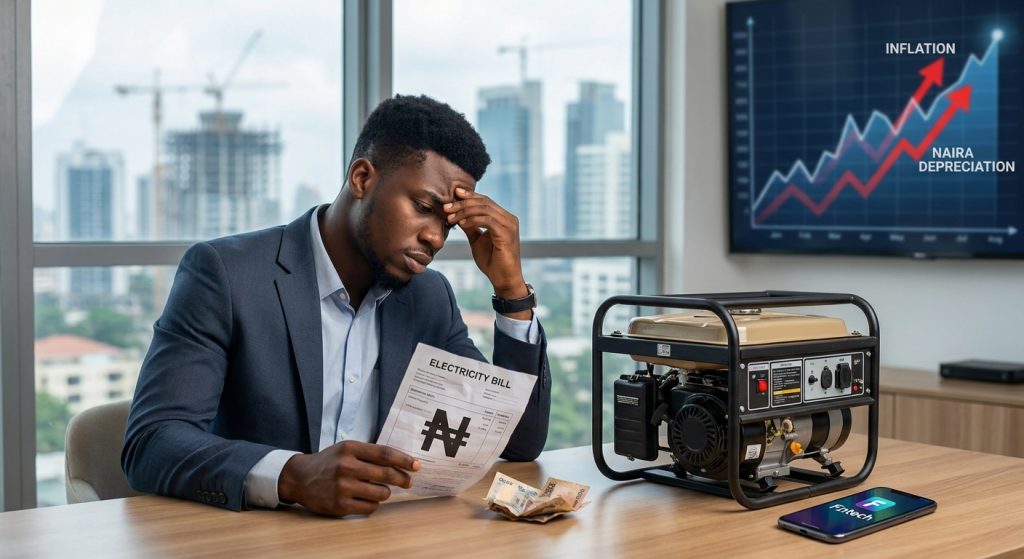
The conviction of former Power Minister Saleh Mamman for ₦33.8 billion fraud in May 2026 is a landmark in Nigeria’s anti-corruption fight. This article reveals how such corruption directly inflates your electricity bills, forces reliance on expensive generators (petrol ₦650-₦700/litre, diesel ₦1,200-₦1,400/litre), erodes savings due to high inflation (33.20% in March 2026) and Naira depreciation (₦1,400-₦1,500/$1), and stifles economic growth. We’ll explore the broader impact on your financial security and provide actionable steps to protect your finances, including diversifying investments and budgeting for instability.
The conviction of former Nigerian Power Minister Saleh Mamman for ₦33.8 billion fraud directly impacts citizens’ finances by inflating electricity tariffs, increasing reliance on expensive alternative power sources (e.g., generators with petrol at ₦650-₦700/litre and diesel at ₦1,200-₦1,400/litre), eroding savings through high inflation (33.20% in March 2026) and Naira depreciation (₦1,400-₦1,500/$1), and stifling economic opportunities. This corruption diverts funds from critical power projects, leading to dilapidated infrastructure, higher operational costs passed to consumers, and a weakened investment climate, ultimately diminishing the purchasing power and financial security of average Nigerians.
Breaking News: Former Power Minister Convicted – A Landmark Ruling Against Corruption in 2026
In a significant development that underscores the ongoing battle against corruption in Nigeria, the Federal High Court in Abuja, on Thursday, May 7, 2026, delivered a landmark judgment. Former Minister of Power, Saleh Mamman, was convicted on 12 counts of fraud and money laundering, involving a staggering sum of approximately ₦33.8 billion.
Justice James Omotosho, presiding over the case, found Mamman guilty of diverting funds specifically earmarked for crucial national power projects, including the Zungeru and Mambilla hydroelectric initiatives. During his pronouncement, Justice Omotosho remarked that Mamman “lived large at the expense of ordinary citizens,” directly contributing to the persistent and debilitating power challenges that plague the nation. The court has since postponed Mamman’s sentencing to May 13, 2026, allowing for further submissions. This ruling, coming after extensive investigations by the Economic and Financial Crimes Commission (EFCC), stands as a pivotal moment in Nigeria’s anti-corruption efforts, particularly within the energy sector, which has historically been a hotbed for graft and mismanagement.
Landmark Ruling: Former Power Minister Saleh Mamman Convicted for ₦33.8 Billion Fraud.
The Ripple Effect: How Corruption in Nigeria’s Power Sector Undermines the Economy in 2026
The conviction of Saleh Mamman for the diversion of ₦33.8 billion is not merely a legal victory; it’s a stark reminder of how deeply corruption in the power sector impacts Nigeria’s economic fabric. This colossal sum, intended for vital projects like the 700MW Zungeru hydroelectric power plant and the long-anticipated Mambilla hydroelectric initiatives, represents lost opportunities and persistent national challenges.
When funds are siphoned off, these critical infrastructure projects suffer from underinvestment. This leads to stalled construction, substandard work, and ultimately, a dilapidated and inefficient power grid. The direct consequence is the epileptic power supply that Nigerians endure daily. Businesses struggle with unpredictable outages, forcing them to incur additional costs for alternative power sources, which we will detail shortly.
Furthermore, corruption inflates operational costs across the entire power value chain – from generation to transmission and distribution. These inflated costs are inevitably passed on to consumers through higher electricity tariffs, even for unreliable service. The Central Bank of Nigeria (CBN) has consistently emphasized that stable and affordable power is a fundamental prerequisite for sustained economic growth and stability. Unreliable power, exacerbated by such acts of corruption, cripples local industries, stifles innovation, and significantly deters Foreign Direct Investment (FDI). Investors are wary of environments where basic infrastructure is unstable and the cost of doing business is artificially inflated by graft.
Consider the Mambilla Power Project, a project that has seen historical delays and cost escalations for decades. While not solely attributable to one individual, cases like Mamman’s highlight how the systemic diversion of funds contributes to these perpetual setbacks, denying Nigeria a significant boost in its energy capacity and economic potential. This chain reaction of corruption, underinvestment, and economic stagnation ultimately translates into a poorer quality of life for the average Nigerian.
Direct Impact on Your Wallet: The Hidden Costs of Power Sector Corruption in 2026
The ₦33.8 billion fraud perpetrated by former Power Minister Saleh Mamman isn’t an abstract figure; it’s a direct assault on your personal finances. The hidden costs of such corruption manifest in several tangible ways, eroding your purchasing power and increasing your daily expenses.
Electricity Bills: Paying for Darkness
Corruption inflates the cost structure of electricity generation and distribution. This means that even when the grid offers power, you’re likely paying more than you should. The prevalence of “estimated billing” is a direct symptom of systemic inefficiencies and a lack of accountability, often linked to corrupt practices within distribution companies (DisCos). Consumers are frequently forced to pay for electricity they didn’t consume, or for service that is inconsistent at best. While specific figures vary by DisCo (e.g., Eko Electricity Distribution Company, Ikeja Electric, Abuja DisCo), the underlying tariffs are higher than they would be in a corruption-free environment.
Comparison Table 1: Average Monthly Household Electricity Bill (Estimated vs. Metered Potential)
| Category | Estimated Bill (₦) (Current Reality) | Metered Bill (₦) (Potential without Corruption) | Difference (₦) |
|---|---|---|---|
| 1-Bedroom Flat | ₦15,000 – ₦25,000 | ₦8,000 – ₦12,000 | ₦7,000 – ₦13,000 |
| 2-Bedroom Apartment | ₦25,000 – ₦40,000 | ₦12,000 – ₦18,000 | ₦13,000 – ₦22,000 |
| 3-Bedroom House | ₦40,000 – ₦70,000 | ₦18,000 – ₦30,000 | ₦22,000 – ₦40,000 |
Note: Figures are illustrative and vary based on consumption, location, and DisCo tariff plans (e.g., Band A, B, C).
The Cost of Doing Business/Living: The Generator Economy
Due to unreliable grid power, reliance on generators has become a Nigerian reality. This reliance comes with significant and escalating costs:
- Fuel: As of May 2026, the average price of petrol hovers between ₦650-₦700 per litre, while diesel, crucial for larger generators, ranges from ₦1,200-₦1,400 per litre in major cities. A small household generator running for just 4-6 hours daily can consume 3-5 litres of petrol, translating to ₦1,950-₦3,500 per day, or ₦58,500-₦105,000 per month just for fuel. Businesses face even higher costs.
- Maintenance: Beyond fuel, generators require regular servicing, oil changes, and spare parts. These maintenance costs add another layer of financial burden, often running into thousands of Naira monthly.
Comparison Table 2: Cost of Power Generation (Grid vs. Generator)
| Power Source | Average Cost per kWh (₦) (Estimated) | Pros | Cons |
|---|---|---|---|
| Grid Electricity (Band A) | ₦225 (for Band A customers as of April 2026) | Generally cheaper per kWh (if available), environmentally friendlier, less maintenance. | Highly unreliable, frequent outages, estimated billing issues, tariffs can be high for consistent supply. |
| Small Petrol Generator (Household) | ₦350 – ₦500 (including fuel & maintenance) | Instant backup power, readily available. | Very expensive fuel, high maintenance, noise pollution, air pollution, safety risks (carbon monoxide). |
| Diesel Generator (Business/Large Household) | ₦450 – ₦700 (including fuel & maintenance) | More robust, can power larger loads, longer run times. | Extremely expensive fuel, high maintenance, significant noise and air pollution, large upfront cost. |
| Solar Power (Hybrid/Off-grid) | ₦100 – ₦200 (long-term average after initial investment) | Clean energy, reduced/eliminated fuel costs, energy independence, quiet. | High upfront installation cost, battery replacement costs, dependent on sunlight, requires professional installation. |
Eroding Savings: Inflation and Naira Depreciation in 2026
The impact of power sector corruption extends beyond direct utility bills and generator costs. It significantly contributes to macroeconomic instability, directly eroding the value of your savings and investments.
Soaring Inflation
When businesses rely on expensive alternative power, their operational costs skyrocket. These costs are inevitably passed on to consumers in the form of higher prices for goods and services. This is a major driver of Nigeria’s persistent inflation. In March 2026, the National Bureau of Statistics (NBS) reported that Nigeria’s headline inflation rate reached a staggering 33.20%. Food inflation, which disproportionately affects low-income households, was even higher at 40.01%. This means that the ₦100,000 you saved last year can now buy significantly less, effectively diminishing your purchasing power.
Naira Depreciation
A weak power sector deters foreign investment and hinders local production, reducing Nigeria’s capacity to earn foreign exchange. This puts immense pressure on the Naira. As of May 2026, the exchange rate hovers between ₦1,400-₦1,500 to $1 in the official market, with parallel market rates often higher. This depreciation makes imported goods, including essential machinery, raw materials, and even some food items, more expensive. For the average Nigerian, this translates to higher costs for everything from electronics to medicines, further squeezing household budgets.
Quick Facts: Economic Indicators (May 2026)
- Headline Inflation (March 2026): 33.20%
- Food Inflation (March 2026): 40.01%
- Naira Exchange Rate (Official, May 2026): ₦1,400 – ₦1,500 / $1
- Petrol Price (Average, May 2026): ₦650 – ₦700 / litre
- Diesel Price (Average, May 2026): ₦1,200 – ₦1,400 / litre
Stifled Economic Growth and Job Losses: The Long-Term Consequences
The systemic corruption exemplified by the former Power Minister’s conviction has far-reaching consequences that extend beyond immediate financial burdens. It fundamentally undermines Nigeria’s potential for sustainable economic growth and job creation.
Impact on Small and Medium Enterprises (SMEs)
SMEs are the backbone of any thriving economy, yet in Nigeria, they bear the brunt of power sector inefficiencies. Many small businesses, from tailors to welders, rely heavily on electricity. The exorbitant cost of running generators often eats into their already thin profit margins, making it difficult to scale, innovate, or even survive. This leads to business closures and, consequently, job losses. The National Bureau of Statistics (NBS) has consistently highlighted the challenges faced by SMEs due to infrastructure deficits, with power being a primary concern.
Deterred Foreign Direct Investment (FDI)
International investors prioritize stability, predictability, and a conducive business environment. A power sector plagued by corruption and inefficiency is a major red flag. The high cost of self-generating power, coupled with the uncertainty of supply, makes Nigeria a less attractive destination for FDI compared to countries with reliable infrastructure. This loss of investment means fewer new industries, less technology transfer, and fewer high-paying jobs for Nigerians.
Reduced Productivity and Competitiveness
Even large corporations operating in Nigeria are forced to allocate significant resources to power generation, diverting capital that could otherwise be used for expansion, research and development, or employee training. This reduces overall productivity and makes Nigerian businesses less competitive on the global stage. The ripple effect is a slower pace of economic development and a reduced capacity to lift citizens out of poverty.
What You Can Do Now: Protecting Your Finances in a Corrupt Environment
While systemic change is crucial, there are practical steps you can take to mitigate the financial impact of power sector corruption and broader economic instability on your personal finances.
-
Diversify Your Income Streams
Relying on a single source of income is risky in an unstable economy. Explore side hustles, freelancing, or developing new skills that can generate additional revenue. This provides a buffer against unexpected expenses or job market fluctuations.
-
Invest in Alternative Power Solutions (Strategically)
While generators are expensive, consider the long-term cost-effectiveness of solar power. Initial investment is high, but it can significantly reduce monthly fuel costs and provide more reliable power. Research reputable solar providers and financing options. For smaller needs, power banks and rechargeable lanterns can reduce reliance on generators for basic lighting and charging.
-
Budget Strictly and Track Expenses
In an inflationary environment, meticulous budgeting is essential. Track every Naira spent to identify areas where you can cut back. Prioritize essential expenses and be mindful of discretionary spending. Tools like budgeting apps can be very helpful.
-
Save and Invest Wisely
Given high inflation, simply saving cash in a traditional bank account means losing purchasing power. Explore investment options that offer returns above the inflation rate. Consider:
- Treasury Bills/Bonds: Issued by the CBN, these offer relatively low-risk returns.
- Mutual Funds: Diversified portfolios managed by professionals.
- Real Estate: Can be a hedge against inflation, but requires significant capital.
- Dollar-denominated Investments: To protect against Naira depreciation, consider investing in dollar-denominated assets or opening a domiciliary account.
Tip: Always consult with a financial advisor before making significant investment decisions, especially in volatile markets.
-
Build an Emergency Fund
Aim to have at least 3-6 months’ worth of living expenses saved in an easily accessible account. This fund is crucial for navigating unexpected job losses, health emergencies, or sudden increases in living costs.
-
Advocate for Accountability
Beyond personal finance, actively participate in civic discussions, support anti-corruption initiatives, and demand transparency from public officials and utility providers. Collective action can drive systemic change.
The Road Ahead: Accountability and Reform
The conviction of Saleh Mamman is a critical step, but it is just one battle in a long war against corruption. For Nigeria to truly overcome its power crisis and unlock its economic potential, sustained efforts are needed:
- Strengthening Institutions: Empowering anti-corruption agencies like the EFCC and ICPC with greater independence and resources is vital.
- Judicial Reform: Ensuring swift and impartial justice for corruption cases sends a strong deterrent message.
- Transparency and Oversight: Implementing robust mechanisms for public oversight of government contracts and project execution, especially in critical sectors like power.
- Policy Consistency: Developing and adhering to long-term energy policies that attract investment and promote efficiency, rather than being subject to political whims.
- Citizen Engagement: Encouraging active citizen participation in demanding accountability and reporting corruption.
The ₦33.8 billion diverted by one individual represents a fraction of the total funds lost to corruption in Nigeria’s power sector over the years. However, this conviction offers a glimmer of hope that the tide may be turning. By understanding the direct impact of such corruption on their daily lives and taking proactive steps to protect their finances, Nigerians can better navigate the current economic challenges while also pushing for a more transparent and accountable future.
FAQs on Power Sector Corruption and Its Impact
Who is Saleh Mamman and why was he convicted?
Saleh Mamman is Nigeria’s former Minister of Power. He was convicted in May 2026 on 12 counts of fraud and money laundering, involving ₦33.8 billion. The funds were intended for critical national power projects like the Zungeru and Mambilla hydroelectric initiatives, but were diverted for personal gain.
How does power sector corruption affect my electricity bill?
Corruption inflates the operational costs of electricity generation, transmission, and distribution. These inflated costs are passed on to consumers through higher tariffs. Additionally, corruption contributes to inefficiencies and estimated billing practices, often leading to consumers paying more for unreliable or non-existent service.
What is the current cost of running a generator in Nigeria (May 2026)?
As of May 2026, petrol costs ₦650-₦700 per litre, and diesel costs ₦1,200-₦1,400 per litre. A small household generator can cost ₦58,500-₦105,000 per month just for fuel, excluding maintenance, making it a very expensive alternative to grid power.
How does corruption in the power sector contribute to inflation and Naira depreciation?
Corruption leads to higher operational costs for businesses (due to self-power generation), which are passed on as higher prices for goods and services, fueling inflation. It also deters foreign investment and hinders local production, reducing foreign exchange earnings and putting pressure on the Naira, leading to depreciation. In March 2026, inflation was 33.20%, and the Naira traded at ₦1,400-₦1,500/$1.
What can I do to protect my finances from these impacts?
You can diversify your income streams, strategically invest in alternative power solutions like solar, budget strictly, save and invest wisely (e.g., in Treasury Bills, mutual funds, or dollar-denominated assets), and build an emergency fund. Additionally, advocate for greater accountability and transparency in governance.