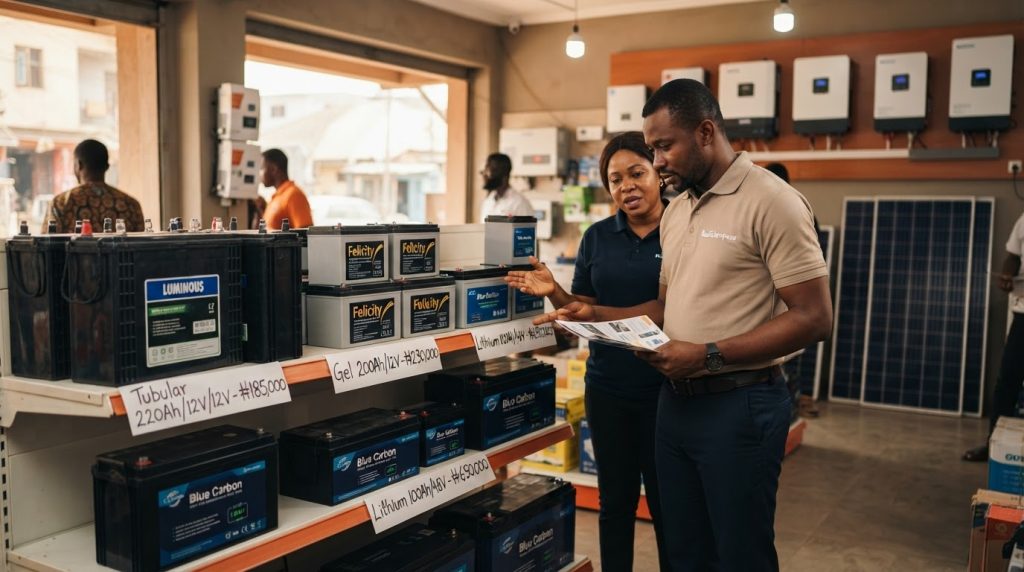
Quick Summary
Inverter battery prices in Nigeria range from ₦85,000 for a 100Ah tubular battery to over ₦1,100,000 for a 300Ah lithium battery as of November 2026. The wide variation depends on battery type (tubular, gel, or lithium), capacity (Ah), brand, and the naira exchange rate. This guide breaks down every factor, provides a complete price list, and gives you a step-by-step buying process so you can choose the right battery for your home or business without overpaying.
Quick Answer
For most Nigerian homes, a 200Ah tubular battery (₦160,000–₦220,000) offers the best balance of cost and performance. If you can stretch your budget, a 100Ah lithium battery (₦236,000–₦420,000) provides better long-term value with zero maintenance and a 5–10 year lifespan. Always verify the manufacturing date, warranty terms, and seller reputation before buying.
Key Takeaways
- Inverter battery prices in Nigeria vary by type: tubular (₦80k–₦250k), gel (₦150k–₦400k), lithium (₦350k–₦1.2M).
- Lithium batteries cost more upfront but last 5–10 years vs. 2–4 years for tubular, making them cheaper over time.
- Calculate your power needs using the formula: total watts × backup hours ÷ 12V = Ah needed. Add 20% buffer.
- Over 5 years, an inverter battery system costs ₦610k–₦1.4M vs. ₦2.1M–₦5.6M for a generator – a clear long-term win.
- Buy from trusted sources like Jumia, Konga, or Alaba International Market. Always get a receipt and warranty card.
Why Inverter Battery Prices in Nigeria Vary So Much
If you’ve been searching for “inverter battery price in Nigeria” and found yourself confused by prices ranging from ₦80,000 to over ₦1,000,000, you’re not alone. The frustration is real – and it’s not your fault.
Nigeria’s power situation in November 2026 remains challenging. Minister of Power Joseph Tegbe recently acknowledged that the transmission network is the sector’s biggest challenge, with some power lines as old as 20 years (BusinessDay, 10 Nov 2026). On 7 November 2026, Tegbe stated that electricity supply would improve within 48–72 hours as the Federal Government tackles grid constraints, including planned maintenance at Egbin power station and gas supply issues (Nairametrics, 7 Nov 2026).
But let’s be honest – promises of improvement have become a familiar refrain. Meanwhile, generator fuel costs keep rising, and electricity tariffs in parts of Lagos have jumped from approximately ₦19/kWh in 2019 to above ₦200/kWh currently (EnterpriseCEO, 7 Oct 2026).
This is why inverter batteries have become essential for Nigerian households and businesses. But the wide price variation makes it hard to know what you should actually pay.
This guide will give you a complete, up-to-date price breakdown for 2026. You’ll learn exactly what determines the cost of an inverter battery, see current prices from real Nigerian providers, and get a step-by-step buying process you can follow today.
No fluff. No generic advice. Just practical information for Nigerians who need reliable power without breaking the bank.
What Determines Inverter Battery Prices in Nigeria?
Before you spend your money, you need to understand why prices vary so much. Here are the key factors:
Battery Type
The type of battery you choose has the biggest impact on price:
- Tubular Batteries (₦80,000 – ₦250,000) – Most common in Nigeria. Affordable, reliable, and can handle frequent charging/discharging. Requires regular maintenance – check water levels every 1–2 months.
- Gel Batteries (₦150,000 – ₦400,000) – Sealed and maintenance-free. Mid-range option. Lasts longer than tubular but costs more upfront.
- Lithium-ion Batteries (₦350,000 – ₦1,200,000) – Premium choice. Lasts 5–10 years (vs. 2–4 for tubular), charges faster, lighter. High upfront cost offset by longer lifespan and zero maintenance. For example, a 12V 100Ah lithium battery currently ranges from approximately ₦236,000 to ₦420,000.
Capacity (Ah)
Battery capacity is measured in Ampere-hours (Ah). This tells you how much energy the battery can store. Here’s a practical guide:
| Capacity | What It Can Power | Typical Backup Time |
|---|---|---|
| 100Ah | Lights + TV + fan | 4–6 hours |
| 150Ah | Lights + TV + fan + small fridge | 4–5 hours |
| 200Ah | Lights + TV + fans + fridge + laptop | 6–8 hours |
| 300Ah | Full home (excluding AC) | 8–12 hours |
Brand
In Nigeria, you’ll find both local and imported brands:
- Popular Nigerian Brands: Felicity, Su-Kam, Luminous, Ritar, NAS
- International Brands: Tesla Powerwall (₦3M+), LG Chem, BYD
Naira Exchange Rate
Most inverter batteries are imported, and the Naira’s value against the US Dollar directly affects prices. When the Naira weakens, battery prices rise. This is why you might see prices change even within the same week.
Warranty
Longer warranty usually means higher price but better value. Typical warranties: Tubular 1–2 years, Gel 2–3 years, Lithium 5–10 years.
Installation Costs
A certified electrician will charge between ₦5,000 and ₦20,000 depending on the complexity of your setup. Some sellers include installation in the price, but most don’t.
2026 Inverter Battery Price List in Nigeria (₦ Naira)
Here is the most comprehensive price list for inverter batteries in Nigeria as of November 2026. Prices are indicative and may vary by location and seller.
| Battery Type | Capacity (Ah) | Brand Example | Price Range (₦) | Warranty | Best For |
|---|---|---|---|---|---|
| Tubular | 100Ah | Felicity | 85,000 – 120,000 | 1–2 years | Budget buyers, small homes |
| Tubular | 150Ah | Luminous | 120,000 – 170,000 | 1–2 years | Medium homes |
| Tubular | 200Ah | Su-Kam | 160,000 – 220,000 | 2 years | Large homes, small businesses |
| Tubular | 300Ah | Ritar | 240,000 – 320,000 | 2 years | Heavy users |
| Gel | 100Ah | Felicity | 150,000 – 200,000 | 2–3 years | Low-maintenance seekers |
| Gel | 200Ah | Luminous | 280,000 – 380,000 | 2–3 years | Medium-large homes |
| Lithium | 100Ah (12V) | Generic/Imported | 236,000 – 420,000 | 5–10 years | Long-term investment |
| Lithium | 200Ah (12V) | Generic/Imported | 450,000 – 750,000 | 5–10 years | Heavy users, businesses |
| Lithium | 300Ah (12V) | Generic/Imported | 650,000 – 1,100,000 | 5–10 years | Full home backup |
| 5kVA Inverter System | Complete | Various | 495,000 – 685,000 | 1–3 years | Whole home solution |
Note: These prices are for the battery only, not including the inverter or charge controller. Complete inverter systems (inverter + battery + charge controller) typically cost more.
Where to Buy
You can purchase inverter batteries from:
- Online: Jumia, Konga
- Physical Markets: Alaba International Market (Lagos), Computer Village (Ikeja), GSM Market (Abuja)
- Direct from Distributors: Felicity, Luminous, Su-Kam have official distributors in major cities
Context: The Federal Government has delivered more than 2.8 million electricity meters between 2023 and October 2026 under the Presidential Metering Initiative (The Guardian Nigeria, 15 Nov 2026). This means more Nigerians are on prepaid meters and can better manage their electricity costs – making inverter batteries an even smarter investment.
Step-by-Step Guide – How to Choose and Buy an Inverter Battery in Nigeria
Follow these steps to make the right choice for your home or business.
-
Step 1: Calculate Your Power Needs
First, list all the appliances you want to run during a power outage. Write down their wattage (usually printed on a sticker at the back).
Simple formula: Total watts × hours of backup needed = Watt-hours (Wh). Then convert to Amp-hours (Ah): Watt-hours ÷ battery voltage (usually 12V) = Amp-hours needed.
Example: 5 LED bulbs (10W each) = 50W, 1 TV (100W) = 100W, 1 ceiling fan (75W) = 75W. Total = 225W. For 6 hours backup: 225W × 6h = 1,350Wh. At 12V: 1,350Wh ÷ 12V = 112.5Ah. So you need at least a 120Ah battery (round up to 150Ah for safety).
-
Step 2: Choose Battery Type
If you… Choose… Have a tight budget Tubular Hate maintenance Gel Plan to keep it for 5+ years Lithium Have heavy power needs Lithium (faster charging) -
Step 3: Match Battery Capacity to Inverter
Your inverter must be compatible with your battery. Most home inverters are 12V or 24V systems.
- 1kVA inverter → 100Ah–150Ah battery (12V)
- 2kVA inverter → 200Ah battery (24V)
- 3kVA inverter → 300Ah battery (24V)
- 5kVA inverter → 400Ah+ battery (48V)
Important: Never connect a battery with higher voltage than your inverter can handle. Check your inverter’s manual.
-
Step 4: Compare Brands and Prices
Use the price table above as your starting point. Then check current prices on Jumia, Konga, or visit a physical store. Don’t just buy the cheapest option – consider warranty and after-sales support.
-
Step 5: Check Warranty and After-Sales Support
Before buying: ask for the warranty card, confirm the warranty period (written, not verbal), ask where the nearest service center is, and check if the warranty covers replacement or just repair.
-
Step 6: Purchase from a Trusted Source
Online: Jumia and Konga offer buyer protection. Check seller ratings and read reviews. Physical Store: Always ask for a receipt. Avoid buying from roadside vendors – counterfeit batteries are common. For tips on spotting fake electrical products, see our guide on how to spot fake electrical cables – the same principles apply to batteries.
Required Documents: You don’t need BVN or NIN to buy an inverter battery. Just cash or bank transfer.
-
Step 7: Arrange Installation
Hire a certified electrician. Do not attempt DIY installation unless you have electrical training. Installation cost: ₦5,000 – ₦15,000 for standard setup. More for complex systems.
What the electrician should do:
- Connect battery to inverter correctly (positive to positive, negative to negative)
- Ensure proper ventilation (batteries can emit hydrogen gas)
- Install a fuse or circuit breaker for safety
- Test the system before leaving
-
Step 8: Maintenance Tips
For tubular batteries: Check water levels every 4–6 weeks. Use distilled water only (not tap water). Clean terminals with a mixture of baking soda and water if you see corrosion.
For gel and lithium batteries: Virtually maintenance-free. Keep the area clean and dry. Avoid deep discharge (don’t let the battery go below 20% charge).
For all batteries: Keep away from direct sunlight and heat. Ensure proper ventilation. Don’t overload the system.
Financing Options
If the upfront cost is too high, consider financing. Arnergy offers distributed solar solutions starting from 5kW with financing arrangements that spread payments over up to five years (EnterpriseCEO, 7 Oct 2026). MTN Lumos also offers PAYG solar systems with outright purchase at ₦525,000 or instalment plans from ₦24,950/month (Lumos Nigeria Products).
Inverter Battery vs Generator – Which is Cheaper in 2026?
This is the question every Nigerian homeowner asks. Let’s compare the costs.
| Cost Category | Generator (2.5kVA) | Inverter Battery (200Ah system) |
|---|---|---|
| Upfront Cost | ₦80,000 – ₦200,000 | ₦250,000 – ₦500,000 |
| Monthly Fuel/Charging | ₦30,000 – ₦90,000 | ₦6,000 – ₦15,000 |
| Monthly Maintenance | ₦5,000 – ₦10,000 | ₦0 – ₦1,000 |
| 5-Year Total Cost | ₦2,100,000 – ₦5,600,000 | ₦610,000 – ₦1,400,000 |
| Lifespan | 5–10 years (engine) | 3–5 years (tubular), 5–10 years (lithium) |
| Noise | Very noisy | Silent |
| Emissions | CO2, fumes | Zero |
| Fuel Availability | Requires petrol/diesel | Uses grid or solar |
The Verdict
Short-term (0–2 years): Generator is cheaper upfront. Long-term (2+ years): Inverter battery is significantly cheaper.
With petrol prices remaining high in 2026, running a generator for 8–10 hours daily can cost ₦3,000 or more per day. That’s ₦90,000 per month. An inverter battery, even with grid charging at ₦200/kWh, costs a fraction of that. Plus, inverter batteries are silent, produce no fumes, and require minimal maintenance.
Additional context: Aliko Dangote has indicated willingness to support efforts to increase electricity generation capacity by 20,000 MW (BusinessDay, 10 Nov 2026). While this is promising, it will take years to materialise. For now, inverter batteries remain the smarter long-term investment.
Where to Buy Inverter Batteries in Nigeria (Online & Physical Stores)
Online Stores
| Platform | Pros | Cons | Best For |
|---|---|---|---|
| Jumia | Buyer protection, reviews, delivery | Higher prices, shipping delays | First-time buyers |
| Konga | Competitive prices, verified sellers | Limited stock | Price comparison |
| Brand Websites | Direct from manufacturer, warranty | May not deliver nationwide | Specific brands |
Physical Markets
| Market | Location | Specialty | Tips |
|---|---|---|---|
| Alaba International | Lagos | Electronics, wholesale | Best prices, but beware of fakes |
| Computer Village | Ikeja, Lagos | Inverters, batteries | Good for complete systems |
| GSM Market | Abuja | Electronics | Smaller selection |
| Ogbete Main Market | Enugu | General electronics | Limited inverter options |
Direct from Distributors
- Felicity Nigeria – Official distributors in Lagos, Abuja, Port Harcourt
- Luminous Nigeria – Showroom in Ikeja, Lagos
- Su-Kam Nigeria – Service centers in major cities
What to Look For When Buying
- Check the manufacturing date – Batteries degrade even when not in use. Look for batteries manufactured within the last 6 months.
- Verify the warranty card – Make sure it’s stamped by the seller.
- Ask for a receipt – Essential for warranty claims.
- Test before buying – If buying in person, ask the seller to test the voltage.
- Compare prices – Don’t buy from the first seller you find.
Frequently Asked Questions
What is the price of inverter battery in Nigeria 2026?
Prices range from approximately ₦85,000 for a 100Ah tubular battery to over ₦1,100,000 for a 300Ah lithium battery. See the full price table in Section 3 for specific brand and capacity prices.
How long does an inverter battery last in Nigeria?
Tubular batteries: 2–4 years with proper maintenance. Gel batteries: 3–5 years. Lithium batteries: 5–10 years. Lifespan depends on usage patterns, depth of discharge, and maintenance.
Which inverter battery is best for home use in Nigeria?
For most Nigerian homes, a 200Ah tubular battery offers the best balance of cost and performance. If you have the budget, a 100Ah lithium battery is better for long-term value.
Can I use a car battery for my inverter?
No. Car batteries are designed for short, high-current bursts to start an engine. They will fail quickly if used for deep-cycle inverter applications. Always use a deep-cycle battery (tubular, gel, or lithium).
How do I know what size inverter battery I need?
Calculate your total wattage needs (lights + appliances) and multiply by the hours of backup you want. Divide by 12V to get Amp-hours. Add 20% buffer for safety. See Step 1 in Section 4 for a detailed example.
Is lithium battery worth the extra cost in Nigeria?
Yes, if you plan to stay in your home for 5+ years. Lithium batteries last 2–3 times longer than tubular batteries, charge faster, and require zero maintenance. The higher upfront cost is offset by longer lifespan.
Where can I buy inverter batteries in Lagos?
Alaba International Market and Computer Village in Ikeja are the best places. You can also buy online from Jumia or Konga.
Do I need NIN or BVN to buy an inverter battery?
No. You don’t need any special documents to purchase an inverter battery. Just cash or bank transfer.
How much does it cost to install an inverter battery?
Installation costs range from ₦5,000 to ₦20,000 depending on complexity. Always hire a certified electrician.
What is the warranty on inverter batteries in Nigeria?
Tubular: 1–2 years. Gel: 2–3 years. Lithium: 5–10 years. Always get the warranty in writing and keep your receipt.