
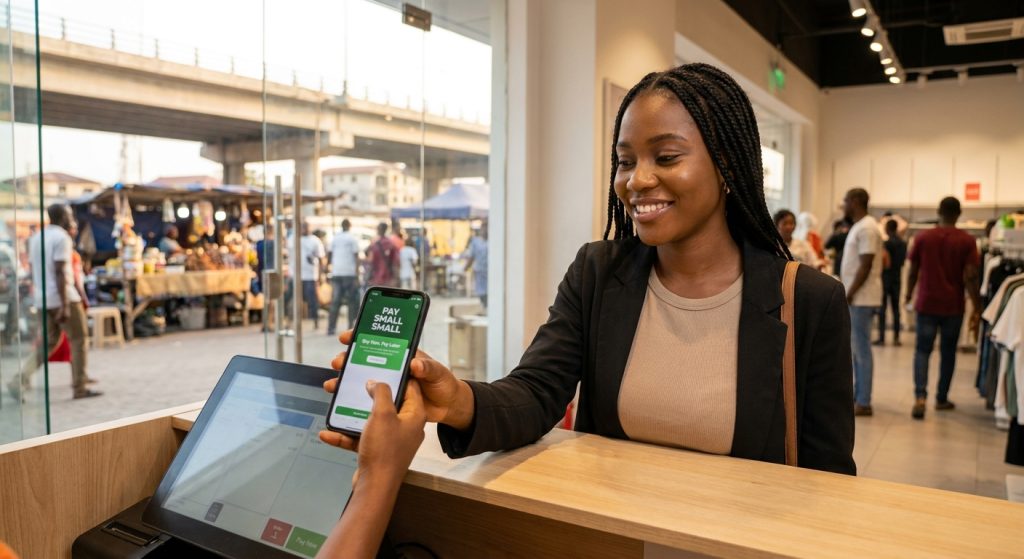
“Pay Small Small” (PSS) schemes—including Buy Now Pay Later (BNPL), installment plans, and asset financing—are transforming Nigeria’s financial landscape. These flexible payment options help Nigerians afford essential goods despite economic pressures, while enabling businesses to boost sales. Key providers include Carbon Zero, Klump, TradeDepot (B2B), and Autochek (vehicle financing). While beneficial, users must watch for late fees (₦2,000-₦5,000 per missed payment), debt risks, and complex refund policies. The Nigerian B2B BNPL market alone will exceed ₦1.75 billion by 2026.
Introduction: What Are Pay Small Small Schemes?
“Pay Small Small” (PSS) refers to payment plans that let Nigerians acquire goods/services through installments rather than upfront lump sums. These schemes have exploded in popularity due to:
- Economic pressures: Inflation (28.92% as of December 2026) and Naira depreciation reduce purchasing power.
- Financial inclusion: 45% of Nigerian adults lacked access to credit in 2026 (EFInA).
- Business growth: SMEs using PSS report 30-50% higher sales volumes (TradeDepot data).
This guide covers all PSS types, top providers, costs in Naira, and smart usage strategies.
Types of Pay Small Small Schemes in Nigeria
Comparison Table: Major PSS Models
| Type | How It Works | Example Providers | Best For | Typical Terms |
|---|---|---|---|---|
| BNPL | Split payments over weeks (often 0% interest) | Carbon Zero, Klump, CredPal | Electronics, fashion | 4 payments over 6 weeks |
| Layaway | Merchant holds item until full payment | Slot, Justrite | Appliances, furniture | 3-12 months, 10-30% deposit |
| Asset Financing | Lease-to-own for high-value items | Autochek, Moove | Vehicles, machinery | 12-60 months |
| B2B BNPL | Inventory financing for retailers | TradeDepot, Moniepoint | SME stock purchases | 7-30 day repayment |
| Micro-loans for Purchases | Small loans tied to specific buys | FairMoney, Branch | Emergency needs | 1-6 months, 5-10% monthly |
Key Providers and Their Offers:
- Carbon Zero: 0% interest BNPL if repaid within 30 days (late fee: ₦1,000 + 1%/day)
- TradeDepot B2B: ₦50,000-₦5M inventory credit for retailers (7-day terms)
- Autochek: Car financing from ₦500,000 at 15-25% APR (3-year max term)
Benefits of Pay Small Small Schemes
For Consumers:
- Affordability: Buy a ₦300,000 laptop with 4x ₦75,000 payments (Carbon Zero)
- Credit building: Some providers report payments to CRC Credit Bureau
- Avoid loan sharks: Better terms than informal lenders (who charge 20-50% monthly)
For Businesses:
- Boost sales: PSS users spend 40% more per transaction (Klump 2026 data)
- Customer loyalty: 65% repeat usage rate for BNPL shoppers
- Cash flow: Get paid upfront by financiers while customers pay installments
Risks and How to Mitigate Them
Common Pitfalls:
- Debt traps: 23% of BNPL users miss payments (CBN 2026 survey)
- Hidden fees: Example: Klump charges ₦2,500 late fee + 5% of overdue amount
- Credit damage: Defaults appear on your credit report for 5+ years
Smart Usage Tips:
✅ Compare APRs: A “0% interest” BNPL may cost 25% APR if late
✅ Set payment reminders: Use apps like Cowrywise to track due dates
✅ Read contracts: Check for repossession clauses in asset financing
Regulatory Landscape
In Nigeria, the Central Bank of Nigeria (CBN) mandates that Buy Now Pay Later (BNPL) providers register as financial institutions under its 2026 Fintech Rules. While the Nigerian Deposit Insurance Corporation (NDIC) covers deposits with licensed banks, most PSS schemes are not covered. Asset financing exceeding ₦100 million requires registration with the Securities and Exchange Commission (SEC).
Pro Tip: Always verify a provider’s CBN registration number before using their services.
Step-by-Step: How to Use Pay Small Small
For Consumers:
- Choose item (e.g., ₦150,000 iPhone on Jumia)
- Select BNPL (e.g., CredPal at checkout)
- Complete profile (BVN/NIN required)
- Make 1st payment (₦37,500 for 4 installments)
- Repay on schedule (Auto-debit from bank)
For Businesses:
- Apply for B2B credit (e.g., TradeDepot)
- Submit documents (CAC, bank statements)
- Receive goods (Pay 30% upfront, 70% in 14 days)
- Repay from sales (Daily/weekly remittances)
Future Outlook (2025-2026)
- Projected growth: B2B BNPL to hit ₦1.75B by 2026 (20.4% CAGR)
- Emerging trends:
- Embedded insurance: Default protection for PSS purchases
- AI underwriting: Faster approvals using alternative credit scoring
- Sector expansion: Education (EduPay), healthcare (MediCredit)
FAQ: People Also Ask
Q: Which banks offer pay small small in Nigeria?
A: Major options:
- GTBank (MarketPlace BNPL)
- UBA (LPO Financing for businesses)
- Kuda (Overdrafts up to ₦50,000)
Q: Can I use pay small small without BVN?
A: No—all licensed providers require BVN/NIN per CBN KYC rules.
Q: What happens if I default?
A: Consequences include:
- Late fees (₦1,500-₦5,000)
- Asset repossession (for financed items)
- Credit score damage (reported to CRC)
Q: Are there pay small small schemes for housing?
A: Yes! Options include:
- Fibre (Rent now, pay later)
- Co-built (Home construction installments)
Last Updated: 26/10/2026
Sources: CBN, EFInA, TradeDepot, Klump, CRC Credit Bureau