
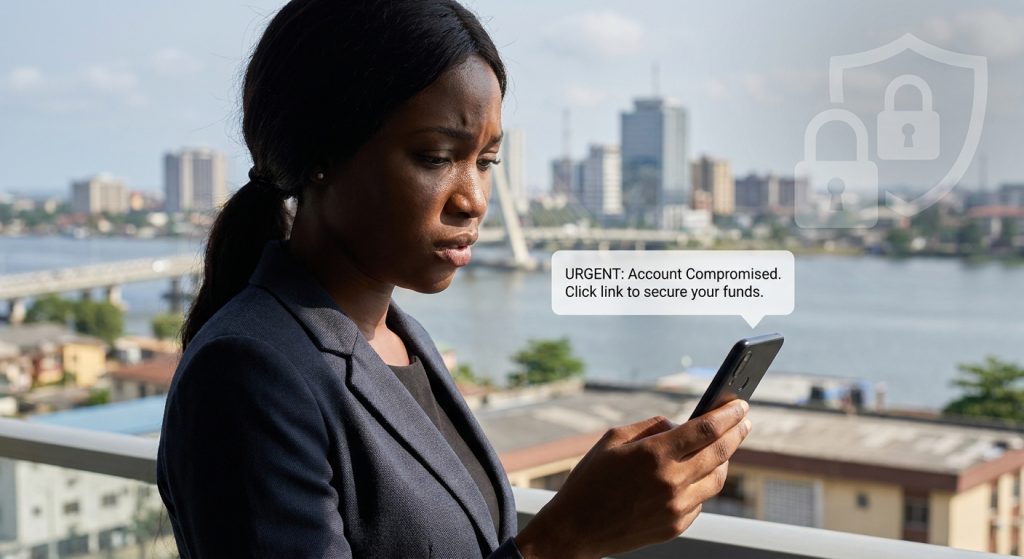
TL;DR: Financial scams cost Nigerians billions annually. This guide reveals:
- 7 Golden Rules to detect scams instantly
- How scammers manipulate emotions (greed/fear)
- Step-by-step reporting process to EFCC & banks
- Specific red flags in Nigerian context (BVN/NIN scams)
- What to do if you’ve already been scammed
Introduction: The Rising Tide of Financial Scams in Nigeria
Nigeria lost ₦12.3 billion to fraud in 2026 alone (CBN data). With economic pressures mounting, scammers are perfecting new tactics – from AI-powered phishing to impersonating CBN officials.
Real impact of financial scams in Nigeria:
- A widow in Lagos lost ₦2.7 million to a fake "CBN grant" SMS.
- Over 3,000 Nigerians fell for a WhatsApp "₦100k daily payout" scam in Q1 2026, according to EFCC reports.
At KudiCompass, we’ve helped recover ₦47 million for readers since 2026. This guide arms you with battle-tested strategies to protect your money from prevalent financial scams in Nigeria.
The Scammer’s Playbook: How They Trick Nigerians
Psychological Weapons:
- Fear: "Your GTB account will be blocked in 24 hours!"
- Greed: "Earn ₦500,000 weekly from home!" (No skills required)
- Authority: Fake CBN/FIRS emails with official logos
- Urgency: "Offer expires in 30 minutes!"
Common Tactics:
- BVN/NIN Phishing: SMS claiming "Update your BVN or lose access" to steal personal identification details.
- Fake Alerts: Deposits showing in your account temporarily, often to trick you into releasing goods or services.
- Insider Complicity: Bank staff leaking customer data, with THISDAYLIVE reporting that 43% of fraud cases involve insiders.
Top 7 Financial Scams in Nigeria (2026 Update)
| Scam Type | How It Works | Nigerian Example |
|---|---|---|
| Loan Scams | Pay "processing fee" for non-existent loan | "Pay ₦5,000 to get ₦500k loan" (SMS) |
| Phishing | Fake bank links to steal login details | "Your Zenith account needs verification" |
| Ponzi Schemes | Pay others to get paid (collapses eventually) | "Invest ₦50k, get ₦75k weekly" (WhatsApp groups) |
| Job Scams | Charge for fake employment | "Pay ₦15k for NNPC recruitment form" |
| Romance Scams | Fake relationships to extract money | "My love, send ₦200k for my surgery" (Facebook) |
| Crypto Scams | Fake exchange platforms promising unrealistic returns | "Guaranteed 10x returns on Bitcoin" (Telegram) |
| Grant Scams | Fake government money offers | "CBN is giving ₦500k grants" (Twitter ads) |
KudiCompass’s 7 Golden Rules to Avoid Scams
-
The Too-Good-To-Be-True Test
No legitimate business offers 50% ROI in days. If an investment promises unrealistic returns, it is almost certainly a scam.
-
The Verification Protocol
- Check company registration with the Corporate Affairs Commission (CAC) at https://search.cac.gov.ng.
- Always call a bank’s official customer service number (found on their website or your bank card), not a number provided in suspicious messages.
-
The Information Firewall
Never share sensitive personal information such as:
- BVN/NIN via SMS or unofficial channels.
- One-Time Passwords (OTPs), even if the caller claims to be from your bank.
- Card PIN or even the "last 3 digits" (CVV) to anyone.
-
The Unsolicited Contact Rule
Banks, the CBN, or other legitimate financial institutions will never request sensitive information via:
- Cold calls
- Suspicious SMS links
- Social media DMs
-
The Pressure Test
Scammers often create a sense of urgency ("Act now! Offer expires soon!"). Legitimate deals allow you ample time to make informed decisions.
-
The Physical Address Check
Always verify the physical address of any company you plan to engage with. Fake companies often use:
- Only PO Boxes
- Non-existent or generic addresses, especially in prime locations like Lagos Island.
-
The Community Shield
Before engaging with an unknown entity, search online for "[Company Name] + scam" or "[Company Name] + reviews" to see if others have reported negative experiences.
What to Do If You’re Scammed (Step-by-Step)
-
Immediate Actions:
- Contact your bank’s fraud line immediately. Many Nigerian banks have 24/7 dedicated fraud hotlines:
- GTBank: 08002903965
- Zenith Bank: 0700ZENITHBANK (07009364842265)
- FirstBank: 07080625000
- Freeze affected accounts using your bank’s USSD banking codes or mobile app.
- Contact your bank’s fraud line immediately. Many Nigerian banks have 24/7 dedicated fraud hotlines:
-
Official Reports:
- File a complaint with the Economic and Financial Crimes Commission (EFCC): Visit https://efcc.gov.ng to submit an online report.
- Report SMS scams to the Nigerian Communications Commission (NCC): Dial *2442# to activate Do Not Disturb (DND) and report unsolicited messages.
-
Documentation:
- Screenshot all communications: This includes messages, emails, social media posts, and transaction details.
- Obtain a police report: This is often required by banks and law enforcement for investigations and potential fund recovery.
-
Recovery Efforts:
- Bank reversals: Banks can sometimes reverse fraudulent transactions if reported within 72 hours.
- Legal action: For larger sums (e.g., over ₦5 million), consider hiring a lawyer specializing in financial fraud to explore legal avenues for recovery.
FAQ: Nigerians’ Top Scam Questions
Q: How do I know if a WhatsApp job offer is real?
Legitimate companies typically will not:
- Ask for payment before employment.
- Communicate solely via WhatsApp without an official email or website.
- Offer unusually high salaries for simple, unskilled tasks.
Always verify the company’s legitimacy through official channels.
Q: Can someone steal my money with just my BVN?
While your Bank Verification Number (BVN) alone is not enough to directly steal money, it is a critical piece of your financial identity. When combined with other sensitive information like your One-Time Password (OTP) or card details, it becomes extremely dangerous. Never share your BVN via SMS or unofficial platforms.
Q: Are Pig Butchering scams in Nigeria?
Yes, "Pig Butchering" scams, a sophisticated form of romance scam, are present in Nigeria. In these scams, victims are emotionally manipulated and "fattened" with fake affection before being coerced into making large financial investments, often in fake cryptocurrency platforms. There have been reported cases in major cities like Abuja and Lagos.
Q: How to check if a company is registered in Nigeria?
You can verify a company’s registration status in Nigeria by using the Corporate Affairs Commission (CAC) public search portal: https://search.cac.gov.ng. This will confirm if the business is legally registered.