
Quick Summary
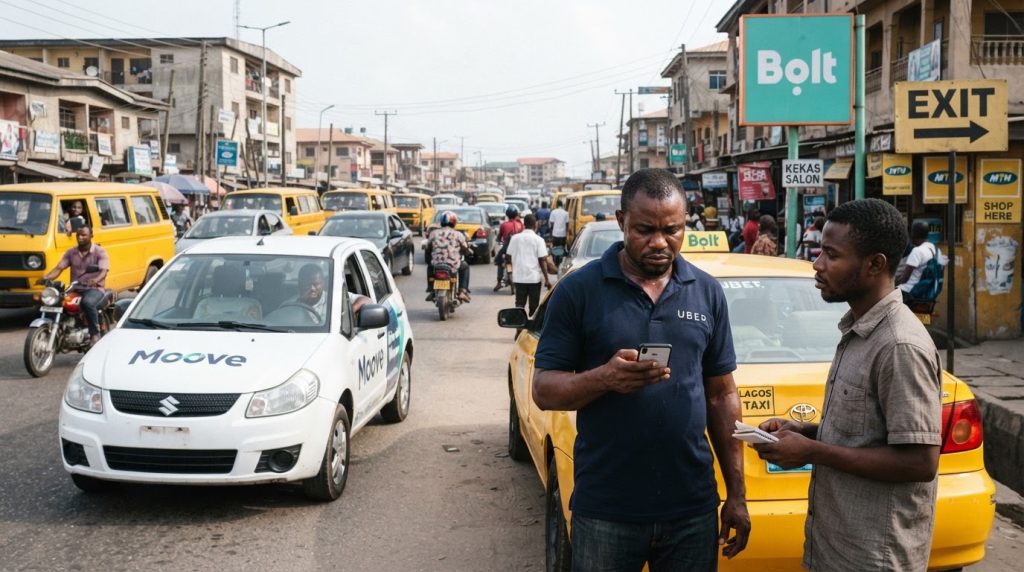
On 08/10/2026, Moove — the Lagos-founded mobility-financing company valued at US$2.1 billion — announced it is winding down its Nigerian operations after six years. The company is handing eligible vehicles worth roughly ₦35 billion to customers with no further payment required from 01/10/2026. This exit, coming just five weeks after Uber left Nigeria, removes the only large-scale vehicle-financing ladder for gig economy drivers and signals a structural shift in Nigeria’s mobility sector.
Quick Answer: What Does Moove’s Exit Mean for the Gig Economy in Nigeria?
Moove’s exit gives thousands of drivers free vehicle ownership but removes the most accessible financing channel for new entrants. The gig economy in Nigeria now faces concentration risk (Bolt controls ~85% of ride-hailing), loss of formalisation momentum, and potential investor caution toward Nigerian fintech. Current drivers should immediately confirm vehicle eligibility, transfer documents, and set up independent maintenance and insurance. Aspiring drivers must explore alternative financing like cooperatives, leasing, or aggressive savings.
Key Takeaways
- Moove transfers ~₦35 billion worth of vehicles to eligible customers, ending all payment obligations from 01/10/2026.
- Uber’s departure in September 2026 triggered Moove’s exit, as Uber accounted for 60–70% of Moove’s vehicle utilisation in Nigeria.
- Over 9,000 customers and ₦57 billion in revenue generated through Moove-financed vehicles are affected.
- The gig economy in Nigeria loses its primary vehicle-financing ladder; new drivers face higher barriers to entry.
- Bolt now dominates the ride-hailing market, raising risks of higher commissions and reduced driver earnings.
- Current drivers must act quickly to secure ownership documents, set up maintenance budgets, and diversify income across platforms.
The Exit in Numbers: What Moove Left Behind
Moove started in Lagos in 2020 with just 76 vehicles, founded by Ladi Delano and Jide Odunsi after they identified a financing gap among mobility entrepreneurs (BusinessDay). Six years later, it has become one of Africa’s most valuable fintechs — and it is now exiting its home market while expanding everywhere else.
| Metric | Figure | Source |
|---|---|---|
| Vehicles transferred to Nigerian customers, at no cost | Approximately ₦35 billion (from 01/10/2026) | Premium Times |
| Revenue generated by Nigerian customers through Moove-financed vehicles | Approximately ₦57 billion | Nairametrics |
| Customers served in Nigeria since 2020 | More than 9,000 | BusinessDay |
| Fleet at launch (Lagos, 2020) | 76 vehicles | BusinessDay |
| Global fleet outside Nigeria | Approximately 42,000 vehicles across 29 cities | BusinessDay |
| Series C raise and valuation (2026) | US$250 million raised; US$2.1 billion valuation, led by Mubadala Investment Company | Nairametrics |
| Nigerian staff reward | One free car per employee | Premium Times |
The ₦35 billion vehicle transfer is the headline. But note what it is not: a blanket giveaway. The reports describe “eligible vehicles” passing to “customers who currently operate them,” with no payment to Moove required from 01/10/2026 (Premium Times). The full eligibility criteria were not published in the coverage we reviewed, so if you are a current Moove customer, your first task is to confirm your vehicle’s status directly with Moove’s customer support.
Why Moove Really Left: The Uber Domino Effect
Moove’s co-founder has been blunt about the cause. Ladi Delano told BusinessDay that the exit was “a direct consequence of Uber’s departure from Nigeria.” Uber was Moove’s largest single customer in the country, accounting for an estimated 60–70% of the vehicle utilisation that made the Drive-to-Own model viable. Without Uber’s platform to guarantee a steady stream of trips, Moove’s Nigerian fleet faced plummeting utilisation rates, rising defaults, and deteriorating unit economics that the company could no longer justify to its global investors.
“We built Moove to solve the financing gap for mobility entrepreneurs, and that model depends on a healthy ride-hailing ecosystem,” Delano told BusinessDay. “When Uber left, the demand floor collapsed. We could not in good conscience continue collecting payments from drivers who were suddenly earning 40% less per day. The only fair outcome was to hand over the vehicles and exit cleanly.”
The decision was not taken lightly. Moove had already tried to pivot: it attempted to redirect its Nigerian fleet toward logistics platforms like Gokada and Max, and even explored direct-to-consumer car subscriptions. But the scale was insufficient. In markets like India, the UAE, and the UK — where Moove now operates 42,000 vehicles — the ride-hailing ecosystem is more diversified, with multiple platforms competing for drivers. Nigeria, after Uber’s exit, effectively became a single-platform market dominated by Bolt and a handful of smaller players, making it impossible for Moove to maintain the same risk-adjusted returns.
What the Exit Means for Current Moove Drivers
If you are one of the 9,000+ customers who currently operate a Moove-financed vehicle, the immediate effect is positive: your car becomes yours, free and clear, as long as you meet the eligibility criteria. That means no more weekly payments, no more repossession risk, and a sudden boost in your net worth. A typical Toyota Corolla or Honda City that Moove financed was valued at between ₦4 million and ₦8 million; receiving full ownership instantly adds that amount to your personal balance sheet.
But there is a catch. The vehicle handover is a one-time event. Moove will no longer provide maintenance support, insurance bundles, or the fuel-card programmes that many drivers relied on. You are now a fully independent owner-operator — responsible for all running costs, repairs, and compliance. If your car was still under Moove’s maintenance plan, you will need to find a new mechanic and budget for unexpected breakdowns.
Additionally, the exit removes the pathway to ownership for aspiring drivers. Before Moove, a Lagos driver typically needed ₦3–5 million upfront to buy a decent used car, or had to enter informal hire-purchase arrangements with interest rates as high as 30–50% per annum. Moove’s model lowered that barrier to a ₦500,000–1,000,000 deposit and weekly payments tied to earnings. That ladder is now gone. For new entrants, the only remaining options are:
- Personal savings or family loans – Requires months or years of accumulation.
- Bank or fintech vehicle loans – Still rare in Nigeria; interest rates of 25–30% and collateral requirements deter most drivers. For guidance on checking fintech legitimacy, see How to Check if a Microfinance Bank or Fintech Is Licensed in Nigeria.
- Informal “agreement” purchases – High risk of repossession and opaque terms.
- Renting from car owners – Daily rent of ₦8,000–12,000 in Lagos, eating deeply into profits.
The gig economy in Nigeria just lost its most accessible financing channel. This will likely reduce the number of new drivers entering the market, which could push up ride prices in the medium term — but also increase the bargaining power of existing drivers who own their vehicles outright.
The Broader Risks for the Gig Economy in Nigeria
Moove’s exit, coming so soon after Uber’s, signals a structural shift in Nigeria’s gig economy. Three risks stand out:
1. Concentration risk in ride-hailing
With Uber gone, Bolt now controls an estimated 85% of the Nigerian ride-hailing market, according to industry estimates. A single dominant platform can adjust commission rates, surge pricing, and driver incentives with little pushback. Drivers who own their vehicles — the newly independent cohort from Moove — have no alternative platform to switch to if Bolt raises its 25% commission to 30% or more. This could compress driver earnings further, even as they enjoy full ownership.
2. Loss of formalisation momentum
Moove was one of the few companies that required drivers to register with the Corporate Affairs Commission (CAC), maintain proper bank accounts, and file taxes through its platform. The exit removes that formalisation channel. Many newly independent drivers may revert to cash-based operations, reducing their access to credit, insurance, and government benefits. The gig economy in Nigeria risks becoming more informal, not less. For tips on managing finances as a freelancer, see Freelancer Finance in Nigeria: USD Payments Taxes Invoices Savings and FX.
3. Investor sentiment for Nigerian fintech
Moove’s exit is a reputational blow. The company raised US$250 million at a US$2.1 billion valuation partly on the strength of its Nigerian proof-of-concept. If the home market cannot sustain a unicorn, international investors may become more cautious about Nigerian fintech models that depend on local gig-economy demand. This could slow funding for other startups in mobility, logistics, and last-mile delivery. The CBN’s recent MPR cut to 23% may help lower borrowing costs, but investor confidence remains fragile.
What to Do Next: Practical Steps for Drivers and Aspiring Entrepreneurs
If you are a current Moove customer:
- Confirm your vehicle’s eligibility immediately. Contact Moove’s Nigerian customer support (the company has stated it will maintain a small team for transition) to verify that your car is included in the ₦35 billion transfer. Ask for a written handover certificate.
- Transfer vehicle documents to your name. Visit the Lagos State Motor Vehicle Administration Agency (MVAA) or your state’s equivalent to register the vehicle in your name. Moove should provide the original purchase invoice and customs papers. Do this within 30 days to avoid legal complications.
- Set up a maintenance budget. Estimate ₦150,000–300,000 per quarter for routine servicing, tyres, and minor repairs. Open a dedicated savings account for this. Consider using a flexible savings account for easy access.
- Review your insurance. Moove’s fleet policy likely covered third-party liability and comprehensive damage. You now need individual insurance. Compare quotes from Leadway, AXA Mansard, and AIICO. Comprehensive cover for a used Corolla costs roughly ₦250,000–400,000 annually. See our Comprehensive Motor Insurance comparison for details.
- Diversify your income. With full ownership, you can now work across multiple platforms (Bolt, LagRide, inDriver) and also offer private hire services. Consider registering with logistics apps like Gokada for delivery work during slow ride hours.
If you are an aspiring driver without a vehicle:
- Save aggressively for a deposit. Target ₦1.5–2 million for a reliable used car (2018–2020 Toyota Corolla or Honda City). This is the minimum to access bank loans or cooperative society financing.
- Explore cooperative vehicle schemes. Some Lagos-based cooperatives, like the National Union of Road Transport Workers (NURTW) branches, offer hire-purchase arrangements at lower rates than informal dealers. Verify terms carefully.
- Consider vehicle leasing instead of ownership. Companies like CARS45 and Jiji are experimenting with short-term leases. Monthly payments of ₦150,000–250,000 may be more manageable than a lump-sum purchase.
- Monitor new fintech entrants. Moove’s exit leaves a gap. Watch for startups like Autochek, which recently launched a “Drive-to-Own” pilot in Lagos, or new mobility platforms that may fill the void. The gig economy in Nigeria is resilient; new solutions will emerge, but they will take 6–12 months to scale.
For policymakers and industry stakeholders:
- The Central Bank of Nigeria (CBN) and the Federal Ministry of Transportation should consider a targeted vehicle-financing scheme for gig workers, perhaps through the Bank of Industry (BOI). Moove’s exit removes a private-sector solution; a public-private partnership could restore access.
- The Lagos State Government could offer tax incentives for companies that provide vehicle financing to ride-hail drivers, similar to the “Lagos Ride” initiative that was proposed in 2024 but never implemented.
Frequently Asked Questions
Will Moove still provide maintenance or insurance after the handover?
No. Moove has stated that the vehicle handover is a one-time event. After 01/10/2026, the company will no longer provide maintenance support, insurance bundles, or fuel-card programmes. Drivers become fully independent owner-operators responsible for all running costs.
What happens to my outstanding payments if my vehicle is eligible?
According to Moove’s announcement, eligible vehicles are transferred with no further payment required from 01/10/2026. Any outstanding balance is effectively forgiven. However, you must confirm your eligibility directly with Moove’s customer support to ensure your specific vehicle is included.
Can I still use Bolt after Moove exits?
Yes. Bolt remains the dominant ride-hailing platform in Nigeria. With full vehicle ownership, you can register with Bolt, LagRide, inDriver, or any other platform. However, be aware that Bolt now controls an estimated 85% of the market, which could lead to higher commission rates in the future.
What financing options exist for new drivers after Moove?
Options are limited. You can save for a deposit (₦1.5–2 million), join a cooperative hire-purchase scheme, lease a vehicle, or explore new fintech entrants like Autochek. Bank vehicle loans remain rare and expensive. For business loan readiness tips, see our Business Loan Readiness Checklist for Nigerian SMEs.
How does Moove’s exit affect the broader gig economy in Nigeria?
The exit, combined with Uber’s departure, creates concentration risk (Bolt dominance), reduces formalisation of gig workers, and may dampen investor confidence in Nigerian fintech. The gig economy in Nigeria is undergoing a painful transformation, but new solutions are expected to emerge within 6–12 months.
The Bottom Line
Moove’s ₦35 billion car giveaway is a windfall for thousands of Nigerian drivers, but it is also a warning. The gig economy in Nigeria has lost two of its most important pillars in two months. Drivers who now own their vehicles have a rare opportunity to build wealth — but only if they manage the transition carefully. Aspiring drivers face a harder road ahead, with fewer financing options and a more concentrated ride-hailing market.
The next 12 months will determine whether Nigeria’s gig economy can reinvent itself without Uber and Moove, or whether the country’s mobility sector will slide backward into informality. For now, the smartest move is to secure what you have, save what you can, and stay alert for the next wave of innovation. The gig economy in Nigeria is not dead — but it is undergoing a painful, necessary transformation.