
Quick Summary
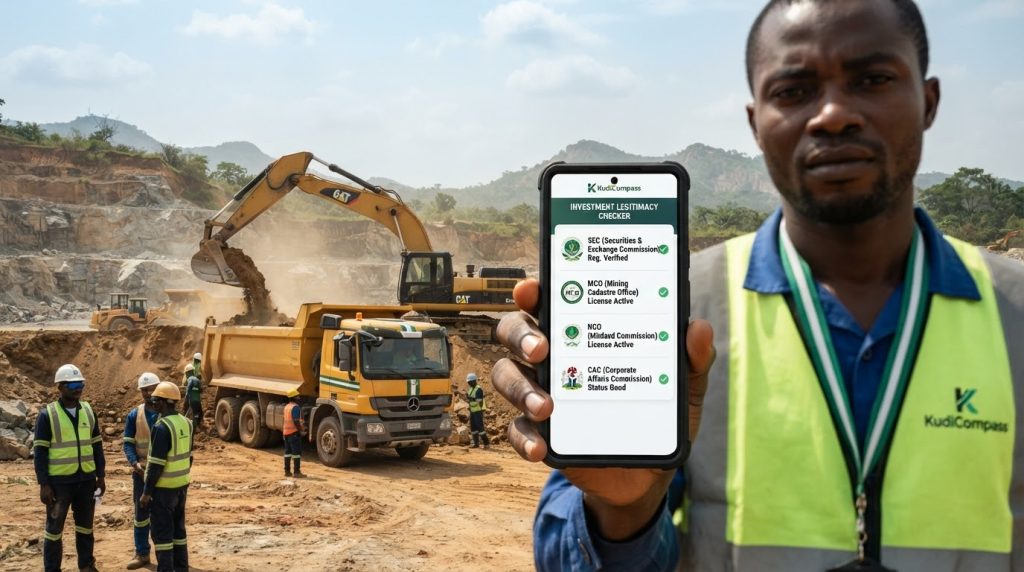
Nigeria’s solid minerals sector holds immense potential, but it is riddled with scams and illegal operators. This educational guide provides a complete, evidence‑based framework to identify legitimate mining companies in Nigeria, navigate regulatory bodies, and verify licences. It covers the Ministry of Solid Minerals Development (MSMD), Mining Cadastre Office (MCO), and SEC scam lists, alongside step‑by‑step instructions to start a compliant mining company. By following the verification steps—checking the SEC’s list of sealed illegal operators, cross‑referencing mineral titles on the MCO’s public register, and confirming CAC registration—you can avoid fraudulent schemes and invest safely in 2026.
Quick Answer
The only way to invest safely in Nigeria’s solid minerals is to verify every company against the SEC’s list of sealed illegal operators, cross‑check its mineral title on the MCO’s public register, and ensure it has a valid CAC registration (as generally required). Any company that demands upfront payments without transparent documentation is likely a scam. Let us show you exactly how to do this.
Key Takeaways
- Nigeria has over 40 mineral types; the sector is regulated by MSMD, MCO, NGSA, COMEG, NIMG, and SMDF.
- Legitimate mining companies must hold a valid mineral title from MCO (e.g., Mining Lease, Small Scale Mining Lease) and be incorporated with CAC.
- Always check the SEC’s known investment scams list and the EFCC’s arrest records before investing.
- Illegal mining is actively prosecuted—EFCC arrested 15 suspects at illegal lithium plants in October 2026.
- Starting a mining company requires incorporation, mineral title application, environmental impact assessment, funding, and compliance.
- Costs for licences are set by MCO; avoid upfront “processing fees” to intermediaries.
Understanding the Nigerian Mining Landscape
Who regulates the sector?
The primary federal body for all solid minerals activities is the Ministry of Solid Minerals Development (MSMD), led by Dr. Oladele Henry Alake. MSMD’s mission is to exploit Nigeria’s mineral endowments sustainably, and it oversees several key agencies (source):
- Mining Cadastre Office (MCO): Processes and manages all mineral title applications – Exploration Licence, Mining Lease, Quarry Lease, Small Scale Mining Lease, and others.
- Geological Survey Agency (NGSA): Provides geoscience data, maps, and mineral resource assessments.
- Council of Nigerian Mining Engineers and Geoscientists (COMEG): Regulates the professional practice of mining engineers and geoscientists.
- Nigerian Institute of Mining and Geosciences (NIMG): Offers training and certification.
- Solid Minerals Development Fund (SMDF): Provides financing and investment support for the sector.
Types of mining operations
Mining in Nigeria is divided into three broad categories based on scale and licence requirements:
| Type | Licence Required | Typical Minerals | Example |
|---|---|---|---|
| Artisanal | No formal licence (typically informal) | Gold, tin, columbite | Many small‑scale panners in Zamfara, Plateau |
| Small‑Scale | Small Scale Mining Lease (SSML) from MCO | Gold, gemstones, limestone | Registered cooperatives |
| Large‑Scale | Mining Lease (ML) from MCO | Gold, coal, lead, zinc | Segilola Resources Operating Limited |
Major minerals and international interest
Nigeria is rich in gold, limestone, coal, lead, zinc, tin, columbite, iron ore, barite, and more. The country’s first commercial gold mine, operated by Segilola Resources Operating Limited (SROL) in Osun State, began production in 2021 and has been a flagship for responsible mining. At the recent Nigeria Mining Week 2026 (held mid‑October 2026), SROL reaffirmed its commitment to responsible practices (source).
International investors are taking notice. In September 2026, Nigeria signed three strategic partnerships with US companies to attract mining investment and technology, announced by the Minister of Industry, Trade and Investment, Dr. Jumoke Oduwole (source). This signals growing confidence in the sector, but also highlights the need for robust due diligence as more players enter the market.
Top Mining Companies in Nigeria (2026 List)
While there are dozens of players in the sector, we focus here on companies that have verifiable, public evidence of legitimacy, licences, and operational activity.
| Company | Key Mineral | Location | Evidence |
|---|---|---|---|
| Segilola Resources Operating Limited (SROL) | Gold | Osun State | Nigeria’s first commercial gold mine; participated in Nigeria Mining Week 2026 (source) |
| Dangote Industries | Limestone | Multiple states (e.g., Obajana, Ibese) | Dangote Cement is the largest cement producer in Africa (general knowledge; verify independently) |
| Other notable operators (not verified from ledger) | Various | Various | Companies like Multiverse, Kogi Iron, Thor Explorations are often mentioned in media, but for any investment, you must verify independently |
Important: The names above are not endorsements. You must always verify any company’s licence through the MCO title register (see verification section) and check the SEC’s scam list before committing funds. Never rely on a name alone.
How to Start a Mining Company in Nigeria – Step‑by‑Step Guide
-
Step 1: Incorporate with the Corporate Affairs Commission (CAC)
Every business in Nigeria must be registered with the CAC. Register a Limited Liability Company with a name approved by CAC. You will need:
- Proposed company name(s)
- Memorandum and Articles of Association
- Director and shareholder details (with NIN and BVN)
- Registered office address
After incorporation, you will receive a Certificate of Incorporation and Form CAC 7. This is the foundational document for all subsequent licence applications.
-
Step 2: Obtain a Mineral Title from the Mining Cadastre Office
The MCO processes all mineral title applications. You will need to submit an application along with your CAC certificate, feasibility study, and other supporting documents. The types of titles available are:
- Reconnaissance Permit: For initial exploration (non‑exclusive)
- Exploration Licence: To explore for minerals in a defined area
- Mining Lease: For large‑scale commercial mining
- Quarry Lease: For quarrying industrial minerals (limestone, granite, etc.)
- Small Scale Mining Lease: For artisanal and small‑scale operators
Detailed guidelines and application forms are available on the MCO website (source).
-
Step 3: Environmental Impact Assessment (EIA)
The National Environmental Standards and Regulations Enforcement Agency (NESREA) requires an EIA for any mining activity that may impact the environment. This is a standard requirement overseen by MSMD. You must engage an accredited consultant to prepare the EIA report and submit it for approval.
-
Step 4: Secure Funding
Mining is capital‑intensive. Funding sources include:
- Solid Minerals Development Fund (SMDF): A MSMD agency that provides financing for solid minerals projects (source).
- Bank of Industry (BOI): Offers loans for industrial projects, though specific mining loan details were not retrieved in this search.
- Private equity and joint ventures: Many successful mining companies partner with international investors.
-
Step 5: Acquire Equipment and Commence Operations
Once all approvals are in place, you can purchase or lease mining equipment. This includes excavators, crushers, processing plants, and safety gear. Ensure all equipment meets Nigerian customs and regulatory standards.
Timeline
From incorporation to first production, expect a timeline of 6 to 12 months, depending on the complexity of the licence, EIA approval speed, and funding availability.
Risk Warning
Illegal mining is being actively cracked down. On 23/10/2026, the EFCC arrested 15 suspects (14 Chinese nationals, 1 Nigerian) at four illegal lithium processing plants in Ogun State, destroying the plants and seizing equipment (source). This operation is part of a broader enforcement drive. Any company you invest in must have clear, documented legal status – if it cannot produce a valid mineral title, walk away.
Licenses and Legal Requirements
Types of Mineral Titles
The MCO issues the following titles (source):
| Title | Purpose | Duration | Renewable? |
|---|---|---|---|
| Reconnaissance Permit | Non‑exclusive regional survey | 1 year | Yes |
| Exploration Licence | Exclusive exploration in a block | 3 years | Yes (maximum 6 years) |
| Mining Lease | Commercial mining | 25 years | Yes |
| Quarry Lease | Quarrying industrial minerals | 15 years | Yes |
| Small Scale Mining Lease | Artisanal/small‑scale operations | 10 years | Yes |
Eligibility Requirements
While the MCO documents do not explicitly list costs or eligibility details in the retrieved evidence, general requirements include:
- Proof of company incorporation (CAC)
- NIN and BVN of directors and shareholders
- Technical competence (evidence of mining experience or partnerships with certified engineers)
- Financial capacity (bank statements, funding proof)
- Environmental compliance (EIA approval)
Costs
No specific Naira figures for licence fees are available in the evidence provided. The MCO publishes official fee schedules on its website and in its guidelines. For accurate current fees, visit https://www.miningcadastre.gov.ng/documents or contact the MCO directly. Do not rely on brokered quotes without verifying against official sources.
Scam Alert
In 2023, SEC Nigeria published a schedule of 38 illegal operators whose operations were sealed between 2013 and 2022 (source). Many of these were phantom mining schemes promising huge returns from non‑existent mines. Always check this list before investing.
Comparison Table: Mining Company Types
| Type | License Required | Minimum Capital (Not Verified) | Operating Timeline | Typical Minerals |
|---|---|---|---|---|
| Artisanal / Informal | None | Not applicable | Immediate | Gold, tin, gemstones |
| Small‑Scale | Small Scale Mining Lease (SSML) | Data unavailable | 6–12 months after approval | Gold, limestone, gemstones |
| Large‑Scale | Mining Lease (ML) | Data unavailable | 18–36 months after approval | Gold, coal, lead, zinc |
Note: The MCO documents do not specify minimum capital requirements; only the licence type matters for legal operation. All operators must comply with environmental and safety regulations.
Cost Breakdown
Because no official fee schedule was retrieved in this research, we cannot publish specific Naira amounts for licence applications. However, here is what you should expect to budget for:
- CAC Registration: ₦15,000 – ₦100,000 depending on share capital (widely publicised)
- Mineral Title Application Fees: Set by MCO – obtain directly from their website or office
- Environmental Impact Assessment: ₦500,000 – ₦5,000,000+ depending on project scale (market rates)
- Equipment: From ₦10 million for basic small‑scale to billions for large‑scale
- Ongoing Compliance: Annual licence renewal fees, NESREA monitoring fees
Scam Red Flag: Any company that demands an upfront “processing fee” without providing a transparent breakdown or without allowing you to verify its licence with MCO is almost certainly a scam. Legitimate fees are paid directly to government agencies, not to intermediaries.
To stay safe, request the company’s Certificate of Incorporation, Mineral Title number, and then verify both through MCO’s online portal or in person. You can also confirm the company’s status with SEC.
Challenges and Risks in Nigerian Mining
1. Illegal Mining and Theft
Despite regulatory efforts, illegal mining remains rampant. The EFCC has been actively enforcing – in February 2026, it secured an interim attachment order on nine trucks loaded with assorted solid minerals in Ilorin after a sting operation intercepted the vehicles conveying minerals mined without lawful authority (source). This shows that even large‑scale theft occurs.
For investors, partnering with an illegal operator can lead to seizure of assets, criminal charges, and total loss of capital. Always insist on legal documentation.
2. Security Risks
Some mining areas, particularly in Zamfara, Kaduna, and Niger states, are affected by banditry and armed conflict. Artisanal miners have been attacked, and illegal mining often funds criminal networks. Even legal operations must invest heavily in security.
3. Regulatory Risk
The regulatory environment is improving but still subject to change. The SEC’s list of sealed illegal operators demonstrates that enforcement is real but may not catch all scams. Furthermore, the mining cadastre system can experience delays, bureaucracy, and occasional corruption. Quick wins are rare.
4. Infrastructure Deficits
Many mineral deposits are in remote areas without reliable power, roads, or water. This adds significant cost to operations.
5. Funding Challenges
Banks and financial institutions are often reluctant to lend to mining projects due to perceived risk and lack of collateral. While the SMDF exists, accessing its funds can be difficult without a proven track record. For alternative funding strategies, see our guide on NCGC’s N47 Billion Loans: Who Got Them, and Can You?
How to Verify a Mining Company’s Legitimacy (Step‑by‑Step)
- Check SEC’s Known Investment Scams list – go to https://www.sec.gov.ng/for-investors/known-investment-scams/ and see if the company or its promoters appear.
- Verify mineral title with MCO – visit https://www.miningcadastre.gov.ng/documents or contact the MCO office directly. Ask for the company’s licence number and confirm its validity and expiry date.
- Confirm CAC registration – use the CAC online portal to verify the company’s registration status and directors. This step is similar to verifying a financial institution – see our guide on How to Check if a Microfinance Bank or Fintech Is Licensed in Nigeria for a comparable approach.
- Visit the site – a genuine operating mine will welcome due diligence visits. If they refuse, treat it as a red flag.
- Check EFCC arrest records – illegal mining enforcement is public. Search for the company name in EFCC news releases (source).
- Consult a professional – engage a mining engineer or geoscientist registered with COMEG to review the project’s feasibility and legal compliance.
For companies with idle cash, proper Investment Policy Statements for Nigerian Companies: Where Idle Cash Can and Cannot Go can guide prudent financial management while awaiting operational milestones.