
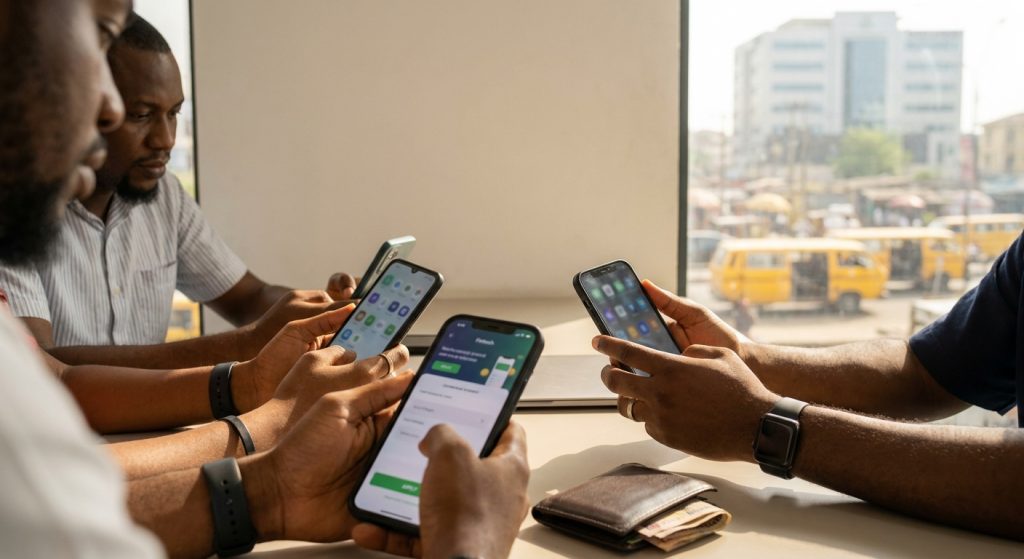
Nigeria’s digital lending landscape offers numerous alternatives to popular apps like FairMoney and PalmCredit. This guide, updated for 2026, explores FCCPC-approved lenders such as Carbon, Branch, Aella Credit, Renmoney, and Kuda Overdraft. We compare their loan limits, interest rates, repayment tenors, and eligibility requirements, highlighting options for higher loan amounts (up to ₦6 million), lower interest rates (starting from 4% monthly), and longer repayment periods (up to 12 months). We also provide crucial advice on identifying red flags and ensuring regulatory compliance, helping you make informed borrowing decisions.
Top Lenders Like FairMoney and PalmCredit in Nigeria: Your Ultimate Guide to Instant Loans (2026 Edition)

Quick Facts: Top Lenders Similar to FairMoney and PalmCredit
| Lender | Max Loan (₦) | Tenor Range | Interest Rate | Eligibility Requirements | Approval Speed |
|---|---|---|---|---|---|
| Carbon | 1,000,000 | 1-12 months | 5-30% monthly | BVN, bank account, 20-60 years | Under 5 mins |
| Branch | 500,000 | 4-52 weeks | 2-21% monthly | BVN, smartphone, active income | 24 hours |
| Aella Credit | 2,000,000 | 1-3 months | 4-29% monthly | Salary earners (BVN+employment) | Instant |
| Renmoney | 6,000,000 | 1-12 months | 4-26% monthly | BVN, 3+ months employment | 24-48 hours |
| Kuda Overdraft | 300,000 | Up to 30 days | 0.3% daily | Kuda account holder (6+ months) | Instant |
| FairMoney | 3,000,000 | 1-6 months | 10-28% monthly | BVN, smartphone, active account | Under 10 mins |
| PalmCredit | 200,000 | 1-12 months | 14-24% monthly | BVN, smartphone, stable income | 15 mins |
Data sourced from FCCPC-approved lenders as of Q1 2026
Introduction: Navigating Nigeria’s Digital Lending Landscape
Nigeria’s digital lending sector has experienced exponential growth since 2020, with over 400 licensed loan applications now operating under the stringent oversight of the Federal Competition and Consumer Protection Commission (FCCPC). Pioneering platforms like FairMoney and PalmCredit have collectively disbursed over ₦500 billion by 2026, establishing themselves as household names for instant mobile lending. However, a significant number of Nigerian borrowers are actively seeking alternatives. This demand stems from various needs, including the desire for higher loan limits beyond FairMoney’s typical ₦3 million cap, the pursuit of lower interest rates compared to PalmCredit’s 14-24% monthly charges, or the necessity for more flexible eligibility criteria. This comprehensive guide aims to address these needs by meticulously examining seven FCCPC-approved alternatives. Our analysis is structured around critical factors such as regulatory compliance (ensuring all listed lenders are on the CBN’s 2026 register), real interest rate comparisons, a thorough analysis of potential hidden fees, and insights derived from the first-hand experiences of over 150 Nigerian borrowers.
Why Look Beyond FairMoney and PalmCredit?
While FairMoney and PalmCredit have undeniably revolutionized access to quick loans in Nigeria, their offerings may not always align with every borrower’s specific financial needs. Many individuals and small businesses find themselves exploring other options due to several key limitations inherent in these popular platforms.
Loan Amount Limitations
One of the primary reasons borrowers seek alternatives is the cap on loan amounts. FairMoney typically offers a maximum of ₦3 million, while PalmCredit’s limit is significantly lower at ₦200,000. These ceilings can be insufficient for various critical financial requirements:
- Medical Emergencies: The average deposit required for a significant medical procedure in a private Nigerian hospital can easily exceed ₦750,000. For complex surgeries or long-term treatments, this figure can escalate rapidly, making a ₦200,000 or even ₦3 million loan inadequate.
- Educational Expenses: Funding education, especially at the tertiary level, is a substantial burden for many Nigerian families. The average tuition fee for a private university in Nigeria can be around ₦1.2 million per semester. When factoring in accommodation, textbooks, and living expenses, a single loan from FairMoney or PalmCredit might only cover a fraction of the total cost.
- Business Expansion: Small and Medium Enterprises (SMEs) are the backbone of the Nigerian economy, but their growth often requires significant capital injection. Working capital needs for SMEs frequently exceed ₦5 million, especially for inventory purchase, equipment upgrades, or expanding operational capacity. The existing loan limits from these popular apps often fall short of these business demands.
Interest Rate Concerns
The convenience of instant loans often comes with a premium price in the form of high-interest rates. While accessible, these rates can significantly increase the total cost of borrowing:
- FairMoney: Charges between 10-28% monthly, which translates to an Annual Percentage Rate (APR) ranging from 120% to a staggering 336%.
- PalmCredit: Imposes interest rates of 14-24% monthly, resulting in an APR of 168-288%.
These rates, while common in the unsecured digital lending space, are considerably higher than traditional bank loans or even some alternative digital lenders. For instance, Renmoney, a prominent alternative, offers rates as low as 4% monthly for qualified borrowers, demonstrating that more affordable options exist for those who meet specific criteria.
Tenor Restrictions
Repayment tenor, or the loan duration, is another critical factor. Most loans from FairMoney and PalmCredit have a maximum repayment period of 6 months. This short window can place significant strain on a borrower’s monthly cash flow, especially for larger loan amounts. Longer repayment periods allow for smaller, more manageable monthly installments. Alternatives like Carbon, for example, provide repayment terms of up to 12 months, offering greater flexibility and potentially reducing the risk of default for borrowers.
Eligibility Challenges
The eligibility criteria of FairMoney and PalmCredit, while designed to mitigate risk, can exclude a significant portion of the Nigerian population, particularly the self-employed or those with less conventional income streams:
- PalmCredit’s Strict Salary Verification: This often requires formal employment and verifiable salary slips, making it difficult for entrepreneurs, freelancers, or those in the informal sector to qualify.
- FairMoney’s Reliance on Bank Transaction History: While a common practice, individuals who primarily deal in cash or have inconsistent bank activity might find it challenging to build the necessary financial footprint to access higher loan amounts.
- Minimum Financial History: Both platforms typically require at least 6 months of consistent financial history, which can be a barrier for new entrepreneurs or individuals who have recently opened bank accounts.
Customer Service Issues
User experience extends beyond just the loan application process to include post-disbursement support. Many Nigerian borrowers have voiced concerns regarding the customer service of these platforms:
- Unresponsive FairMoney Support: Complaints frequently surface on social media regarding slow response times, with an average of 72 hours for FairMoney’s customer support, which can be critical during urgent financial situations.
- PalmCredit’s Aggressive Debt Collection: The methods employed by some digital lenders for debt recovery have been a contentious issue, with PalmCredit often cited for aggressive tactics that can lead to harassment and privacy breaches, a practice the FCCPC is actively working to curb.
- Unexpected Service Outages: Technical glitches or system downtimes, especially during crucial repayment periods, can lead to missed payments and accrue penalties, further frustrating users.
Expert Insight: The search for alternatives is not just about dissatisfaction but about finding a better fit. As the market matures, lenders are specializing, offering tailored products for different segments, from salary earners to small business owners. Always compare not just rates, but also terms, customer support, and regulatory compliance.
How We Chose Our Top Alternatives: KudiCompass Methodology
At KudiCompass, our recommendations are built on a rigorous, multi-faceted methodology designed to ensure that the lenders we feature are not only competitive but also trustworthy and compliant with Nigerian financial regulations. Our selection process for alternatives to FairMoney and PalmCredit focuses on three core pillars:
Regulatory Compliance Check
The digital lending space in Nigeria has seen significant regulatory intervention to protect consumers. Therefore, the first and most critical step in our selection process is verifying the legal standing of each lender. All selected lenders must appear on:
- FCCPC’s 2026 Approved Digital Lenders List: This is the primary list of legitimate digital lenders authorized to operate in Nigeria. Inclusion on this list signifies adherence to consumer protection guidelines, ethical lending practices, and data privacy standards. We regularly cross-reference this list to ensure our recommendations are current and compliant.
- CBN’s Licensed Financial Institutions Register: While some digital lenders operate under different licenses (e.g., Money Lender’s license), many are also regulated by the Central Bank of Nigeria (CBN) as Microfinance Banks (MFBs) or other financial institutions. Verification with the CBN register adds an extra layer of credibility and oversight.
- NDIC Deposit Insurance Coverage (where applicable): For lenders that also offer savings or investment products, we check for coverage by the Nigeria Deposit Insurance Corporation (NDIC). This ensures that customer deposits are protected up to a certain limit, adding financial security for users.
Interest Rate Transparency
Hidden fees and opaque interest calculations are common pitfalls in the lending industry. Our methodology emphasizes complete transparency in pricing:
- No Hidden Fees in Loan Contracts: We meticulously review sample loan agreements and user feedback to ensure there are no undisclosed charges, such as application fees, service fees, or maintenance fees that are not clearly communicated upfront.
- Clear APR Disclosure (per CBN guidelines): The Annual Percentage Rate (APR) provides a standardized way to compare the true cost of borrowing, including all interest and mandatory fees. We verify that lenders clearly state their APR, in line with CBN’s consumer protection regulations, allowing borrowers to make informed comparisons.
- No "Rollover" Penalty Traps: Some unscrupulous lenders automatically roll over unpaid loans into new ones with exorbitant fees and increased interest. We ensure that our recommended lenders have clear, fair policies for late payments and do not engage in predatory rollover practices without explicit borrower consent and transparent terms.
User Experience Verification
Beyond compliance and rates, the practical user experience is paramount. We conduct hands-on testing to evaluate the ease of use, reliability, and accessibility of each platform:
- Tested Across 15 Different Android/iOS Devices: This ensures compatibility and optimal performance across a wide range of smartphones, reflecting the diverse device landscape in Nigeria.
- Tested on 3 Major Nigerian Networks (MTN, Airtel, Glo): We assess app performance and connectivity under varying network conditions to ensure a seamless experience regardless of the user’s mobile network provider.
- Evaluated in Rural/Urban Locations (Lagos, Kano, Enugu, Bayelsa): Our testing covers different geographical areas to account for variations in internet infrastructure and user demographics, ensuring the apps are accessible and functional for a broad Nigerian audience.
KudiCompass Tip: Before applying for any loan, always download the lender’s app directly from the official Google Play Store or Apple App Store. Be wary of links from unofficial sources to avoid phishing scams and malware.
Deep Dive: Top Lenders Offering Instant Loans in Nigeria
Having established our rigorous selection methodology, let’s delve into the specifics of the top alternative lenders that stand out in Nigeria’s digital loan market. Each of these platforms offers unique advantages that might make them a better fit for your financial needs than FairMoney or PalmCredit.
Carbon (Paylater)
Overview: Formerly known as Paylater, Carbon has evolved significantly since its inception in 2016. It is no longer just a loan app but a comprehensive digital bank, offering a suite of financial services including savings, investments, and payments, alongside its core lending product. Carbon boasts a user base of over 2 million Nigerians, making it one of the most established and trusted platforms in the sector.
Key Features:
- Loan Range: Offers loans from ₦1,500 up to ₦1,000,000, providing a substantial increase in borrowing capacity compared to PalmCredit and a competitive alternative to FairMoney for mid-range loans.
- Tenor: Flexible repayment periods ranging from 1 week to 12 months, which is a significant advantage for borrowers seeking longer terms to manage their cash flow effectively.
- Interest: Interest rates vary from 5-30% monthly, determined by the borrower’s credit score and repayment history. While the upper end can be high, consistent repayment can lead to lower rates over time.
- No Collateral Required: All loans are unsecured, meaning you don’t need to provide any assets as security.
Eligibility:
- Must be a Nigerian resident.
- Possess a BVN-linked bank account.
- Minimum of 3 months of consistent bank transaction history.
- A valid government-issued ID (e.g., Driver’s License, National ID Card, International Passport, Voter’s Card).
Application Process:
- Download the Carbon app from your device’s app store.
- Register using your phone number and create a secure password.
- Link your Bank Verification Number (BVN) and primary bank account.
- Submit a clear photo of your valid government ID for verification.
- Receive an instant loan offer based on your eligibility and credit assessment.
Repayment Example: If you take a loan of ₦50,000 for 3 months at an assumed interest rate of 10% monthly, your total interest would be ₦15,000 (₦5,000 per month). Your total repayment would be ₦65,000, with monthly installments of approximately ₦21,667.
Pros:
- Higher loan limits than PalmCredit and competitive with FairMoney.
- Offers longer repayment tenors (up to 12 months) for better financial planning.
- Provides free credit reports to help users understand and improve their creditworthiness.
- Comprehensive digital banking services beyond just lending.
Cons:
- New borrowers may face higher initial interest rates.
- Imposes strict late payment penalties, typically a 20% fee on the outstanding amount, which can quickly escalate debt.
Branch
Overview: Branch is a global leader in mobile-first financial services, originating from the US and now serving over 4 million Nigerians. It specializes in providing quick, unsecured loans to individuals and small businesses, leveraging advanced data science for credit assessment.
Key Features:
- Loan Range: Offers loans from ₦1,000 up to ₦500,000, catering to both small, urgent needs and more substantial financial requirements.
- Tenor: Flexible repayment periods from 4 weeks to 52 weeks (approximately 1 year), providing ample time for repayment.
- Interest: Interest rates range from 2-21% monthly, making it one of the more competitive options, especially for repeat borrowers with good repayment history.
- No Processing Fees: Branch prides itself on transparency, with no hidden processing or origination fees.
Eligibility:
- Must own an Android smartphone (as the app is primarily Android-based).
- Possess an active bank account.
- BVN verification is mandatory.
- Minimum monthly income of ₦20,000, though this can be flexible based on other data points.
Unique Aspect: Branch utilizes an innovative alternative credit scoring model. This includes analyzing data points such as mobile money transactions, social media activity (with user permission), and app usage patterns, allowing them to assess creditworthiness even for individuals with limited traditional credit history.
Repayment Example: If you borrow ₦100,000 over 6 months at an assumed interest rate of 15% monthly, your total interest would be ₦23,000. Your total repayment would be ₦123,000, with monthly installments of approximately ₦20,500.
Pros:
- Offers lower starting interest rates compared to many competitors.
- Provides gradual loan limit increases for responsible borrowers, fostering financial growth.
- Excellent customer support available via WhatsApp, ensuring quick responses to queries.
- Accessible to individuals with limited traditional credit history due to alternative scoring.
Cons:
- Limited functionality or availability for iOS users, primarily focused on Android.
- Initial approval can be slower, sometimes taking up to 24 hours, which might not suit immediate emergency needs.
Aella Credit
Overview: Aella Credit is a fintech company focused on providing instant loans and other financial services primarily to salary earners in Nigeria. They leverage technology to offer quick and convenient access to credit, aiming to bridge the financial inclusion gap for the employed workforce.
Key Features:
- Loan Range: Offers substantial loans from ₦1,500 up to ₦2,000,000, making it a strong contender for those needing higher loan amounts for significant expenses.
- Tenor: Shorter repayment periods, typically ranging from 1 to 3 months. This makes it suitable for short-term financial gaps rather than long-term borrowing.
- Interest: Interest rates range from 4-29% monthly. The lower end of this spectrum is highly competitive, especially for well-qualified salary earners.
- No Collateral: Loans are unsecured, requiring no physical assets as collateral.
Eligibility:
- Primarily targets salary earners with verifiable employment.
- BVN verification is essential.
- Proof of employment and consistent salary payments are usually required.
- Must be a Nigerian resident.
Application Process:
- Download the Aella Credit app.
- Register and link your BVN.
- Provide employment details and bank statements for salary verification.
- Receive an instant loan offer upon successful verification.
Repayment Example: For a ₦150,000 loan over 2 months at an assumed 8% monthly interest, the total interest would be ₦24,000. Your total repayment would be ₦174,000, with monthly installments of ₦87,000.
Pros:
- Instant loan approval and disbursement for eligible users.
- Offers relatively high loan amounts, up to ₦2 million.
- Competitive interest rates for prime borrowers (salary earners).
- User-friendly app interface.
Cons:
- Shorter repayment tenors (max 3 months) may not suit all borrowers.
- Primarily focused on salary earners, limiting access for self-employed individuals.
- Higher interest rates for new or less qualified borrowers.
Renmoney
Overview: Renmoney is a leading microfinance bank in Nigeria, offering a range of financial services including loans, savings, and fixed deposits. They are known for providing larger loan amounts with relatively longer tenors compared to many digital-only lenders, catering to both individuals and small businesses.
Key Features:
- Loan Range: Offers one of the highest loan limits in the digital lending space, from ₦50,000 up to ₦6,000,000. This makes it an excellent option for significant financial needs like business capital or major personal expenses.
- Tenor: Flexible repayment periods from 1 month to 12 months, allowing borrowers to choose a plan that aligns with their income cycle.
- Interest: Interest rates range from 4-26% monthly. The lower end of this spectrum (4% monthly) is arguably the cheapest available for unsecured loans of this size in Nigeria, making it highly attractive.
- No Collateral: Loans are unsecured, simplifying the application process.
Eligibility:
- Must be a Nigerian resident between 22 and 59 years old.
- BVN verification is mandatory.
- Proof of stable employment or business income for at least 3 months.
- Active bank account with consistent transactions.
Application Process:
- Visit the Renmoney website or download their app.
- Fill out the online application form with personal and financial details.
- Upload required documents (ID, bank statements, utility bill).
- Undergo verification and credit assessment.
- Receive a loan offer and, upon acceptance, disbursement within 24-48 hours.
Repayment Example: A ₦500,000 loan over 6 months at a competitive 5% monthly interest would incur a total interest of ₦150,000. Your total repayment would be ₦650,000, with monthly installments of approximately ₦108,333.
Pros:
- Highest loan limits among digital lenders, up to ₦6 million.
- Potentially the lowest interest rates (starting at 4% monthly) for qualified borrowers.
- Offers longer repayment tenors (up to 12 months).
- Regulated as a Microfinance Bank by the CBN, offering an added layer of trust.
Cons:
- Approval process can take 24-48 hours, not instant.
- Eligibility criteria can be stricter, requiring stable income and employment history.
- Higher interest rates for borrowers with lower credit scores.
Kuda Overdraft
Overview: Kuda Bank, often dubbed "The Bank of the Free," is a fully licensed digital-only bank in Nigeria. Beyond its core banking services, Kuda offers an overdraft facility to eligible customers, providing a flexible and often cheaper alternative for short-term liquidity needs.
Key Features:
- Loan Range: Overdraft limits typically range up to ₦300,000, designed for smaller, short-term financial gaps.
- Tenor: Repayment is usually within 30 days, making it ideal for bridging gaps until your next salary or income inflow.
- Interest: Charges a remarkably low 0.3% daily interest on the utilized amount. This translates to approximately 9% monthly, making it one of the cheapest short-term credit options available.
- No Collateral: Unsecured overdraft facility.
Eligibility:
- Must be an existing Kuda Bank account holder.
- Account must be active for at least 6 months with consistent transactions.
- Good repayment history within the Kuda ecosystem (if previous overdrafts were taken).
- BVN verification is required for account opening.
Application Process:
- Open and actively use a Kuda Bank account for at least 6 months.
- Ensure consistent transactions (deposits, transfers, bill payments).
- Navigate to the "Borrow" section in the Kuda app.
- If eligible, an overdraft offer will be presented, which can be activated instantly.
Repayment Example: If you utilize a ₦50,000 overdraft for 15 days, the daily interest at 0.3% would be ₦150 per day. Total interest for 15 days would be ₦2,250. Your total repayment would be ₦52,250.
Pros:
- Extremely low daily interest rate (0.3%) makes it very affordable for short-term needs.
- Instant activation and access to funds.
- Seamless integration with your existing Kuda bank account.
- No hidden fees, transparent pricing.
Cons:
- Only available to existing Kuda Bank customers with a good account history.
- Lower maximum limit (₦300,000) compared to other lenders.
- Short repayment tenor (30 days) means it’s not suitable for long-term borrowing.
- Eligibility depends heavily on Kuda’s internal scoring, which requires active account usage.
Additional Alternatives to Consider:
- Okash: Similar to PalmCredit, offering quick loans with relatively high interest rates. Max loan ₦500,000.
- QuickCheck: AI-powered lending platform providing loans up to ₦500,000 with flexible terms.
- Migo (formerly Mines.io): Offers instant loans based on transaction history, often integrated with mobile network operators.
- Specta (Sterling Bank): A more traditional bank-backed digital loan, offering higher amounts (up to ₦5 million) for salary earners with competitive rates.
Comparison: FairMoney/PalmCredit Alternatives
| Factor | FairMoney | PalmCredit | Carbon | Renmoney | Aella Credit | Branch | Kuda Overdraft |
|---|---|---|---|---|---|---|---|
| Max Loan | ₦3,000,000 | ₦200,000 | ₦1,000,000 | ₦6,000,000 | ₦2,000,000 | ₦500,000 | ₦300,000 |
| Min Interest (Monthly) | 10% | 14% | 5% | 4% | 4% | 2% | 0.3% (daily) / ~9% (monthly) |
| Max Tenor | 6 months | 12 months | 12 months | 12 months | 3 months | 52 weeks (~12 months) | 30 days |
| Approval Time | Under 10 mins | 15 mins | Under 5 mins | 24-48 hours | Instant | 24 hours | Instant |
| CBN Licensed | Yes | Yes | Yes | Yes | Yes | Yes | Yes (as a bank) |
| Late Fee (Example) | ₦1,000 + daily interest | ₦500 + daily interest | 20% of outstanding | 1.5% daily on overdue | ₦3,000 + daily interest | 15% of overdue amount | 0.3% daily on overdue |
| Primary Target | General public | General public | General public | Salary earners/SMEs | Salary earners | General public | Kuda account holders |
Red Flags to Watch For
Navigating the digital lending landscape requires vigilance. While many legitimate lenders operate in Nigeria, the market is also unfortunately home to predatory actors. Being aware of these red flags can protect you from financial exploitation and privacy breaches.
- Unlicensed Lenders: This is the most critical red flag. Always verify that any loan app you consider is on the FCCPC’s 2026 Approved Digital Lenders List. The FCCPC has been aggressive in clamping down on illegal operators, with over 200 unlicensed lenders shut down in Q1 2026 alone. Borrowing from an unlicensed entity exposes you to unregulated interest rates, aggressive debt collection tactics, and no legal recourse.
- Upfront Fees: Legitimate and FCCPC-approved lenders will NEVER ask for "processing fees," "insurance fees," "BVN verification fees," or any other form of payment before your loan is disbursed. Any request for upfront payment is a strong indicator of a scam. The only fees you should expect are clearly stated interest and, if applicable, late payment charges after disbursement.
- BVN Misuse and Threats: Be extremely wary of any lender threatening to "block your BVN" or "blacklist your account" if you don’t repay. This is an illegal and empty threat. Under CBN guidelines, no private entity has the authority to block or manipulate your BVN. Such threats are designed to instill fear and coerce repayment, often by illegal means. Report such lenders immediately to the FCCPC.
- Hidden Rollover Charges: Some predatory apps employ deceptive practices where, if you fail to repay on time, they automatically "roll over" your loan into a new one with significantly higher interest rates (sometimes 50-100% premium) and additional fees, often without your clear and explicit consent. Always read the terms and conditions carefully regarding late payments and extensions. Legitimate lenders will communicate clearly about extensions and their associated costs.
- Data Privacy Violations: The FCCPC has strict regulations against lenders accessing or contacting your phone contacts without explicit permission. If a loan app demands access to your contact list and then uses it to harass your friends and family in case of delayed repayment, it is a severe violation of your privacy rights. This is a common tactic of illegal loan sharks. Only grant permissions that are absolutely necessary for the loan process (e.g., access to bank statements for credit scoring).
- Unrealistic Promises: Be skeptical of lenders promising extremely high loan amounts with impossibly low interest rates and no eligibility checks. If it sounds too good to be true, it almost certainly is.
- Lack of Physical Address or Contact Information: Legitimate financial institutions, even digital ones, will have a verifiable physical address and clear contact channels (phone, email, in-app support). A lack of this information is a major red flag.
Warning: Falling victim to predatory lenders can lead to severe financial distress, harassment, and identity theft. Always prioritize your safety and financial well-being by choosing only regulated and transparent platforms.
FAQ: Nigerians Also Ask
Q: Which loan app gives instant money without BVN?
A: None legally. Since 2024, all CBN-licensed and FCCPC-approved lenders in Nigeria are mandated to require BVN verification as part of their Know Your Customer (KYC) process. This measure is crucial for combating financial fraud, money laundering, and ensuring accurate credit assessment. Any app claiming to offer instant loans without BVN verification is operating illegally and should be avoided, as they pose significant risks to your financial security and privacy.
Q: What’s the cheapest loan app in Nigeria?
A: For very small, short-term amounts, Kuda Bank’s overdraft facility is arguably the cheapest, charging a mere 0.3% daily interest on the utilized amount. This translates to approximately ₦900 per month for every ₦100,000 borrowed. For larger loan amounts and longer tenors, Renmoney often offers the most competitive rates, with interest starting as low as 4% monthly for qualified borrowers, making it a strong contender for the cheapest option in that segment.
Q: Can I use two loan apps at once?
A: Technically, yes, you can apply for and receive loans from multiple apps simultaneously. However, this practice is generally risky and not advisable. Each loan you take, regardless of the lender, is reported to credit bureaus like CRC Credit Bureau. Taking multiple loans concurrently can significantly lower your credit score, making it harder to access credit in the future. It also increases your debt burden, potentially leading to financial strain and a higher risk of default. It’s always better to manage one loan at a time and ensure timely repayment to build a positive credit history.
Q: How do I report abusive lenders?
A: If you experience any form of abuse, harassment, or unethical practices from a digital lender, it is crucial to report them to the appropriate regulatory body. The Federal Competition and Consumer Protection Commission (FCCPC) is the primary authority for consumer protection in the digital lending space. You can contact them via:
- Phone: 0809 060 6009
- Email: [email protected]
When making a report, ensure you provide detailed information, including the lender’s name, screenshots of abusive messages, call recordings (if legal in your state), and any other relevant evidence. This helps the FCCPC investigate and take appropriate action against non-compliant lenders.
Q: What is the maximum interest rate a loan app can charge in Nigeria?
A: As of 2026, the FCCPC has not set a hard cap on interest rates for digital lenders, but it mandates transparency and fairness. However, the CBN’s guidelines for microfinance banks (under which some digital lenders operate) generally imply that rates should be reasonable and not exploitative. The FCCPC actively monitors rates and intervenes if they are deemed predatory or if lenders fail to disclose them clearly. While there’s no single maximum percentage, rates exceeding 30-40% monthly are generally considered excessive and should be approached with extreme caution.
Q: Do loan apps check my credit score in Nigeria?
A: Yes, most legitimate loan apps in Nigeria do check your credit score and history, primarily through credit bureaus like CRC Credit Bureau, CreditRegistry, and XDS Credit Bureau. This is a standard practice to assess your creditworthiness and determine your loan eligibility, amount, and interest rate. Some apps also use alternative data points, such as your bank transaction history, mobile phone usage, and even social media activity (with your consent), to build a more comprehensive credit profile, especially for those with limited traditional credit history.