
Quick Summary
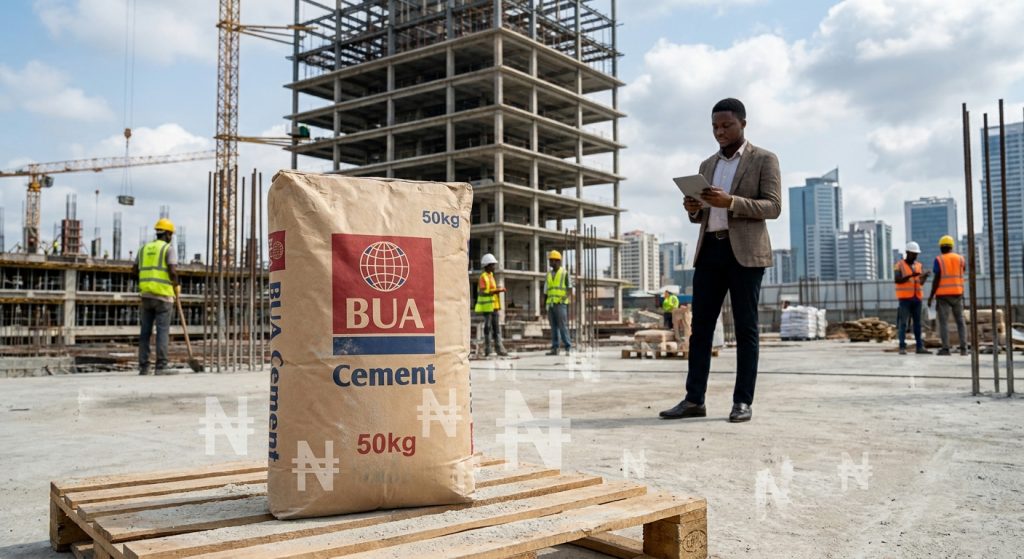
In 2026, Nigerian cement prices remain elevated, with a 50kg bag of BUA Cement typically costing between ₦10,000 and ₦14,000. While BUA Cement has not announced a specific price drop, the company maintains that prices will decline when production and logistics costs, particularly foreign exchange stability and energy expenses, ease. Despite these high cement prices, BUA Cement reported robust financial performance in Q1 2026, with significant revenue and profit growth. This article delves into the factors influencing cement prices, BUA Cement’s strategic outlook, and the implications for various stakeholders in Nigeria’s economy.
Quick Answer
As of May 2026, BUA Cement has not announced a specific price drop. The price of a 50kg bag of BUA Cement currently ranges from ₦10,000 to ₦14,000. BUA Cement has publicly stated that prices will decrease when production and logistics costs, driven by factors like foreign exchange stability and energy costs, become more favorable.
The Enduring High Cost of Cement: BUA’s Stance in 2026
The Nigerian construction sector, and indeed the average Nigerian family planning a building project, continues to grapple with the persistently high cost of cement in 2026. As of early May this year, a 50kg bag of BUA Cement, alongside other major brands, commands a price tag ranging between ₦10,000 and ₦14,000 across various parts of the country. This reality stands in stark contrast to the public’s fervent desire for a significant reduction in prices.
BUA Cement, a key player in the industry, has consistently attributed these elevated prices to the prevailing high production and logistics costs within the Nigerian economy. Their stance remains clear: a sustainable reduction in cement prices is intrinsically linked to improvements in the macroeconomic environment. Specifically, BUA Cement has highlighted two critical factors that, if addressed, could pave the way for lower prices: greater foreign exchange stability and a significant reduction in energy expenses. Until these fundamental cost drivers ease, the company indicates that the current pricing regime is likely to persist.
Behind the Numbers: Analyzing Current Cement Prices in Naira
The current pricing of cement, particularly BUA Cement, at ₦10,000 to ₦14,000 per 50kg bag in May 2026, reflects a challenging economic landscape. To put this into perspective, back in 2026, cement prices had already soared to as high as ₦13,000 per bag, indicating a sustained upward trajectory with little respite for consumers entering 2026.
This price range is not unique to BUA Cement. Major competitors such as Dangote Cement and Lafarge Africa are operating within similar price brackets, suggesting that the underlying economic pressures affect the entire industry. This uniformity underscores a market where production costs dictate pricing across the board, rather than significant competitive price undercutting.
The impact of these high prices is profound. For the average Nigerian consumer, embarking on any construction project, no matter how small, has become an increasingly daunting financial undertaking. Housing affordability is further eroded, and the dream of homeownership becomes more distant. For larger construction projects, both private and public, these elevated costs translate into higher project budgets, potential delays, and sometimes, outright cancellation, ultimately hindering infrastructure development and economic growth.
Here’s a snapshot of the current market price ranges:
Comparison Table 1: Nigerian Cement Market Price Range (May 2026)
| Product | Price per 50kg Bag (Approximate Range) |
|---|---|
| BUA Cement | ₦10,000 – ₦14,000 |
| Dangote Cement | ₦10,000 – ₦14,000 |
| Lafarge Africa | ₦10,000 – ₦14,000 |
Why Prices Remain High: Unpacking the Drivers in 2026
The reasons behind the enduring high cost of cement in Nigeria in 2026 are multifaceted, stemming from a complex interplay of macroeconomic challenges and operational hurdles. BUA Cement’s consistent explanation points to fundamental issues that affect all manufacturers in the country.
Firstly, persistent foreign exchange instability remains a critical headache. Cement production relies heavily on imported raw materials, spare parts for machinery, and specialized additives. When the Naira weakens against major foreign currencies, the cost of these imported inputs skyrockets. Manufacturers then have no choice but to pass a significant portion of these increased costs onto the consumer. The CBN’s benchmark interest rate, currently at 26.50%, while aimed at curbing inflation and stabilizing the Naira, also impacts the cost of borrowing for businesses, indirectly contributing to higher operational costs. For more insights on how CBN monetary policy affects the Nigerian economy, you can refer to our detailed analysis.
Secondly, exorbitant energy costs continue to plague the manufacturing sector. Fuel (diesel and petrol) for generators, gas for kilns, and unreliable public electricity supply all contribute substantially to the cost of producing cement. Manufacturers often have to rely on expensive alternative power sources, driving up their overheads. The cost of transporting finished cement across the country is also heavily influenced by fuel prices, adding another layer to the final retail price.
Thirdly, broader inflationary pressures across the Nigerian economy mean that the cost of labour, local raw materials (like limestone), and other operational expenses are continuously rising. This general inflationary environment creates a ripple effect, making every stage of the production and supply chain more expensive.
Finally, logistics challenges and infrastructure deficits exacerbate the problem. Poor road networks increase transportation time and damage vehicles, leading to higher maintenance costs and delivery prices. Security concerns in some regions also add to the cost of logistics. Even with increased production capacity from companies like BUA Cement, inefficient distribution channels can prevent prices from reflecting supply improvements. These combined factors create a challenging environment where a significant price drop remains elusive without fundamental economic reforms.
BUA Cement’s Financial Strength: A Paradox Amidst High Prices
Despite the challenging economic environment and the public outcry over high cement prices, BUA Cement has demonstrated remarkable financial resilience and growth in 2026. This presents a paradox: while consumers and builders struggle with affordability, the cement giant is reporting impressive figures.
In Q1 2026, BUA Cement sustained a robust revenue growth of 22.1%, reaching an impressive ₦355 billion. Even more striking, the company’s profits for the same quarter doubled to a staggering ₦176 billion. These figures highlight the company’s ability to navigate the tough economic climate, largely by passing on increased costs to consumers and benefiting from strong demand relative to supply.
BUA Cement’s strategy for sustaining this momentum includes a sharp focus on optimizing operating costs – a crucial move in an era of high energy and FX expenses. Furthermore, the company is aggressively expanding its brand presence into new markets, both domestically and potentially regionally, to capture greater market share and diversify its revenue streams.
The implication of these strong financial outcomes is clear: while high input costs are a genuine concern for manufacturers, the prevailing high selling prices for cement are undeniably contributing significantly to these substantial profits. This dynamic underscores the complex balance between corporate profitability and consumer affordability in a high-inflation, high-cost environment.
BUA Cement’s Q1 2026 Highlights:
- Revenue up 22.1% to ₦355bn
- Profits doubled to ₦176bn
Ripple Effect: Who Feels the Pinch (and Who Benefits) from Current Cement Prices?
The current high cement prices in Nigeria, including BUA Cement, create a distinct ripple effect across various segments of the economy, disproportionately impacting some while benefiting others.
Those Feeling the Pinch:
- Consumers and Homeowners: This group bears the brunt of the high prices directly. The cost of building a new home, renovating an existing one, or undertaking any small-scale construction project has skyrocketed. This leads to delayed projects, reduced scope, or outright abandonment of building plans. The dream of homeownership becomes increasingly unattainable for many.
- Small and Medium-sized Builders/Contractors: These businesses operate on tighter margins and are highly sensitive to material costs. High cement prices erode their profitability, make it difficult to bid competitively, and can lead to project losses or even business failures.
- Real Estate Developers (Affordable Housing Segment): Developers focusing on affordable housing struggle immensely. The increased cost of cement, a primary building material, makes it nearly impossible to deliver truly affordable homes while maintaining quality and profitability. This exacerbates Nigeria’s housing deficit.
- Government Infrastructure Projects: While governments often have larger budgets, the inflated cost of cement means fewer roads, bridges, and public buildings can be constructed with the same allocated funds. This slows down national development and infrastructure growth.
- Tenants: Indirectly, tenants feel the pinch through potential rent hikes. As the cost of constructing new properties rises, landlords may increase rents to cover their higher development costs or to reflect the increased value of existing properties due to higher replacement costs. Experts had already predicted potential rent hikes back in 2026 due to soaring cement prices, which has largely materialized in 2026.
Those Who Benefit (or are insulated):
- Cement Manufacturers (e.g., BUA Cement, Dangote, Lafarge): Despite the challenges of high input costs, these companies are able to maintain significant profit margins due to the high selling prices and consistent demand. BUA Cement’s Q1 2026 financial results, with doubled profits, are a clear testament to this.
- Large-Scale Developers (Luxury/High-End): Developers catering to the luxury market are relatively more insulated. Their target clientele is less price-sensitive, allowing them to absorb higher material costs and pass them on without significantly impacting demand.
- Distributors and Major Retailers: While they face risks of reduced sales volume, those who can maintain consistent supply and manage their logistics efficiently can still achieve higher profit margins per bag sold, especially in regions with high demand and limited competition.
- Investors in Cement Companies: Shareholders of companies like BUA Cement benefit directly from the strong financial performance, seeing their investments grow through dividends and stock appreciation. As of April 24, 2026, BUA Cement’s stock closed at ₦335.00 per share, and analysts have raised price targets, indicating investor confidence despite broader market pressures. For more on investing in Nigerian stocks, explore our guide.
The current pricing structure creates a dichotomy, enriching manufacturers and investors while imposing significant financial strain on the majority of the population and the broader construction ecosystem.
BUA Cement’s Strategic Outlook: Production, Expansion, and Market Influence
BUA Cement’s strategic outlook in 2026 is characterized by a dual focus: enhancing production capacity and expanding market reach, all while navigating the challenging economic currents. The company’s impressive Q1 2026 financial performance provides a strong foundation for these ambitions.
Central to BUA Cement’s strategy is the optimization of operating costs. In an environment where foreign exchange and energy costs are volatile, efficiency gains in production and logistics become critical for maintaining profitability. This involves leveraging technology, improving plant maintenance, and potentially exploring alternative energy sources to reduce reliance on expensive fossil fuels.
Furthermore, BUA Cement is actively pursuing aggressive brand expansion into new markets. This could involve deepening its penetration in underserved regions within Nigeria or exploring opportunities in neighbouring West African countries. Such expansion would not only increase sales volume but also diversify revenue streams and potentially mitigate risks associated with over-reliance on a single market.
The company’s commitment to increased production capacity, evidenced by past investments in new lines, aims to meet the country’s growing demand for cement. While increased supply theoretically should lead to lower prices, the current macroeconomic factors largely override this effect. However, a consistent and reliable supply from BUA Cement helps to stabilize the market and prevent even sharper price spikes that could occur from severe shortages.
BUA Cement’s market influence is undeniable. As one of the top three players, its pricing decisions and production levels significantly impact the overall market dynamics. While the company has stated that price reductions depend on easing input costs, its continued profitability and strategic investments suggest a long-term commitment to growth within the Nigerian context, adapting to, rather than being overwhelmed by, the prevailing economic conditions.
The Role of Regulatory Bodies and Economic Policies
Nigerian regulatory bodies, particularly the Central Bank of Nigeria (CBN), play a crucial, albeit indirect, role in the cement pricing dynamics. While the CBN does not directly regulate cement prices, its monetary policies profoundly influence the operating environment for manufacturers like BUA Cement.
The CBN’s decision to leave the benchmark interest rate at 26.50% in 2026 is a prime example. This high interest rate environment is designed to combat inflation and stabilize the Naira. While a stronger, more stable Naira would directly benefit BUA Cement by reducing the cost of imported raw materials and spare parts, the high interest rates also increase the cost of borrowing for businesses. This can impact investment in new production lines or technology upgrades that could ultimately lead to greater efficiency and potentially lower prices. Understanding the impact of CBN interest rate hikes is crucial for businesses and consumers alike.
The Nigerian Exchange (NGX) also provides a barometer for investor sentiment. BUA Cement’s stock performance, including instances where it led market drops (falling 10% to ₦414.00 on one occasion) amidst broader market pressure, reflects the sensitivity of investors to economic policies and market conditions. Analysts’ revised price targets, from ₦149.69 back in 2026 to ₦157.04 in 2026, incorporate assumptions about revenue growth, profit margins, and discount rates, all of which are influenced by the CBN’s policies and the overall economic outlook.
Beyond monetary policy, other government interventions or lack thereof, such as efforts to improve infrastructure (roads, power supply) or provide targeted incentives for manufacturers, also have a significant impact. For instance, consistent power supply would drastically cut energy costs for cement producers, allowing them to potentially reduce prices. However, such comprehensive interventions have been slow to materialize, leaving manufacturers to bear the burden of self-generated power and poor logistics.
The Securities and Exchange Commission (SEC) ensures market integrity and transparency for publicly listed companies like BUA Cement, but its role is more about investor protection and market regulation rather than direct price control of commodities. Ultimately, a holistic approach involving fiscal and monetary policies, alongside infrastructure development, is needed to create an environment conducive to lower cement prices.
What a Price Drop Would Mean: Scenarios for Stakeholders
While BUA Cement has not announced a specific price drop, understanding the potential implications of such an event is crucial for various stakeholders. A significant reduction in cement prices would trigger a cascade of effects, largely positive for the broader economy.
For Consumers and Builders:
- Increased Affordability: The most immediate and significant impact would be improved affordability for construction projects. More Nigerians would be able to build or renovate homes, leading to a boost in individual wealth and living standards.
- Stimulated Construction Activity: Lower material costs would lead to a surge in construction projects, from individual homes to commercial buildings. This would create jobs for artisans, labourers, and other professionals in the construction value chain.
- Reduced Housing Costs: Over time, increased construction and lower input costs could contribute to a reduction in the overall cost of housing, making homeownership more accessible and potentially stabilizing or even reducing rents.
For the Construction Sector:
- Boosted Profitability: Small and medium-sized contractors, who have been squeezed by high material costs, would see their profit margins improve, leading to business expansion and greater stability.
- Faster Project Completion: With more affordable materials, projects could proceed more quickly, reducing delays and associated costs.
- Infrastructure Development: Government and private sector infrastructure projects would become more cost-effective, allowing for more ambitious and widespread development initiatives.
For BUA Cement and Other Manufacturers:
- Potential for Increased Sales Volume: While profit margins per bag might decrease, a lower price could stimulate significant demand, leading to higher overall sales volumes and potentially maintaining or even increasing total revenue.
- Market Share Dynamics: Companies that can adapt quickly to lower prices and maintain efficiency might gain market share.
- Reduced Inventory Costs: A more liquid market with higher turnover could reduce inventory holding costs.
- However, a price drop would also mean lower revenue per unit, requiring manufacturers to be even more efficient to maintain profitability. This is why BUA Cement emphasizes that any price reduction must be driven by a reduction in their own input costs, not just a voluntary decision.
For Investors:
- Mixed Impact: Investors might initially react with caution if a price drop is not accompanied by significant cost reductions, fearing lower profit margins. However, if the price drop stimulates a massive increase in demand and sales volume, and the company maintains efficiency, it could lead to sustained revenue growth and positive long-term returns.
- Stock Performance: The stock performance of cement companies would depend on the market’s perception of the sustainability of the new pricing structure and the company’s ability to maintain profitability.
Ultimately, a cement price drop, particularly if driven by improved economic fundamentals like FX stability and lower energy costs, would be a net positive for the Nigerian economy, stimulating growth, creating jobs, and improving living standards.
People Also Ask (FAQ)
Q1: Has BUA Cement officially announced a price drop in 2026?
A1: As of May 2026, BUA Cement has not made any official announcement regarding a specific price drop. The company maintains that prices will decline when production and logistics costs, particularly foreign exchange stability and energy expenses, ease.
Q2: What is the current price of a 50kg bag of BUA Cement in Nigeria (May 2026)?
A2: The current price of a 50kg bag of BUA Cement in Nigeria, as of May 2026, typically ranges between ₦10,000 and ₦14,000, depending on the location and distributor.
Q3: Why are cement prices still so high in Nigeria in 2026?
A3: Cement prices remain high due to several factors, including persistent foreign exchange instability which increases the cost of imported raw materials and spare parts, high energy costs (fuel, gas, electricity) for manufacturing and transportation, general inflationary pressures across the economy, and logistics challenges due to poor infrastructure.
Q4: How has BUA Cement performed financially despite high prices?
A4: BUA Cement reported strong financial performance in Q1 2026, with revenue growing by 22.1% to ₦355 billion and profits doubling to ₦176 billion. This indicates the company’s ability to maintain profitability by passing on increased costs and benefiting from consistent demand.
Q5: What impact do high cement prices have on the average Nigerian?
A5: High cement prices significantly increase the cost of building and renovating homes, making homeownership less affordable. It also leads to potential rent increases, delays in construction projects, and higher costs for government infrastructure development, ultimately affecting the overall economy and living standards.
Q6: What is the CBN’s role in cement pricing?
A6: The Central Bank of Nigeria (CBN) does not directly regulate cement prices. However, its monetary policies, such as setting the benchmark interest rate (currently 26.50%), influence the broader economic environment, including the cost of borrowing for manufacturers and the stability of the Naira, which in turn affects production costs for cement companies.
Q7: Is there any hope for lower cement prices in the near future?
A7: BUA Cement has stated that prices will decrease when fundamental input costs, specifically foreign exchange stability and lower energy expenses, become more favourable. Without significant improvements in these macroeconomic factors, a substantial and sustained price drop is unlikely in the immediate future.
Q8: What should I consider if I’m planning a building project in 2026?
A8: Given the high and stable cement prices, it’s crucial to meticulously budget for material costs, explore alternative building materials where appropriate, and engage with experienced professionals for realistic cost estimates. Also, factor in potential delays and cost overruns due to the prevailing economic conditions.