
This article is for informational purposes only and does not constitute financial advice. Always consult a licensed financial advisor before making investment decisions. The author has no financial interest in any film mentioned.
Quick Summary
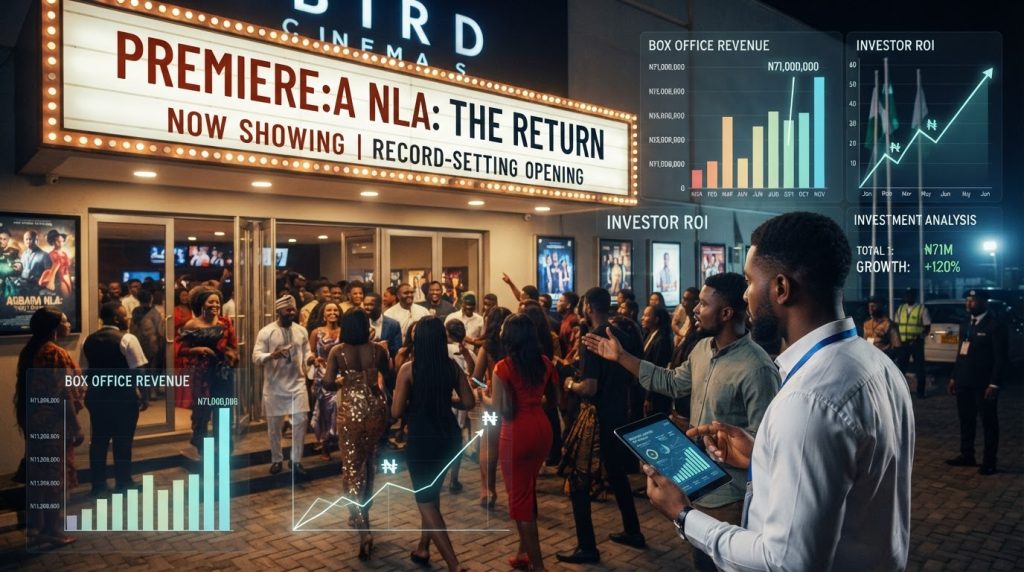
On 2 October 2026, the faith-based Nollywood remake Agbara Nla: The Return earned over ₦71 million from preview screenings alone—a record for any Nigerian film. For investors, this isn’t just box office trivia; it signals consumer spending power in entertainment, regional market potential, and the viability of faith-based content as an asset class. This article breaks down the numbers, compares the film to recent hits, and gives practical investment lessons for anyone with ₦50,000 to ₦5 million to deploy.
What This Means
The record-breaking preview gross of Agbara Nla: The Return provides a real-time case study for evaluating Nollywood investments. By analysing early demand signals like preview admissions and regional revenue concentration, investors can identify which projects have the financial discipline to break even or outperform—turning market noise into actionable insight.
Agbara Nla’s N71m Preview: What Nollywood’s New Record Teaches Investors
Key Takeaways
- Previews are a leading indicator: Strong early ticket sales signal sustained box office potential.
- Regional concentration matters: Lagos, Oyo, Abuja, and Ogun account for over 80% of preview revenue—target these markets first.
- Franchises reduce risk: Remakes and sequels leverage existing fan bases, lowering the chance of a flop.
- Use historical multipliers to estimate returns: Compare preview grosses to final box office of similar films.
- Co-production spreads financial risk: Partnering with multiple production houses reduces downside for individual investors.
Signal vs Noise
On 2 October 2026, a faith-based Nollywood remake did something no Nigerian film has done before: earn over ₦71 million from preview screenings alone. Agbara Nla: The Return ran previews from 25 September to 1 October 2026, before its official release (Punch). For Nigerian investors, this isn’t just box office trivia—it’s a signal about consumer spending power in entertainment, regional market potential, and the viability of faith-based content as an asset class.
Verified Facts
| Metric | Value |
|---|---|
| Preview gross | ₦71 million+ from 12,134 admissions (Nairametrics) |
| Records broken | Biggest single-day preview gross in West Africa, biggest first-day gross for a Nollywood title, biggest faith-based opener of all time at the West African box office, biggest single-day gross for October, and biggest preview admissions for 2026 (12,100+) (Vanguard) |
| Regional breakdown | Lagos 50.8%, Oyo 13.2%, Abuja 10.7%, Ogun 6.2%, Kwara 4.5%, Osun 3.8%, Edo 3.3%, Ondo 2.7%, Rivers 1.9%, plus 9 other states (Nairametrics) |
| Production & distribution | Produced by Mount Zion Film Productions, Sozo Films, and Circuits; distributed by Nile Entertainment (Guardian) |
| Directors | Damilola and Joshua Bamiloye, sons of the original 1993 filmmaker Mike Bamiloye (Guardian) |
Reported (Unverified)
Final gross projection: Some analysts estimate the film could reach ₦200 million+ if the multiplier from previews to total gross matches Onobiren: A Woman’s Story (₦30.1M opening → ₦138.1M final). However, this is speculation—the film is still in its first week of official release as of 04/10/2026.
Rumor
“Faith-based films always perform well” – Not true. While Agbara Nla broke records, other faith-based releases in 2025 and 2026 have flopped. The genre has high variance.
The Money Lesson
Investment principle: When evaluating any entertainment investment (film, music, live event), look for early demand signals. Pre-sales, advance ticket bookings, and social media buzz are the Nollywood equivalent of a startup’s pre-seed traction.
1. Previews Are a Leading Indicator
Previews are the closest thing Nollywood has to a “beta test” for box office performance. Agbara Nla‘s ₦71 million preview is more than double the opening weekend of Onobiren: A Woman’s Story (₦30.1 million) and nearly triple that of What About Us (₦24.6 million) (Nairametrics). For investors, this signals strong word-of-mouth potential—people who saw the preview are likely to recommend it, driving sustained box office over weeks.
2. Regional Concentration Matters
The revenue breakdown reveals a stark reality: Lagos alone accounts for 50.8% of preview revenue. Add Oyo (13.2%), Abuja (10.7%), and Ogun (6.2%), and you cover 80.9% of the total. The remaining 19.1% is spread across 14 other states, with some like Anambra and Kano contributing just 0.1% each.
Investment principle: If you’re investing in a Nollywood film, ensure your distribution deal covers Lagos, Oyo, Abuja, and Ogun as a baseline. These four states are the “must-win” markets. Expanding to Kwara, Osun, Edo, and Ondo adds incremental revenue but at diminishing returns.
3. Faith-Based Content Has a Built-In Audience
Agbara Nla is a remake of a 1993 classic by Mike Bamiloye, a pioneer of Christian filmmaking in Nigeria. The original had a cult following, especially among Pentecostal and evangelical communities. The remake leveraged that nostalgia while updating production values for modern cinemas.
Investment principle: Franchises and sequels reduce risk. A film based on an established IP (intellectual property) has a pre-existing fanbase that can be activated for previews and opening weekend. This is why Hollywood invests heavily in sequels—and Nollywood is learning the same lesson.
4. The Multiplier Effect
Compare Agbara Nla‘s preview to Onobiren‘s opening:
| Film | Opening/Preview Gross | Final Gross | Multiplier |
|---|---|---|---|
| Onobiren: A Woman’s Story (2026) | ₦30.1M | ₦138.1M | 4.6x |
| What About Us (2024) | ₦24.6M | ₦100M+ | 4.1x+ |
| Agbara Nla: The Return (2026) | ₦71M+ (preview) | TBD | TBD |
Key insight: *Agbara Nla*’s preview data alone already surpasses the total opening of its nearest competitors, setting a new benchmark for Nollywood’s financial potential.
If Agbara Nla achieves a similar multiplier (4x–5x), its final gross could be ₦284M–₦355M. However, previews are not exactly the same as opening weekend—they’re often more concentrated among die-hard fans. A more conservative estimate is 3x, giving ₦213M.
Investment principle: Use historical multipliers to estimate potential returns, but adjust for genre, seasonality, and competition. Faith-based films often have longer legs because churches promote them for weeks after release.
5. Production Structure Spreads Risk
Agbara Nla was produced by three companies (Mount Zion, Sozo Films, Circuits) and distributed by Nile Entertainment. This collaborative model spreads financial risk and pools marketing muscle. For individual investors, this is a template: co-investing with multiple partners reduces your downside if the film underperforms.
Investment principle: Never be the sole financier of a film unless you have deep pockets and a high risk tolerance. Look for opportunities to invest alongside established production houses that have a track record. Before committing, verify that any fund or production company is registered with the Securities and Exchange Commission (SEC)—see our guide on safe investment apps and SEC verification in Nigeria.
How a Nigerian with ₦50k–₦5m Applies This
₦50,000 – ₦500,000: The Micro-Investor
You cannot produce a film with this amount, but you can:
- Buy cinema tickets strategically: Use preview data to decide which films to watch. If a film has strong preview numbers, it’s likely worth your ₦3,000–₦5,000 ticket. Avoid films with weak early signals.
- Invest in film-related stocks: If you have a stock trading account (e.g., with Bamboo, Chaka, or a licensed stockbroker), look for companies that own cinema chains (like Silverbird Group, though not publicly listed) or media companies. As of 2026, there are no pure-play Nollywood stocks on the Nigerian Exchange (NGX), but you can invest in broadcasters like MultiChoice Nigeria (if listed) or film production companies that are registered as businesses. For a broader perspective on stock investing, see our breakdown of the Dangote IPO hype.
- Crowdfunding: Some Nollywood projects use crowdfunding platforms like Kickstarter or local equivalents. With ₦50,000, you can be a “micro-producer” and get a share of profits or credits. Always verify the platform’s SEC registration and the producer’s track record.
₦500,000 – ₦5,000,000: The Angel Investor
With this range, you can:
- Co-produce a short film or web series: Partner with a production company like Mount Zion or Sozo Films for a faith-based project. Your ₦500,000 could cover post-production or marketing costs in exchange for a percentage of net profits.
- Invest in a film fund: Some asset management companies offer entertainment funds. For example, the Nollywood Fund (if registered with SEC) pools money from multiple investors to finance multiple films, diversifying risk. Minimum investment is typically ₦1 million–₦5 million. Always check the fund’s tax implications on dividends and capital gains.
- Buy distribution rights for a specific region: If you have ₦2 million, you could acquire the distribution rights for a film in Oyo or Ogun state, where Agbara Nla showed strong demand. You’d then share in the box office revenue from that region.
Important: Before investing, verify that the fund or production company is registered with the Securities and Exchange Commission (SEC). Also, ensure you have a BVN for identity verification and a NIN for tax purposes. The CBN requires all financial transactions above ₦10 million to be routed through banks, but smaller investments can use fintechs like Paga or Paystack for ticket sales.
Risk warning: Only about 20% of Nollywood films break even in cinemas. Most rely on streaming deals and TV rights. Diversify across multiple projects and never invest money you cannot afford to lose.
What to Watch Next
- Track *Agbara Nla*’s box office – Follow Nairametrics and Vanguard for weekly updates. If the film crosses ₦200 million, it confirms the preview data as a reliable indicator.
- Research film investment funds – Look for SEC-registered funds like Nollywood Investment Trust or Creative Capital Fund. Verify their registration number on the SEC website.
- Open a stock trading account – If you don’t have one, use a licensed broker like Meristem, CSL Stockbrokers, or a fintech like Bamboo. This allows you to invest in media companies when they list.
- Attend a film investment seminar – Organizations like the Nigerian Film Corporation and FilmOne occasionally host investor workshops. Check their websites for 2026 events.
- Diversify – Don’t put all your money into one film. Even Agbara Nla‘s producers spread risk across three companies. As an individual, invest in a fund that backs multiple films. Monitor CBN interest rate changes that could affect financing costs for film projects.
Comparison Table: How Agbara Nla Compares With Top Nollywood Openers
| Feature | Agbara Nla: The Return (2026) | Onobiren: A Woman’s Story (2026) | What About Us (2024) |
|---|---|---|---|
| Genre | Faith-based / Action | Drama | Drama / Romance |
| Preview Gross | ₦71M+ | N/A | N/A |
| Opening Weekend Gross | N/A (ongoing) | ₦30.1M | ₦24.6M |
| Final Gross | TBD | ₦138.1M | ₦100M+ |
| Admissions (Previews) | 12,134 | N/A | N/A |
| Run Duration | Ongoing | 7 weeks | Unknown |
| Regional Spread | 18 states | Unknown | Unknown |
| Distribution Partner | Nile Entertainment | Unknown | Unknown |
| Production Partners | Mount Zion, Sozo, Circuits | Unknown | Unknown |
Sources: Nairametrics, Vanguard, Punch
Frequently Asked Questions
How much did Agbara Nla: The Return make in previews?
Over ₦71 million from 12,134 admissions between 25 September and 1 October 2026 (Punch).
Is investing in Nollywood profitable?
It can be, but it’s high-risk. Agbara Nla is an outlier. Most Nollywood films do not recoup their budgets. According to industry reports, only about 20% of Nollywood films break even in cinemas. The rest rely on streaming deals and TV rights.
What are the risks of investing in a film?
Major risks include: poor box office performance, piracy (which can reduce revenue by 30–50%), delayed distribution, and disputes over profit sharing. Always have a written contract and verify the producer’s track record.
Can I invest with ₦50,000?
Yes, through crowdfunding or by buying shares in a film investment club. However, most professional film funds require a minimum of ₦1 million. With ₦50,000, you’re better off buying cinema tickets to support the industry or investing in a diversified portfolio of entertainment stocks.
How do I verify a film investment opportunity?
Check if the fund or company is registered with the SEC. You can search the SEC’s database of registered capital market operators. Also, ask for the film’s budget, distribution plan, and past performance of similar projects. Never invest based on hype alone. For more on verifying platforms, see our guide to safe investment apps.
What role does the CBN play in film financing?
The CBN regulates banks that lend to film producers. In 2025, the CBN launched the Creative Industry Financing Initiative (CIFI) to provide low-interest loans to filmmakers. However, as of 2026, uptake has been slow due to stringent collateral requirements.
This article was updated on 4 October 2026. Box office figures are preliminary and may change as the film continues its run.