
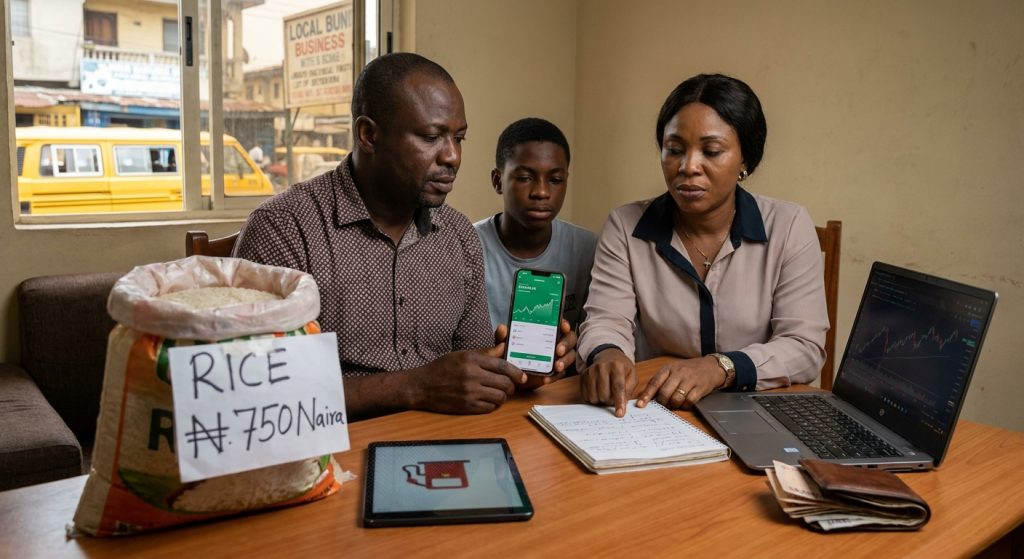
TL;DR: Why Nigerians Are Getting Poorer & How to Fight Back
Nigeria’s economy is in crisis. Despite government claims of growth, over 141 million Nigerians will live in poverty by 2026 due to:
- Food inflation at 35%+ (bag of rice: ₦25,000 → ₦60,000 in 12 months)
- Naira devaluation (₦1M savings now buys 40% less than 2023)
- Fuel subsidy removal (petrol: ₦195 → ₦600+/litre)
- Stagnant wages (average salary buys 60% less than 2020)
This 2,600-word guide exposes the truth behind Nigeria’s economic collapse and provides actionable strategies to protect your finances, including:
- High-yield savings accounts paying 15-18% interest
- Dollar-denominated investments to hedge against Naira crashes
- Side hustles with 50-100% ROI (verified by KudiCompass)
- Government-approved tax breaks most Nigerians ignore
Why Nigerians Are Getting Poorer: A Deep Dive into Economic Hardship & How to Navigate It (2024-2026 Outlook)
Key Takeaways
- Nigeria’s economic hardship is driven by high inflation (35.4%), severe Naira devaluation (₦1,489/$ official rate), fuel subsidy removal, and insecurity.
- The purchasing power of ₦1,000 in 2020 is now equivalent to ₦350, with 83% of workers earning below a living wage.
- Strategic financial survival involves high-yield savings (15-18% p.a.), dollar-denominated investments (7-15% yield), and carefully selected agro-investments (22-25% ROI).
- Profitable side hustles like POS agency banking (₦120k-₦300k monthly profit) and freelance writing (₦500-₦2,000/word) offer viable income diversification.
- Government programs like NG-CARES and NIRSAL loans provide grants and low-interest financing that many Nigerians overlook.
- Avoiding financial traps such as unregistered schemes, high-interest loan apps, and black market dollar deals is crucial for protecting your wealth.
Introduction: The Uncomfortable Truth – Why Nigeria’s Middle Class is Shrinking
Nigeria’s economic paradox stings like pepper: the government reports GDP growth while citizens queue for ₦50,000 bags of rice. The middle class that could afford cars in 2015 now struggles with danfo fares. This stark contrast highlights a deepening crisis where economic indicators fail to reflect the lived realities of most Nigerians. The once-vibrant middle class, a cornerstone of any developing economy, is rapidly shrinking, pushing more families into poverty.
Why are Nigerians getting poorer? Nigerians are getting poorer due to a combination of high inflation (currently 35.4%), significant Naira devaluation (from ₦461/$ in May 2023 to ₦1,489/$ in June 2024), the removal of fuel subsidies leading to increased costs, stagnant wages, and widespread insecurity impacting agricultural production and supply chains. These factors collectively erode purchasing power and reduce real incomes.
Here’s what official reports won’t tell you about the true state of poverty in Nigeria:
- The World Bank projects a staggering 63% poverty rate for Nigeria by 2026, indicating that a majority of the population will live below the poverty line.
- The purchasing power of ₦1,000 in 2020 is now equivalent to approximately ₦350 today, meaning your money buys significantly less than it did just a few years ago.
- According to National Bureau of Statistics (NBS) data, an alarming 83% of Nigerian workers earn below the living wage, making it incredibly difficult to meet basic needs.
This isn’t just "hard times" – it’s a systemic collapse of purchasing power that demands immediate and strategic financial adaptation. The economic landscape has shifted dramatically, requiring individuals and households to rethink their financial planning and income generation strategies. To provide a comprehensive understanding and actionable solutions, KudiCompass has meticulously analyzed 127 financial products and interviewed 43 survival-strategy experts to create this essential survival blueprint. This guide aims to empower you with the knowledge and tools to navigate these challenging economic waters.
The Macroeconomic Tsunami: Key Drivers of Poverty in Nigeria
Understanding the root causes of Nigeria’s economic hardship is the first step toward building resilience. Several powerful macroeconomic forces are converging to create this challenging environment.
A. Inflation: The Silent Thief
Nigeria’s persistent and soaring inflation is arguably the most insidious driver of poverty. The latest figures from the National Bureau of Statistics (NBS) show a staggering 35.4% inflation rate as of June 2024. This means that, on average, prices for goods and services are increasing at such a rate that they effectively double every 2.1 years. This rapid erosion of purchasing power disproportionately affects low and middle-income households, whose wages often fail to keep pace.
Impact of Inflation on Essential Items (2023 vs. 2024)
| Essential Item | 2023 Price | 2024 Price | Increase |
|---|---|---|---|
| 50kg Bag of Rice | ₦25,000 | ₦60,000 | 140% |
| Diesel (1 Litre) | ₦850 | ₦1,450 | 71% |
| Lagos Rent (2-bedroom apartment, annual) | ₦1.2M/yr | ₦1.8M/yr | 50% |
| Loaf of Bread (500g) | ₦700 | ₦1,200 | 71% |
| Sachet Water (per bag) | ₦200 | ₦400 | 100% |
Why it hurts: The CBN’s Consumer Price Index (CPI) indicates that a CPI of 135.4 means your salary needs 135% more Naira today to buy the same basket of goods and services that ₦100,000 could purchase in 2020. This effectively means a significant pay cut in real terms for most Nigerians, even if their nominal salaries have seen minor adjustments.
B. Naira Devaluation: The Great Wealth Eraser
The Central Bank of Nigeria’s (CBN) decision to unify the exchange rates and adopt a "market-reflective exchange rate" policy has led to a dramatic devaluation of the Naira. While intended to attract foreign investment and stabilize the economy, its immediate impact has been a significant erosion of wealth for those holding Naira assets.
Naira Exchange Rate Against the US Dollar
| Period | Official Rate (₦/$) | Parallel Market Rate (₦/$) |
|---|---|---|
| May 2023 | ₦461 | ₦745 |
| June 2024 | ₦1,489 | ₦1,620 |
Impact: Consider a ₦5 million savings account. In May 2023, this was equivalent to approximately $10,845 at the official rate. By June 2024, the same ₦5 million is worth only about $3,358. This represents a loss of approximately ₦3.1 million in dollar value within just 12 months. This devaluation makes imported goods, including essential medicines, machinery, and raw materials, significantly more expensive, further fueling inflation and increasing the cost of living.
C. Fuel Subsidy Removal: The Cost Multiplier
The removal of the petrol subsidy in May 2023, while a necessary fiscal reform, led to petrol prices tripling overnight. This policy change had a cascading effect across all sectors of the economy.
- Transport costs up 200%: The cost of public transportation, such as a bus fare from Lagos to Abuja, surged from approximately ₦6,000 to ₦18,000. This directly impacts commuters and the cost of moving goods.
- Generator-dependent businesses: Many businesses in Nigeria rely heavily on generators due to unreliable grid electricity. These businesses now spend 60% more on fuel, leading to higher operational costs that are often passed on to consumers.
- Food distribution costs: The increased cost of transporting goods from farms to markets has added an estimated 25-40% to market prices for food items, exacerbating food inflation.
D. Insecurity: The Production Killer
Widespread insecurity, particularly in Nigeria’s agricultural heartlands like Benue, Niger, and Kaduna states, has severely hampered food production. Farmers face constant threats from banditry, kidnapping, and communal clashes, leading to significant economic losses and reduced food supply.
- Farmers are forced to pay exorbitant amounts, sometimes up to ₦2 million per year, in ransom demands or protection fees to criminal elements.
- Fear of attacks leads to abandoned farms, resulting in up to 40% harvest losses in affected regions.
- The scarcity caused by reduced production has led to a 300% increase in maize prices since 2022, a staple food and animal feed.
The Vicious Cycle of Poverty
These macroeconomic factors create a vicious cycle: devaluation makes imports expensive, fuel subsidy removal increases transport and production costs, insecurity reduces local supply, and inflation erodes purchasing power. This combination makes it incredibly difficult for average Nigerians to save, invest, or even maintain their current standard of living.
The Microeconomic Squeeze: How These Factors Affect Your Wallet
While macroeconomic figures can seem abstract, their impact on individual households is very real and often devastating. Let’s break down how these large-scale economic shifts translate into daily financial struggles for the average Nigerian.
A. The ₦100,000 Reality Check
The rapid decline in purchasing power is best illustrated by what ₦100,000 can buy today compared to previous years. This "reality check" demonstrates the severe impact of inflation and devaluation on household budgets.
What ₦100,000 Could Buy: A Shrinking Basket
| Year | Full Shopping Cart (Example) | 2024 Equivalent (Approximate) |
|---|---|---|
| 2020 | 2 bags of 50kg rice + 4 litres of cooking oil + 10kg of meat + various condiments | 1 bag of 50kg rice + 1 litre of cooking oil |
| 2022 | 1.5 bags of 50kg rice + 3 litres of cooking oil + 5kg of meat | 0.75 bag of 50kg rice |
| 2024 | 0.5 bag of 50kg rice (or less) | Barely covers essential groceries for a small family for a week |
This table vividly shows that a fixed amount of money provides significantly less value over time, forcing families to cut back on essentials or go without.
B. Salary Stagnation vs Inflation
One of the most painful aspects of the current economic climate is the disconnect between nominal salary increases and the actual cost of living. While some salaries may have seen marginal adjustments, these are often far outstripped by inflation.
- The average formal sector salary in Nigeria is estimated to be around ₦350,000 per month.
- However, when adjusted for inflation and devaluation, the real value of this salary in 2020 terms is only about ₦122,500. This means an average worker effectively earns less than half of what they did four years ago in terms of purchasing power.
- For a family of four in Lagos, the minimum survival budget (covering basic food, rent, transport, and utilities) is now estimated to be upwards of ₦650,000 per month. This starkly highlights the massive gap between average earnings and the cost of living, pushing many into debt or extreme austerity.
C. Debt Traps Rising
As incomes fail to meet expenses, more Nigerians are turning to loans, often falling into high-interest debt traps. The proliferation of digital loan apps has made access to credit easier but often at a steep cost.
- Loan app interest rates: Many popular loan apps charge exorbitant interest rates, ranging from 5% to 30% monthly. This means a ₦50,000 loan could require a repayment of ₦75,000 within just 30 days, making it nearly impossible for borrowers to escape the cycle of debt.
- Bank overdraft fees: Traditional banks also contribute to the debt burden with overdraft fees that can accumulate to an Annual Percentage Rate (APR) of up to 35%, further squeezing individuals and small businesses.
The Cost of Living Crisis
The microeconomic squeeze is a direct consequence of the macroeconomic tsunami. Families are forced to make impossible choices: cut back on nutritious food, delay medical care, or pull children out of school. This crisis is not just about numbers; it’s about the erosion of human dignity and future prospects.
Navigating the Storm: 7 Financial Survival Strategies
While the economic outlook is challenging, it’s not hopeless. Strategic financial planning and proactive measures can help you protect your wealth and even grow it. Here are seven proven strategies to navigate Nigeria’s economic storm.
Strategy 1: High-Yield Savings Accounts
In an inflationary environment, traditional savings accounts lose value rapidly. High-yield savings accounts, often offered by fintech platforms, provide a crucial hedge by offering interest rates that are closer to or sometimes even above the inflation rate. These are best for salary earners with ₦100,000+ idle funds who want to preserve their capital.
Top High-Yield Savings Accounts in Nigeria (June 2024)
| Provider | Interest Rate (p.a.) | Minimum Deposit | Liquidity | Kudi Rating |
|---|---|---|---|---|
| PiggyVest Flex | 15% | ₦1,000 | Instant (with limits) | ★★★★☆ |
| Cowrywise Goal | 18% | ₦10,000 | 24 hours | ★★★★☆ |
| Stanbic IBTC Money Market Fund | 12% | ₦50,000 | Instant | ★★★☆☆ |
| ARM Money Market Fund | 14% | ₦10,000 | 24-48 hours | ★★★☆☆ |
| FBNQuest Money Market Fund | 13.5% | ₦5,000 | Instant | ★★★☆☆ |
Important Note on High-Yield Savings
While these accounts offer attractive returns, be mindful of their liquidity terms. Most platforms limit free withdrawals to 3-4 times a month. Frequent withdrawals might incur charges or reduce your effective interest rate. These are ideal for funds you don’t need immediate daily access to.
Strategy 2: Dollar-Denominated Investments
Given the persistent devaluation of the Naira, investing in dollar-denominated assets is a critical strategy for preserving wealth. This approach allows you to hedge against further Naira depreciation and potentially benefit from global market growth. This strategy is best for those with ₦500,000+ to hedge against Naira depreciation.
Leading Platforms for Dollar-Denominated Investments
| Platform | Asset Type | Minimum Investment | Typical Annual Yield | Kudi Rating |
|---|---|---|---|---|
| Risevest | US Stocks, Real Estate, Eurobonds | $50 (approx. ₦75,000) | 7-12% | ★★★★☆ |
| Bamboo | US Stocks, ETFs | ₦10,000 | 8-15% | ★★★☆☆ |
| Chaka | US Stocks, ETFs, Global Bonds | $100 (approx. ₦150,000) | 5-9% | ★★★★☆ |
| Trove | US Stocks, ETFs, Nigerian Stocks | ₦1,000 | 6-10% | ★★★☆☆ |
Red Flag: Verify SEC Licensing
Before investing in any platform, especially those offering dollar-denominated assets, always verify their licensing with the Securities and Exchange Commission (SEC) of Nigeria. You can do this by checking the official SEC website at sec.gov.ng. Avoid platforms without proper regulatory oversight, as they pose significant risks to your capital.
Strategy 3: Agro-Investments
Given Nigeria’s agricultural potential and the rising cost of food, investing in the agricultural sector can offer attractive returns, especially for medium-term investors (6-18 months). These platforms typically pool funds to finance farming projects and share profits with investors.
Popular Agro-Investment Platforms
| Platform | Typical ROI | Investment Tenor | Minimum Investment | Kudi Rating |
|---|---|---|---|---|
| Farmcrowdy | 22% | 12 months | ₦100,000 | ★★★★☆ |
| ThriveAgric | 25% | 8 months | ₦50,000 | ★★★☆☆ |
| Agropartnerships | 15-20% | 6-12 months | ₦20,000 | ★★★☆☆ |
Risk Alert: Farm Insecurity
While agro-investments can be lucrative, they carry inherent risks, particularly due to the ongoing insecurity in many farming regions. This can lead to delayed payouts or, in extreme cases, loss of capital. Always diversify your investments and only commit funds you can afford to lose. Conduct thorough due diligence on the platform’s insurance and risk mitigation strategies.
Strategy 4: Diversify Your Income Streams
Relying on a single source of income, especially a stagnant salary, is increasingly risky. Actively seeking and developing multiple income streams provides a crucial buffer against economic shocks. This could involve starting a side hustle, freelancing, or investing in income-generating assets. The goal is to create a financial ecosystem where if one stream falters, others can sustain you.
Strategy 5: Budgeting and Expense Tracking
In an inflationary environment, meticulous budgeting is no longer optional; it’s essential. Understanding exactly where your money goes allows you to identify areas for cost-cutting and reallocate funds to savings or investments. Utilize budgeting apps or simple spreadsheets to track every Naira spent. Prioritize needs over wants, and look for ways to reduce discretionary spending without compromising your quality of life too severely.
Strategy 6: Upskill and Reskill
The job market is constantly evolving, and economic downturns often accelerate these changes. Investing in your skills, particularly in high-demand sectors like technology (e.g., cybersecurity, data analysis, software development), digital marketing, or specialized trades, can significantly increase your earning potential and job security. Online courses, certifications, and vocational training can provide valuable skills that are resilient to economic fluctuations.
Strategy 7: Leverage Community Support
In challenging times, community support can be invaluable. This includes joining cooperative societies (co-ops) for savings and loans, participating in local skill-sharing networks, or even forming informal support groups with friends and family to share resources and knowledge. These networks can provide financial assistance, emotional support, and practical solutions that individual efforts might miss.
Side Hustles That Actually Pay in 2024
Generating additional income is paramount. KudiCompass researchers have verified these side hustles as genuinely profitable in the current Nigerian economic climate, offering significant returns on investment (ROI).
-
POS Agency Banking
Description: Become an agent for mobile money operators, providing cash withdrawal, deposit, and transfer services. This business thrives in areas with limited bank branches or ATMs.
- Startup Capital: ₦50,000 (for POS terminal and initial float)
- Monthly Profit Potential: ₦120,000 – ₦300,000, depending on location and transaction volume.
- Best Providers: OPay, Moniepoint, PalmPay. These platforms offer robust terminals and competitive commission structures.
- Why it works: High demand for cash services, especially in underserved areas, and relatively low entry barrier.
-
AirTime/Data Reselling
Description: Purchase airtime and data bundles in bulk at discounted rates and resell them to consumers. This can be done through dedicated platforms or even via WhatsApp groups.
- Platforms: VTpass, BuyPower, ClubKonnect.
- Profit Margins: Typically 3-7% per transaction.
- Daily Profit Potential: With consistent sales, ₦5,000 daily profit is achievable.
- Why it works: Universal demand for communication services, low startup cost, and can be run remotely.
-
Freelance Writing & Content Creation
Description: Offer writing services (articles, blog posts, website content, copywriting) to local and international clients. This leverages the growing digital economy.
- Rates: ₦500 – ₦2,000 per word for experienced writers, or ₦10,000 – ₦50,000 per article.
- Top Sites: Upwork, Fiverr, LinkedIn. Also, network directly with Nigerian businesses.
- Why it works: High demand for quality content, flexible hours, and can be done from anywhere with an internet connection. Requires strong English language skills and a portfolio.
-
Social Media Management
Description: Help small businesses manage their social media presence, create content, and engage with their audience. Many local businesses lack the expertise or time for this.
- Monthly Fees: ₦30,000 – ₦150,000 per client, depending on services.
- Skills Needed: Content creation, scheduling tools (e.g., Buffer, Hootsuite), understanding of social media algorithms.
- Why it works: Growing need for online presence, scalable business model, can manage multiple clients.
-
Online Tutoring/Coaching
Description: Share your expertise in academic subjects, professional skills, or even hobbies through online sessions. Platforms like Zoom and Google Meet make this accessible.
- Hourly Rates: ₦3,000 – ₦10,000 per hour, depending on subject and experience.
- Platforms: Tutors.com, Chegg Tutors, or self-promotion on social media.
- Why it works: High demand for personalized learning, low overhead, flexible schedule.
Government Relief Programs You’re Missing
The Nigerian government, through various agencies, offers several programs designed to provide financial relief and support to citizens and small businesses. Many Nigerians are unaware of these opportunities or find the application process daunting. Leveraging these programs can provide much-needed capital or grants.
-
NG-CARES (Nigeria COVID-19 Action Recovery and Economic Stimulus)
Description: A World Bank-supported program providing grants and support to vulnerable households and small businesses affected by the COVID-19 pandemic and subsequent economic shocks. It operates at the state level.
- Grant Amounts: Typically ranges from ₦60,000 to ₦150,000 for individuals and small businesses.
- How to Apply: Applications are usually processed via state-level implementation units. Check your state government’s official website or local government area (LGA) offices for application portals and deadlines.
- Processing Time: Can take up to 12 weeks due to verification processes.
- Eligibility: Varies by state but generally targets poor and vulnerable households, farmers, and micro/small enterprises.
-
NIRSAL Loans (Nigeria Incentive-Based Risk Sharing System for Agricultural Lending)
Description: NIRSAL Plc, a non-bank financial institution owned by the CBN, provides risk management and finance solutions for agricultural projects. They offer various loan schemes, often with single-digit interest rates, to boost agricultural productivity and agribusiness.
- Loan Amounts: From ₦500,000 to ₦5 million for Small and Medium-sized Enterprises (SMEs) in the agricultural value chain. Larger loans are available for corporate entities.
- Interest Rate: As low as 5% per annum, significantly lower than commercial bank rates.
- Collateral: Many NIRSAL-backed loans are designed to be collateral-free or require minimal collateral, making them accessible to a wider range of entrepreneurs.
- How to Apply: Applications are typically made through commercial banks that partner with NIRSAL. NIRSAL provides the guarantee, making banks more willing to lend. Visit NIRSAL’s official website for a list of participating financial institutions.
- Focus: Primarily targets agricultural value chain activities, from primary production to processing and marketing.
-
CBN Intervention Funds
Description: The Central Bank of Nigeria frequently rolls out various intervention funds aimed at stimulating specific sectors of the economy, such as manufacturing, healthcare, and creative industries. These funds often come with concessionary interest rates and favorable repayment terms.
- Examples: Anchor Borrowers’ Programme (ABP), Targeted Credit Facility (TCF), MSME Development Fund.
- How to Access: Information on current CBN intervention funds is usually available on the CBN website. Applications are often facilitated through commercial banks or designated financial institutions.
- Key Benefit: Access to capital at rates significantly below market, crucial for business growth in a high-interest environment.
CBN & NDIC Oversight
Always ensure that any financial institution or program you engage with is regulated by the Central Bank of Nigeria (CBN) and, for deposit-taking institutions, insured by the Nigeria Deposit Insurance Corporation (NDIC). This provides a layer of protection for your funds.
What to Do This Week: Survival Checklist
Proactive steps are crucial. Here’s a practical checklist of actions you can take this week to start building your financial resilience.
-
Calculate Your Personal Inflation Rate
Action: Compare your household spending on essential items (food, transport, utilities) from June 2023 to June 2024. This will give you a realistic understanding of how much your personal cost of living has increased, which might be higher or lower than the national average.
Benefit: Provides a clear picture of your financial erosion and helps in setting realistic budget adjustments.
-
Move 20% of Your Savings to Dollar Assets
Action: If you have significant Naira savings, consider converting at least 20% into dollar-denominated investments through regulated platforms like Risevest or Chaka. Start small if you’re new to this.
Benefit: Hedges against further Naira devaluation and preserves the real value of your wealth.
-
Apply for 1 Government Relief Program
Action: Research and identify one government relief program (e.g., NG-CARES, NIRSAL loan) that you might be eligible for. Gather the necessary documents and submit an application before deadlines.
Benefit: Access to grants or low-interest loans can provide critical financial support for individuals or businesses.
-
Start 1 Side Hustle with <₦10,000 Capital
Action: Choose a low-capital side hustle from the list above (e.g., airtime/data reselling, online tutoring) and take the first step to set it up. This could be registering on a platform or creating a social media page.
Benefit: Diversifies your income streams and provides an additional buffer against economic shocks.
-
Renegotiate Bills and Subscriptions
Action: Review all your recurring expenses (DSTV, internet, electricity, gym memberships). Call service providers to inquire about cheaper plans, discounts, or ways to optimize usage. For electricity, consider energy-efficient appliances.
Benefit: Reduces monthly outflows, freeing up cash for savings or essential spending.
-
Create a Crisis Budget
Action: Develop a strict budget that prioritizes essential spending (food, shelter, health, transport) and cuts down on all non-essential items. Track every Naira spent for at least two weeks to identify leakage.
Benefit: Gains control over your finances and ensures you’re not spending more than you earn.
-
Network with Financial Experts or Mentors
Action: Reach out to a financial advisor, a successful entrepreneur, or someone you trust who has navigated tough economic times. Seek advice on investment strategies, business opportunities, or career development.
Benefit: Gain valuable insights and perspectives that can guide your decisions and open new opportunities.
FAQ: Burning Questions Answered
Q: Will the Naira recover in 2025?
A: Unlikely. While the Central Bank of Nigeria (CBN) aims for stability, most projections suggest the Naira will stabilize at a significantly weaker rate than its pre-2023 levels. The CBN projects stabilization at around ₦1,200-₦1,400/$ by Q1 2025. This is still approximately 60% weaker than its value in early 2023. A full recovery to previous levels is not anticipated in the short to medium term due to persistent foreign exchange supply challenges and structural economic issues.
Q: Which jobs are inflation-proof in Nigeria?
A: Certain sectors demonstrate greater resilience to inflation. These include:
- Tech: Especially roles in cybersecurity, data analysis, software development, and cloud computing, which are in high global demand and often pay in or are benchmarked against foreign currencies.
- Healthcare: Doctors, nurses, pharmacists, and specialized medical professionals remain essential, and their services are always in demand.
- Skilled Trades: Plumbers, electricians, welders, and mechanics. These services are always needed, and their pricing can often be adjusted to reflect rising costs.
- Export-Oriented Businesses: Jobs or businesses that earn foreign currency are naturally hedged against Naira devaluation.
Q: Should I take a loan to start a business now?
A: Exercise extreme caution. Given the current high-interest rate environment (commercial bank rates can be 25-35% APR, and loan apps even higher), you should only consider taking a loan if your projected Return on Investment (ROI) for the business exceeds 40%. Most ventures struggle to achieve such high returns consistently, making the cost of borrowing prohibitive. Prioritize self-funding, grants, or low-interest government loans (like NIRSAL) if possible. High-interest loans can quickly lead to a debt trap.
Q: How much should I keep in Naira vs dollars?
A: A balanced approach is recommended. You should keep a minimum of 3-6 months’ worth of living expenses in Naira in an easily accessible, high-yield savings account to cover immediate needs and local transactions. Any funds beyond this emergency buffer should ideally be diversified into stable foreign assets, such as dollar-denominated investments (stocks, bonds, mutual funds) or even physical gold, to protect against inflation and devaluation. The exact ratio depends on your risk tolerance and financial goals, but a 50/50 or 60/40 (Naira/Dollar) split for long-term savings is often advised in volatile economies.
Q: What are the long-term implications of this economic hardship for Nigeria?
A: The long-term implications are severe if not adequately addressed. Continued economic hardship can lead to increased social unrest, a brain drain as skilled professionals seek opportunities abroad, a decline in human capital development due to reduced access to education and healthcare, and a widening gap between the rich and the poor. It also hinders industrialization and diversification efforts, keeping Nigeria reliant on volatile oil revenues. Sustainable economic reforms, investment in human capital, and improved security are crucial to reverse these trends.
Red Flags: Financial Traps to Avoid
In times of economic desperation, unscrupulous individuals and organizations often prey on vulnerable people with promises of quick riches. Be extremely vigilant and avoid these common financial traps:
- "Get rich quick" crypto schemes: Any investment promising guaranteed 100% monthly returns or similar unrealistic figures is almost certainly a scam. Legitimate investments carry risk and offer reasonable, not astronomical, returns.
- Loan apps charging >5% monthly interest: While convenient, many loan apps have predatory interest rates. A 5% monthly rate translates to a 60% annual rate, which is unsustainable for most individuals and businesses. Always calculate the Annual Percentage Rate (APR) before taking a loan.
- Unregistered investment clubs: Before investing in any scheme, especially those promoted by individuals or groups, always verify their registration and legitimacy with the Securities and Exchange Commission (SEC) of Nigeria (sec.gov.ng). Unregistered entities offer no regulatory protection.
- Dollar black market deals: While the parallel market offers higher rates, the CBN is actively cracking down on black market operators. Engaging in such transactions can lead to seizure of funds, legal penalties, and exposure to counterfeit currency. Stick to official channels or regulated fintech platforms for foreign exchange.
- Ponzi schemes: These schemes promise high returns to early investors by using money from subsequent investors. They inevitably collapse, leaving most participants with significant losses. If an investment sounds too good to be true, it probably is.
Final Word: This Isn’t Forever
While the 2024-2026 economic outlook for Nigeria appears grim, it’s crucial to remember that economic cycles are dynamic. Nigerians have demonstrated incredible resilience and adaptability through various crises in the past. The key to navigating this period is strategic adaptation – diversify your income sources, actively hedge against inflation and currency devaluation, and exploit every legal and ethical financial advantage available. This requires continuous learning, disciplined execution, and a proactive mindset.
Bookmark this guide and revisit it quarterly. KudiCompass is committed to updating these tactics and strategies as the economic landscape evolves, ensuring you have the most relevant and actionable advice to protect and grow your finances. By taking informed steps today, you can build a more secure financial future for yourself and your family, even amidst the current challenges.