
Quick Summary
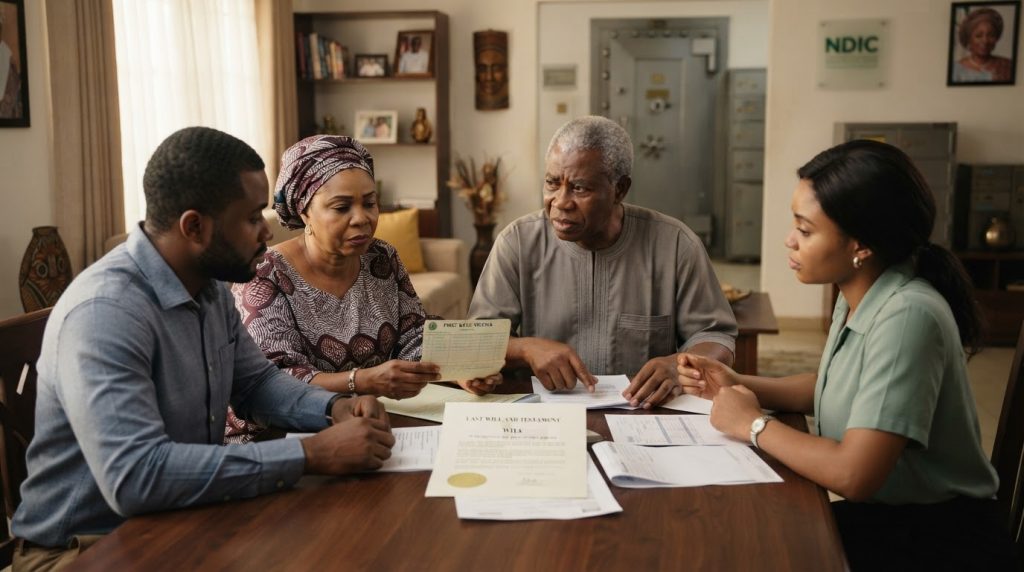
Over ₦71.28 billion in unclaimed bank funds sits in Nigeria’s financial system, locked in accounts of deceased or forgotten depositors. Despite CBN and NDIC improvements, eight in ten Nigerians have no will linking their savings to heirs. Without a will, families must navigate a costly, lengthy probate process to reclaim money — and many never do. The solution is simple: draft a will and inform your family.
Quick Answer
Nigeria’s unclaimed bank funds crisis stems from a legal gap: the next-of-kin system does not grant inheritance rights. To access a loved one’s account after death, you need either a proved will (probate) or Letters of Administration from the High Court. The CBN’s Unclaimed Balances Trust Fund holds money from accounts inactive for 10+ years, but rightful owners can reclaim indefinitely — provided they know the account exists and can produce the right documents.
Key Takeaways
- ₦71.28 billion in unclaimed liquidation dividends remains with the NDIC as of 30 September 2026; total dormant account money is much higher.
- Naming a “next of kin” does not give legal rights to bank funds — only a will or Letters of Administration works.
- The CBN invests transferred dormant balances in Treasury Bills, but the original owner’s claim is indefinite.
- NDIC’s BVN system speeds up payouts for insured deposits (₦500,000 limit) but does not solve the will gap.
- Every Nigerian with savings should draft a will to avoid leaving families locked out.
Why ₦71.28 Billion in Unclaimed Funds Matters
As of 30 September 2026, the Nigeria Deposit Insurance Corporation (NDIC) reported that ₦71.28 billion in liquidation dividends had been declared but remained unclaimed by depositors of failed banks. This figure represents only the portion tied to NDIC-insured institutions. The total amount sitting in dormant accounts across Nigeria’s 24 commercial banks, microfinance banks, and other financial institutions is likely far higher.
Under the Central Bank of Nigeria’s (CBN) Guidelines on Management of Dormant Accounts, Unclaimed Balances and Other Financial Assets in Banks issued in July 2024, any account inactive for 10 years must be transferred to the CBN’s Unclaimed Balances Trust Fund (UBTF) Pool Account. The CBN then invests these balances in Nigerian Treasury Bills and other approved securities, as stated in the FAQs accompanying the guidelines.
The good news? The right of beneficial owners to reclaim these funds is indefinite. The bad news? Most families don’t know the money exists — and the legal process to claim it is far from simple.
Did you know? The ₦71.28 billion only covers NDIC-insured failed banks. Dormant balances at operating banks pushed into the CBN’s UBTF are not publicly disclosed, meaning the true figure could be several times larger.
Why the Next-of-Kin System Fails You
Many Nigerians believe that naming a “next of kin” when opening a bank account automatically gives that person the right to access funds after death. This is incorrect.
In the landmark case of Union Bank v. Ajabule (2011), the Nigerian Court of Appeal ruled that the designation “next of kin” does not confer inheritance rights. A next of kin is simply a contact person the bank can reach in an emergency — not a legal heir to the account balance.
To access a deceased person’s bank funds, the NDIC requires claimants to provide:
- A Proved Will or Letter of Administration (or a court order administering the estate)
- The death certificate of the deceased
- Signed claim forms with passport photographs of the administrators/executors
This requirement is published on the NDIC’s official claims page. There is no shortcut — even if you are the spouse or child of the deceased, you must obtain these legal documents from the High Court.
Warning: If your only link to a deceased relative’s account is being listed as next of kin, you have no legal right to the funds. You must go to court to obtain Letters of Administration.
“Eight in Ten Nigerians Have No Will”
In an interview with Nairametrics published on 3 October 2026, Kelvin Ojomo, Founder and CEO of Seedwills, highlighted the scale of the problem: “I conducted a couple of studies, and I found out that eight in ten Nigerians have no will.”
Ojomo argued that the current system is failing families. “The current next-of-kin system has not been able to fill these gaps comfortably,” he said. “A will system properly integrated with banks gives much more peace of mind.”
The full interview underscores a critical gap: while Nigeria has made progress in financial inclusion and account opening, the legal infrastructure tying those accounts to succession planning has not kept pace.
How the CBN’s UBTF Handles Your Money — And Where It Goes
Here’s what happens to your money if you die without a will linking your accounts:
| Stage | Process | Timeline |
|---|---|---|
| Account goes dormant | No customer-initiated transaction | After 1 year of inactivity |
| Account flagged as dormant | Bank notifies customer/next of kin | After 1 year |
| Final warning | Bank publishes notice | Before 10-year mark |
| Transfer to CBN UBTF | Balance moved to CBN Pool Account | After 10 years |
| CBN invests funds | Treasury Bills and approved securities | Ongoing |
| Claim by rightful owner | Contact bank with legal documents | Indefinite |
The CBN’s 2024 guidelines clearly state that the right of beneficial owners to reclaim is indefinite. But the practical challenge remains: if the account holder didn’t leave a will or inform anyone about the account, no one may ever claim it.
NDIC’s BVN System: Faster Payments, But Only for Insured Deposits
The NDIC has made significant progress in speeding up payments when a bank fails. Using the Bank Verification Number (BVN) system, the NDIC can now quickly identify and pay insured depositors.
According to the NDIC’s frequently asked questions, the BVN system “has now created a database where all bank customers are captured and their accounts are linked. The initiative will aid the speed of making pay-out of insured sums to depositors after an insured institution is liquidated.”
In a recent case reported by Nairametrics on 1 October 2026, the NDIC paid 82.36% of insured deposits within just four days of a bank closure through BVN-enabled payments.
However, this speed only applies to the ₦500,000 NDIC insurance limit per depositor per bank. Any amount above that — plus unclaimed dividends from liquidated banks — still requires the full legal process.
What Happens to Your Pension and Investment Accounts
The problem extends beyond bank accounts. Your pension savings with a Pension Fund Administrator (PFA), your investment with a fund manager, your mutual fund units, and even your microfinance bank savings all face the same risk.
Under Nigerian law:
- Pension accounts: If you die without a will, your pension savings are paid to your legal beneficiaries (spouse and children) but only after they obtain Letters of Administration. Read more in our guide on Choosing Your PFA.
- Investment accounts: Same requirement — no will means court involvement. For safe options, see our review of Safest Investment Apps in Nigeria 2026.
- Fixed deposits: Automatically roll over; if unclaimed for 10 years, transferred to CBN UBTF.
Ojomo’s call to action is clear: “Nigerians should link bank and pension accounts to their wills.” This would allow families to bypass the lengthy probate process for smaller accounts and access funds quickly.
How Nigeria Stacks Up Against Other Countries
| Country | Time limit before funds become unclaimed | System for tying accounts to wills | Claim process for families |
|---|---|---|---|
| Nigeria | 10 years | None (voluntary will integration emerging) | Probate or Letters of Administration required |
| UK | 15 years | Payable on Death (POD) mandates available | Simplified for accounts under £5,000 |
| USA | 3–5 years (varies by state) | Transfer on Death (TOD) widely used | Simplified for named beneficiaries |
| South Africa | 3 years (Guardian’s Fund) | Will-linked accounts available | Letters of Executorship required |
Nigeria currently lacks Payable on Death (POD) mandates — a common international practice where account holders can name a beneficiary who automatically inherits the account upon death. The CBN and NDIC have not yet introduced this option, unlike progress seen in other policy areas such as the CBN’s recent MPR cut.
How to Check If You Have Unclaimed Funds
If you suspect a deceased relative had money in a Nigerian bank, here’s how to start the search:
- Check with the NDIC: Visit ndic.gov.ng/claims for information on liquidated banks.
- Contact the CBN: Inquire about the UBTF Pool Account for dormant accounts older than 10 years.
- Check with individual banks: Use the deceased’s BVN to search across their bank records. For guidance on recovery, see How to Recover Money Sent to the Wrong Nigerian Bank Account.
- Pension Commission (PenCom): Check for unclaimed pension benefits. Our guide on Pension Fund II in Nigeria may help.
- Securities and Exchange Commission (SEC): Check for unclaimed dividends from quoted companies.
The Legal Cost of Claiming Without a Will
Obtaining a Grant of Probate (if there’s a will) or Letters of Administration (if there isn’t) involves:
| Step | Estimated Cost | Timeframe |
|---|---|---|
| Probate Registry filing fees | ₦5,000 – ₦100,000+ | 1–3 months |
| Lawyer’s fees (estate administration) | 5–10% of estate value | 3–12 months |
| Newspaper publication (citation) | ₦30,000 – ₦100,000 | 2–4 weeks |
| Court hearings | Varies | 1–6 months |
| Total | ₦100,000 – ₦2 million+ | 3–18 months |
If the estate is small (e.g., ₦500,000 in a bank account), the legal cost may consume a significant portion of the inheritance. This is why a will — especially one that names specific beneficiaries for each account — can save both time and money.
What Industry Experts Recommend
Kelvin Ojomo of Seedwills advocates for a fundamental change: “A will system properly integrated with banks gives much more peace of mind.” He recommends:
- Every adult Nigerian with savings should draft a will — even if the estate is small
- Link bank, pension, and investment accounts directly to the will — this ensures immediate access
- Use digital will platforms like Seedwills to keep the process affordable and accessible
The cost of drafting a simple will in Nigeria ranges from ₦50,000 to ₦200,000 through a lawyer, and as low as ₦5,000 to ₦15,000 through digital platforms.
What the CBN and NDIC Should Do Next
Experts suggest three regulatory changes that could dramatically reduce unclaimed funds:
- Introduce Payable on Death (POD) mandates — Allow account holders to name beneficiaries who automatically inherit
- Mandate will-linked accounts — Require banks to offer integrated will services at account opening
- BVN-linked inheritance database — Use the BVN system to notify next of kin when accounts become dormant
The NDIC has already shown the power of BVN integration, achieving 82.36% payout within four days. Extending this system to automatically identify and contact beneficiaries when account holders die would be a logical next step.
3 Concrete Next Steps
Here’s what you should do today to protect your savings for your family:
Frequently Asked Questions
How much unclaimed bank money is there in Nigeria?
As of 30 September 2026, the NDIC reported ₦71.28 billion in unclaimed liquidation dividends from failed banks. The total including dormant accounts at operating banks is likely significantly higher. The CBN’s UBTF Pool Account holds balances transferred from accounts inactive for 10+ years, but the total amount in this fund has not been publicly disclosed.
Can I claim my deceased father’s bank money without a will?
Yes, but you will need a Letter of Administration from the High Court. Simply being named as next of kin does not give you the legal right to access the funds. You must provide the court with proof of death, proof of relationship, and details of all known assets.
Is the “next of kin” legally entitled to bank money?
No. The Nigerian Court of Appeal ruled in Union Bank v. Ajabule (2011) that next-of-kin designation does not confer inheritance rights. It is merely a contact designation. Only a will (proved in court) or Letters of Administration gives legal authority to access accounts.
How long does it take to claim unclaimed bank funds in Nigeria?
The timeline varies based on whether you have a will:
With a valid will: 3–6 months (probate process)
Without a will: 6–18 months (Letters of Administration process)
Simple unpaid dividends (NDIC): 1–3 months if you have the right documents
What happens to unclaimed bank money after 10 years?
Under the CBN’s 2024 guidelines, banks must transfer balances from accounts dormant for 10+ years to the CBN’s Unclaimed Balances Trust Fund (UBTF) Pool Account. The CBN then invests these funds in Nigerian Treasury Bills and other approved securities. However, the right of the original owner or their legal representatives to claim the money is indefinite.
Can I claim unclaimed funds from the CBN’s UBTF?
Yes. The CBN’s guidelines allow next of kin, legal representatives, or beneficial owners to submit claims to the financial institution where the account was held. You must provide legal evidence of title, including a proved will or letter of administration.
How do I check if I have unclaimed money in Nigeria?
Start with the NDIC’s website for liquidated bank claims. Contact individual banks with the deceased’s BVN to search across their records. Check with the Pension Commission for unclaimed pension benefits. For accounts transferred to the CBN, contact the original bank to initiate a reclaim request.
Does Nigeria have Payable on Death (POD) bank accounts?
No. Nigerian law does not currently recognise Payable on Death mandates. This means account holders cannot simply name a beneficiary who automatically inherits the account. Changes to banking regulations would be required to introduce this option.
Disclaimer: This article is for informational purposes only and does not constitute legal advice. Consult a qualified lawyer for advice specific to your situation.