
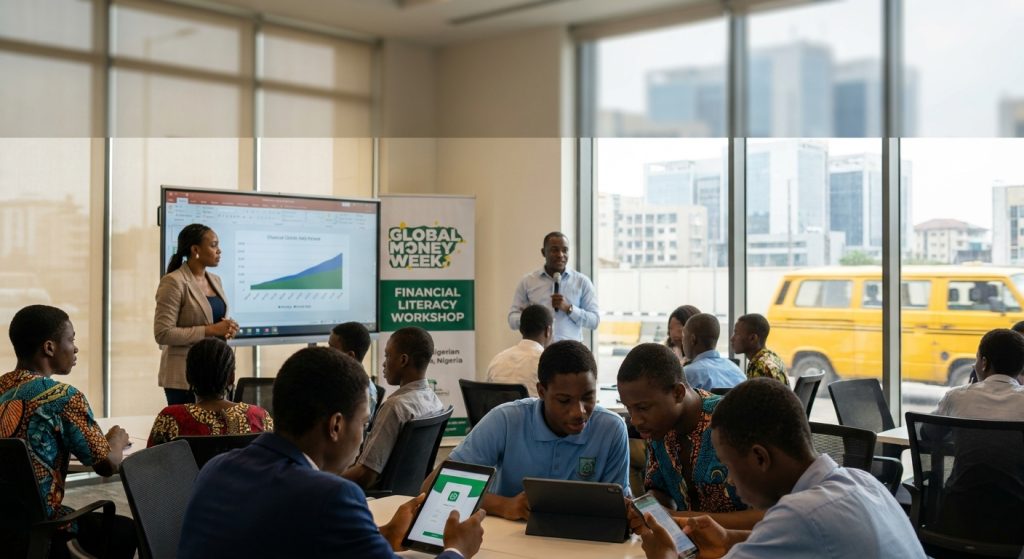
OPay and the Central Bank of Nigeria (CBN) are partnering for Global Money Week 2026 (March 18-24) to boost financial literacy among Nigerian youth. This collaboration will feature a financial literacy fair in Lagos, integrate digital education modules into OPay’s app, and implement a train-the-trainer program for educators. Leveraging OPay’s 18 million users and CBN’s existing ‘Sabi Money’ platform, the initiative aims to equip young Nigerians with essential money management skills, improve fintech adoption, and increase formal savings account ownership, ultimately fostering a more financially savvy generation for national economic growth.
OPay Partners CBN to Advance Youth Financial Literacy at Global Money Week 2026: Complete Analysis
Global Money Week 2026 (March 18-24) marks a pivotal moment for financial education in Nigeria as OPay joins forces with the Central Bank of Nigeria (CBN) to empower young Nigerians with critical money management skills. This strategic collaboration between one of Nigeria’s leading fintech platforms and the nation’s apex bank represents a significant step toward building a financially literate generation capable of driving economic growth.
The OPay-CBN partnership for Global Money Week 2026 aims to significantly advance youth financial literacy in Nigeria. Key initiatives include a large-scale financial literacy fair in Lagos, the integration of financial education modules within the OPay app, and a comprehensive train-the-trainer program for 500 educators. This collaboration leverages OPay’s extensive user base and technological infrastructure with the CBN’s regulatory expertise and existing educational frameworks to deliver practical, real-world financial skills to young Nigerians.
Key Takeaways
- Strategic Partnership: OPay and CBN are collaborating for Global Money Week 2026 to enhance financial literacy among Nigerian youth.
- Target Audience: Primarily secondary school students (ages 12-18), with content also relevant for university students and young adults up to 25.
- Core Initiatives: A major financial literacy fair in Lagos, in-app educational modules on OPay, and a train-the-trainer program for educators.
- Leveraging Strengths: OPay brings its vast user base (18M+), technological infrastructure, and financial products, while CBN provides regulatory content and leverages existing programs like ‘Sabi Money’.
- Expected Impact: Increased youth fintech adoption, higher formal savings account ownership, improved digital payment literacy, and enhanced financial decision-making skills.
- Free Participation: All GMW 2026 activities are free for students, funded by OPay and CBN as part of their corporate social responsibility.
- Long-term Vision: To foster a financially competent generation, leading to improved savings rates, reduced debt, and more financially savvy entrepreneurs.
Introduction: A Landmark Partnership for Nigeria’s Financial Future
Global Money Week 2026 (March 18-24) marks a pivotal moment for financial education in Nigeria as OPay joins forces with the Central Bank of Nigeria (CBN) to empower young Nigerians with critical money management skills. This strategic collaboration between one of Nigeria’s leading fintech platforms and the nation’s apex bank represents a significant step toward building a financially literate generation capable of driving economic growth. The initiative is particularly timely given Nigeria’s demographic profile and the increasing digitalization of its economy.
The CBN has intensified its financial literacy campaigns targeting youth, recognizing that only 26% of Nigerian adults demonstrate basic financial literacy (CBN Financial Inclusion Survey, 2025). This statistic underscores the urgent need for comprehensive and accessible financial education programs across the country. Through existing programs like the "Sabi Money" e-learning platform and the Bank Consumer Education Series, the CBN has laid groundwork that this partnership with OPay will significantly amplify. These foundational efforts have provided valuable insights into effective educational methodologies and content delivery, which will be integrated into the new collaboration.
Why this matters:
With 63% of Nigeria’s population under 25 (National Bureau of Statistics, 2025) and fintech adoption among youth growing at 28% annually, equipping young Nigerians with financial skills becomes not just beneficial but essential for national economic stability. This demographic dividend can only be fully realized if the youth are financially empowered to participate meaningfully in the economy, make informed decisions, and contribute to wealth creation. The partnership aims to bridge the gap between theoretical knowledge and practical application, preparing young people for the complexities of modern financial systems.
The OPay-CBN Collaboration: Strategic Details and Implementation
The partnership between OPay and the CBN is meticulously designed to deliver impactful financial education through a multi-faceted approach. It combines physical events with digital outreach and capacity building for educators, ensuring broad reach and sustainable impact.
Core Components of the Partnership
- Global Money Week Financial Literacy Fair (Lagos, March 20-22, 2026)
- Venue: Eko Convention Center, a prime location chosen for its capacity and accessibility, ensuring a conducive environment for learning and engagement.
- Expected attendance: 5,000+ secondary school students, drawn from various schools across Lagos and potentially neighboring states, making it one of the largest youth financial literacy events in the country.
- Focus areas: Budgeting, digital payments, savings culture, and fraud prevention. These topics are crucial for young people navigating an increasingly digital and complex financial landscape. Workshops will be interactive, featuring practical exercises and expert-led sessions.
- Digital Education Integration
- OPay will develop in-app financial literacy modules, making learning accessible directly through the platform many young Nigerians already use daily. These modules will be bite-sized, engaging, and designed for mobile consumption.
- CBN to provide regulatory-approved content, ensuring accuracy, relevance, and alignment with national financial policies and consumer protection guidelines. This collaboration guarantees that the information disseminated is authoritative and trustworthy.
- Target: Reach 2 million youth users by Q4 2026. This ambitious target highlights the scale of digital outreach planned, leveraging OPay’s extensive user base and digital marketing capabilities.
- Train-the-Trainer Program
- Equipping 500 teachers across 200 schools, thereby creating a multiplier effect. These trained educators will serve as ongoing resources for financial literacy within their respective institutions, ensuring the program’s longevity beyond Global Money Week.
- Curriculum aligned with CBN’s financial education framework, guaranteeing consistency and quality of instruction. The training will cover pedagogical approaches to teaching financial concepts to young audiences, as well as practical tools and resources.
Financial Inclusion Impact:
The partnership is expected to significantly boost financial inclusion metrics among Nigerian youth, as detailed in the table below. These projections are based on the anticipated reach and effectiveness of the combined initiatives.
| Metric | Current (2025) | Projected (2027) |
|---|---|---|
| Youth Fintech Adoption | 41% | 58% |
| Formal Savings Account Ownership (18-25) | 33% | 45% |
| Digital Payment Literacy | 29% | 50% |
Source: CBN Financial Inclusion Reports
OPay’s Value Proposition in This Initiative
As Nigeria’s largest mobile money platform with over 18 million active users (OPay Q4 2025 report), OPay brings crucial assets to this partnership, making it an ideal collaborator for the CBN in this endeavor. Its established presence and technological capabilities are instrumental in reaching a wide youth audience.
- Technological Infrastructure
- Existing user base of digitally-native youth: OPay already has a significant penetration among young Nigerians, providing a direct channel for communication and education.
- Capacity for mass education through app notifications and in-platform features: OPay can leverage its robust notification system and in-app content delivery mechanisms to disseminate financial literacy materials efficiently and at scale.
- Financial Products Alignment
- OWealth savings accounts (current yield: 10% p.a.): This product offers a practical tool for young people to apply savings principles learned, demonstrating the power of compound interest in a real-world context.
- OPay Payments (processing ₦2.3 trillion monthly): The platform’s extensive payment processing capabilities mean that young users are already familiar with digital transactions, making it easier to teach secure and efficient digital payment practices.
- OPay Business solutions for young entrepreneurs: For aspiring young business owners, OPay offers tools that can help them manage finances, accept payments, and understand basic business accounting, fostering entrepreneurial growth.
- Behavioral Data Insights
- Understanding youth financial patterns to tailor education: OPay’s data analytics can provide valuable insights into how young people spend, save, and interact with financial services, allowing for the customization of educational content to be more relevant and impactful.
- Capacity for targeted financial literacy messaging: Based on user behavior and demographics, OPay can deliver personalized financial advice and educational content, increasing engagement and effectiveness.
Existing Financial Literacy Frameworks Being Leveraged
The OPay-CBN partnership is not starting from scratch; it builds upon and integrates with the CBN’s established and successful financial literacy initiatives, ensuring continuity and maximizing impact.
CBN’s "Sabi Money" E-Learning Platform
Launched in 2024, this platform has already reached 1.2 million Nigerian youth with modules covering a wide array of financial topics. Its digital nature makes it highly scalable and accessible, especially to the tech-savvy youth demographic.
- Basic Financial Concepts
- Compound interest calculations: Essential for understanding long-term savings and investments.
- Time value of money: A fundamental concept for making informed financial decisions.
- Inflation impact on savings: Educating youth on how inflation erodes purchasing power and the importance of investing.
- Practical Skills
- How to read bank statements: A crucial skill for tracking finances and identifying discrepancies.
- Comparing loan offers (APR calculations): Empowering youth to understand the true cost of borrowing.
- BVN/NIN linkage requirements: Navigating essential regulatory compliance for financial transactions in Nigeria.
Access Requirements for "Sabi Money":
- Free registration: Ensuring no financial barrier to access.
- Basic smartphone capability: Designed to be accessible on common mobile devices.
- NIN verification for certification: To ensure authenticity and track progress for official recognition.
Bank Consumer Education Series
This CBN program focuses on empowering consumers with knowledge about their rights and responsibilities within the financial ecosystem, particularly emphasizing protection against fraud and understanding regulatory frameworks.
- Consumer Protection
- Understanding CBN’s complaint resolution process: Equipping consumers with the knowledge of how to seek redress for financial grievances.
- How to verify licensed financial institutions: Protecting consumers from illegal operators and scams.
- Regulatory Updates
- Latest circulars on digital banking: Keeping consumers informed about evolving regulations in the digital financial space.
- Changes in transfer limits or fees: Ensuring transparency and awareness of operational changes.
- Fraud Prevention
- Identifying phishing attempts: Educating users on common cyber threats and how to avoid them.
- Secure authentication practices: Promoting strong passwords, multi-factor authentication, and other security measures.
What This Means for Nigerian Youth and Parents
The OPay-CBN partnership offers a wealth of opportunities and long-term benefits for young Nigerians and their families, fostering a culture of financial responsibility and empowerment.
Immediate Opportunities
- Free Access to Premium Financial Education
- Workshops during Global Money Week: Direct interaction with financial experts and practical learning sessions.
- Ongoing digital resources: Continuous access to educational content through the OPay app and CBN platforms, allowing for self-paced learning.
- Practical Application Through OPay Features
- Hands-on experience with budgeting tools: Learning by doing, using real-world applications to manage personal finances.
- Real-time savings tracking: Visualizing financial progress and understanding the impact of consistent savings.
- Certification Opportunities
- Verifiable financial literacy certificates: A tangible recognition of acquired skills, potentially valuable for academic or early career pursuits.
- Potential school credit recognition: Encouraging schools to integrate financial literacy into their curriculum and acknowledge student participation.
Long-Term Benefits
- Improved Financial Decision-Making
- Better loan terms understanding: Avoiding predatory loans and making informed borrowing choices.
- Informed investment choices: Laying the groundwork for future wealth creation through understanding various investment vehicles.
- Enhanced Employability
- Financial literacy as a workplace skill: Employers increasingly value candidates with strong personal finance management skills.
- Entrepreneurship advantages: Equipping young entrepreneurs with the financial acumen needed to start and sustain successful businesses.
- Generational Wealth Building
- Early adoption of savings culture: Instilling habits that lead to long-term financial security.
- Compound interest benefits: Understanding how early and consistent savings can lead to significant wealth accumulation over time.
Comparative Analysis: Financial Literacy Initiatives in Nigeria
To understand the unique contribution of the OPay-CBN partnership, it’s helpful to compare it with other significant financial literacy initiatives currently active in Nigeria. This comparison highlights the diverse approaches and target audiences within the financial education landscape.
| Initiative | Lead Organization | Target Audience | Delivery Method | Unique Feature |
|---|---|---|---|---|
| OPay-CBN Partnership | OPay & CBN | Secondary Students | Hybrid (Physical/Digital) | Fintech Integration & Real-world Application |
| Sabi Money | CBN | Youth 15-25 | Digital Platform | Gamified Learning & Regulatory Content |
| EFInA Programs | EFInA (Enhancing Financial Innovation & Access) | Rural Women, MSMEs | Community Workshops, Agent Networks | Local Language Focus & Financial Inclusion for Underserved |
| NSE StockTown | Nigerian Stock Exchange (NSE) | University Students, Young Professionals | Simulation Platform | Virtual Trading Experience & Investment Education |
| Banker Committee Initiative | CBN & Commercial Banks | NYSC Members | Camp Training, Workshops | Direct Bank Account Opening & Entrepreneurship Focus |
| Junior Achievement Nigeria (JAN) | Junior Achievement Nigeria | Primary & Secondary Students | In-school Programs, Mentorship | Entrepreneurship & Work Readiness Skills |
| Financial Literacy for All (FLFA) | Various NGOs & Private Sector | General Public, Low-Income Earners | Workshops, Radio Programs | Basic Financial Planning & Debt Management |
Potential Challenges and Mitigation Strategies
While the OPay-CBN partnership holds immense promise, it is crucial to acknowledge potential hurdles and proactively develop strategies to overcome them, ensuring the program’s long-term success and impact.
Implementation Hurdles
- Digital Divide Concerns
- Challenge: Uneven smartphone/internet access across Nigeria, particularly in rural and underserved areas, could limit the reach of digital modules.
- Solution: Partner with schools for computer lab access and provide offline resources where internet connectivity is poor. Explore community centers as hubs for digital learning. OPay could also explore subsidized data bundles for educational content.
- Sustainability Questions
- Challenge: Maintaining momentum and engagement post-Global Money Week 2026, preventing the initiative from being a one-off event.
- Solution: Implement quarterly refresher modules and ongoing challenges within the OPay app. Establish a dedicated online community for participants and educators. Seek long-term funding and institutionalize financial literacy within school curricula.
- Measurement Difficulties
- Challenge: Tracking real behavioral change and the long-term impact of financial literacy education, which can be complex and require sustained effort.
- Solution: Conduct pre/post testing with longitudinal studies to assess knowledge retention and behavioral shifts. Utilize OPay’s data analytics (with strict privacy protocols) to observe changes in savings patterns, digital transaction habits, and product engagement among participants.
- Curriculum Relevance and Adaptability
- Challenge: Ensuring the content remains relevant and adaptable to the rapidly evolving financial landscape and diverse needs of Nigerian youth.
- Solution: Establish a standing committee with representatives from OPay, CBN, educators, and youth to regularly review and update the curriculum. Incorporate feedback mechanisms from participants and teachers to ensure content is engaging and addresses current financial trends and challenges.
Consumer Protection Considerations
As a collaboration involving a fintech platform and the apex bank, consumer protection is paramount to build trust and ensure ethical implementation.
- Data Privacy
- Ensure compliance with NDIC guidelines and Nigeria Data Protection Regulation (NDPR) for all data collected.
- Implement clear opt-in for data usage and provide transparent privacy policies, especially concerning minors’ data. Regular audits of data handling practices should be conducted.
- Product Appropriateness
- Ensure that any financial products introduced or referenced are age-appropriate and suitable for the financial literacy level of the target audience.
- Strictly prohibit aggressive marketing to minors and ensure that educational content is clearly distinguishable from promotional material.
- Conflict of Interest
- Maintain a clear distinction between educational content and OPay’s commercial objectives.
- Implement transparent disclosure requirements for any OPay products or services mentioned within the educational modules, ensuring that the primary focus remains on unbiased financial education.
- Accessibility for Persons with Disabilities
- Challenge: Ensuring that digital and physical resources are accessible to youth with various disabilities.
- Solution: Incorporate accessibility features in digital modules (e.g., screen reader compatibility, captions). Ensure physical event venues are wheelchair accessible and provide sign language interpreters or other necessary accommodations upon request.
Step-by-Step: How to Participate in Global Money Week 2026
For interested students, parents, and educators, here’s a guide on how to engage with the OPay-CBN Global Money Week 2026 initiatives:
-
Registration Process
- Visit the dedicated OPay GMW Portal (live from March 1, 2026). This will be the central hub for all registration and event information.
- Provide basic details (name, school, contact information). Ensure all information is accurate for communication and certification purposes.
- Receive confirmation SMS/email with event details, schedules, and any pre-event instructions. Keep this confirmation safe.
-
Preparation
- Download the OPay app (if not an existing user) from official app stores. Familiarize yourself with its interface, as some educational modules will be integrated there.
- Review pre-event materials that will be made available on the GMW portal. These materials will provide an overview of topics and help participants prepare for workshops.
- Prepare questions for financial experts and speakers. This will enhance engagement and allow participants to address specific financial concerns.
-
Event Attendance
- Physical attendees: Bring your student ID or a valid form of identification for verification at the Eko Convention Center. Arrive early to secure good seating and network.
- Virtual participants: Test your internet connection and platform compatibility (e.g., Zoom, Microsoft Teams) in advance. Ensure you have a quiet environment for optimal learning.
- Active participation in workshops: Engage with speakers, ask questions, and participate in interactive sessions to maximize learning.
-
Post-Event Engagement
- Complete the feedback survey. Your input is valuable for improving future financial literacy initiatives.
- Access recorded sessions and supplementary materials on the OPay GMW Portal for review and deeper understanding.
- Join the alumni network or online community (if established) to continue learning, sharing experiences, and networking with peers and mentors.
Frequently Asked Questions
Q: Is there any cost to participate?
A: No, all Global Money Week 2026 activities, including the fair, digital modules, and workshops, are completely free for students. The CBN and OPay are funding the initiative as part of their corporate social responsibility and commitment to national development. There are no hidden fees or charges for accessing any of the educational content or events.
Q: What age group is this targeting?
A: The primary target audience for the Global Money Week 2026 initiatives is secondary school students, typically ages 12-18. However, some of the digital content and general workshops will also be highly beneficial and suitable for university students and young adults up to age 25, who are often at a critical stage of making independent financial decisions.
Q: Will participants need an OPay account?
A: While having an OPay account provides full access to all integrated digital features, such as in-app modules and practical budgeting tools, it is not mandatory for participation in the core educational activities. Basic workshops and the physical fair can be attended without an OPay account. However, creating an account (with parental consent for minors) is encouraged to maximize the learning experience and apply concepts directly.
Q: How does this differ from regular school financial education?
A: This initiative significantly differs by providing practical, real-world financial skills using actual fintech tools and scenarios, unlike often theoretical classroom lessons. It offers direct access to financial experts, industry insights, and hands-on experience with digital financial services, bridging the gap between academic knowledge and practical application in Nigeria’s modern economy.
Q: Are there rewards for participation?
A: Yes, active participants who complete the program requirements will receive verifiable certificates of completion, which can be a valuable addition to their academic or professional profiles. Furthermore, outstanding participants may qualify for special recognition, scholarships, or even internship opportunities with OPay, the CBN, or other partner financial institutions, providing a pathway for further engagement and career development.
Q: How can schools get involved?
A: Schools are highly encouraged to participate. They can register groups of students for the physical fair and virtual workshops through the OPay GMW Portal. Additionally, schools can nominate teachers for the train-the-trainer program, enabling them to integrate financial literacy into their regular curriculum. The partnership aims to provide resources and support for schools to become hubs for financial education.
Q: What measures are in place for student safety at the physical event?
A: The safety and security of all participants, especially minors, are paramount. The Global Money Week Financial Literacy Fair at the Eko Convention Center will have robust security measures in place, including professional security personnel, controlled access points, and emergency medical services. Clear protocols for student supervision will be communicated to participating schools and parents. The CBN and OPay are working closely with relevant authorities to ensure a safe and conducive environment.
Red Flags to Watch Out For
While the OPay-CBN partnership is a legitimate and beneficial initiative, participants should remain vigilant against potential scams or misrepresentations that might try to leverage the event’s popularity. Awareness of these red flags can help protect individuals.
- Unauthorized Fees
- Legitimate programs associated with this OPay-CBN initiative will explicitly state that participation is free and will not request any payments for registration, access to materials, or certificates.
- Report any monetary requests or demands to the CBN’s consumer protection department or OPay’s official customer service channels immediately.
- Data Mining Attempts
- Only provide personal information through the official OPay GMW Portal or designated registration points at the physical event.
- Be wary of unsolicited emails, SMS, or social media messages asking for sensitive personal or financial details. Always verify the authenticity of the sender and the website before submitting any information.
- Too-Good-To-Be-True Offers
- Beware of promises of instant wealth, guaranteed high returns, or investment schemes promoted outside the official educational context of the event.
- The core focus of financial education is on sustainable practices, responsible saving, and informed decision-making, not quick riches. Any such offers are likely scams.
- Unofficial Communication Channels
- All official communications regarding the OPay-CBN Global Money Week 2026 will come from verified OPay and CBN channels (official websites, social media accounts, and designated email addresses).
- Exercise caution with information from unofficial groups, individuals, or websites that claim to represent the initiative.
What to Do This Week
To make the most of the upcoming Global Money Week 2026 and the OPay-CBN partnership, here’s a checklist of actions for various stakeholders:
Conclusion: A Transformative Step for Nigeria’s Economic Future
The OPay-CBN partnership for Global Money Week 2026 represents more than just another financial literacy campaign—it’s a strategic investment in Nigeria’s human capital development. By combining OPay’s technological prowess and extensive user base with the CBN’s regulatory expertise and existing educational frameworks, this initiative has the potential to fundamentally reshape how Nigerian youth interact with financial systems. It is a testament to the growing recognition that financial education is not a luxury but a necessity for national progress.
The true measure of success for this ambitious collaboration will be visible in the coming years through improved savings rates, lower personal debt burdens, and a greater number of financially savvy entrepreneurs emerging from this generation. For participating students, this could mark the beginning of lifelong financial competence that benefits both their personal circumstances and the national economy at large. This partnership sets a new benchmark for public-private collaborations in addressing critical societal needs, paving the way for a more financially inclusive and prosperous Nigeria.