
Quick Summary
Nigeria’s economy in 2026 presents a complex picture: while some sectors show growth, persistent high inflation, recorded at 15.69% in April 2026, is severely impacting purchasing power for households and businesses. The Central Bank of Nigeria (CBN) is attempting to balance inflation control with economic growth through various monetary policies. This article explores these mixed economic signals, details the impact of rising costs and policy decisions on personal finances, and offers practical strategies for Nigerians to navigate the economic landscape effectively in 2026.
What This Means for You
In 2026, Nigerians are facing significantly higher costs for essential goods and services, including food, transport, and healthcare, largely due to an annual inflation rate of 15.69% (April 2026). This means your Naira buys less than before. High interest rates, with commercial lending potentially reaching 20-30%+, make borrowing expensive, while savings rates (typically 3-7%) offer negative real returns when adjusted for inflation. To protect your finances, it’s crucial to implement strategic budgeting, diversify investments into inflation-hedged assets like Treasury Bills or real estate, and stay informed about CBN policies and market trends.
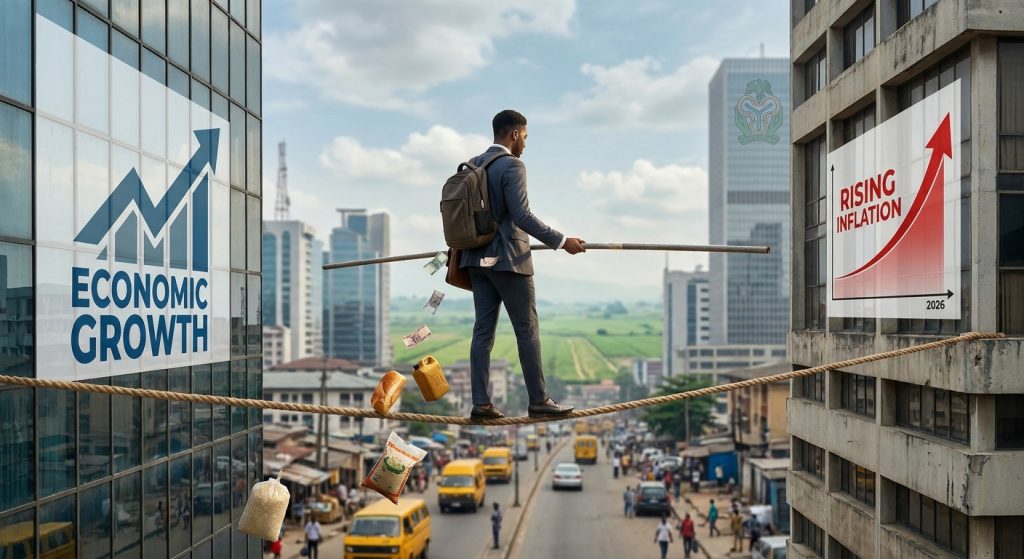
Nigeria’s Economic Tightrope: Navigating Rising Costs Amidst Mixed Signals – What It Means for Your Wallet 2026
Nigeria’s economic landscape in 2026 presents a fascinating, albeit challenging, paradox. On one hand, there are glimpses of economic growth and resilience, yet on the other, the pervasive shadow of soaring inflation and an escalating cost of living continues to loom large over every Nigerian household and business. This duality creates a tightrope walk for policymakers and a daily struggle for citizens.
The persistent inflationary pressure, which saw the headline inflation rate climb to 15.69% in April 2026, is a direct consequence of several intertwined factors. While the removal of the fuel subsidy in 2026 and the subsequent Naira devaluation in 2026 provided a historical shock to the system, the current drivers are more complex. Global commodity prices, particularly for oil and food, continue to exert upward pressure. Domestically, persistent supply-side issues, including infrastructure deficits, insecurity in food-producing regions, and high logistics costs, exacerbate the problem. These factors collectively erode the purchasing power of the Naira, making daily existence increasingly difficult.
For the average Nigerian, this means that despite any reported GDP growth, the reality on the ground is one of shrinking wallets and difficult choices. The World Bank’s grim assessment from 2026, which indicated that 63% of Nigerians were living below the poverty line, serves as a stark background to the current economic climate. This article aims to dissect these mixed signals, providing a clear understanding of the underlying dynamics and, crucially, offering actionable insights to help you protect and grow your finances in 2026.
The CBN’s Dilemma: Taming Inflation While Fostering Growth in 2026
The Central Bank of Nigeria (CBN) finds itself in an unenviable position in 2026, tasked with the delicate balancing act of taming persistent inflation without stifling the nascent signs of economic growth. The Monetary Policy Committee (MPC) has, throughout 2026, continued to grapple with this challenge, often resorting to interest rate hikes and adjustments to the Cash Reserve Ratio (CRR) for commercial banks. These measures are primarily aimed at mopping up excess liquidity from the financial system, thereby curbing inflationary pressures.
The CBN’s stated objectives remain steadfast: achieving price stability, ensuring a stable exchange rate, and fostering sustainable economic growth. However, the effectiveness of these policies in the face of persistent inflation and FX volatility remains a subject of intense debate. While the CBN has pointed to a moderation in monthly inflation rates during early 2026 as a sign of progress, the continued rise in the annual inflation rate, reaching 15.69% in April 2026, indicates that underlying structural issues are not easily resolved by monetary tools alone. This presents a mixed policy challenge for monetary authorities, as tightening too aggressively could choke off credit to businesses and individuals, impeding growth.
In 2026, the CBN has also maintained its active role in the FX market, though with varying degrees of success, attempting to inject liquidity and stabilize the Naira. Furthermore, regulatory pronouncements impacting banks and fintechs, such as revised capital requirements and stricter compliance frameworks (including BVN/NIN linkage for all accounts), are aimed at strengthening the financial system and curbing illicit financial flows. However, these measures can also increase operational costs for financial institutions, potentially impacting service delivery and pricing for consumers. Traders and investors are keenly advised to closely watch the CBN’s moves, as their decisions significantly influence market direction and the cost of capital across the economy. The current economic climate demands agility and informed decision-making from both the central bank and market participants.
The Cost of Living Crisis: Unpacking the Numbers Behind Rising Prices in 2026
The cost of living crisis in Nigeria is not merely a perception; it is a tangible reality reflected in the National Bureau of Statistics (NBS) figures for 2026. The headline inflation rate, which soared to 15.69% in April 2026, paints a stark picture of eroded purchasing power. This aggregate figure is underpinned by significant increases across various components, with food and core inflation being particularly troubling. Food inflation, often the most impactful for the average household, has seen relentless increases, driven by supply chain disruptions, insecurity in farming regions, and rising input costs for farmers.
Specific examples of price increases are abundant and felt daily. While the fuel subsidy removal in 2026 saw petrol prices jump significantly from around ₦195 per litre to over ₦600 per litre, these higher transport costs have since filtered down to virtually every good and service. Food staples, once relatively affordable, have become luxury items for many. For instance, a 50kg bag of local rice, which might have cost around ₦35,000 in January 2026, now easily fetches upwards of ₦70,000 to ₦80,000 in major markets like Mile 12 in Lagos or Bodija in Ibadan as of April 2026. Similarly, a tuber of yam, depending on size, could have been ₦2,500 in early 2026 but is now often between ₦4,500 and ₦6,000. Garri, a common staple, has also seen its price per measure double or even triple in some markets over the past year.
This inflationary spiral has a devastating impact on household budgets, forcing many to cut back on essentials, compromise on nutrition, and defer critical expenses. The World Bank’s 2026 data, which indicated a staggering 63% poverty rate, serves as a grim baseline, suggesting that the current inflationary trend is only pushing more Nigerians into economic hardship. Beyond food, sectors like transportation, housing (rents continue to climb in urban centers), and healthcare have also seen significant price hikes, making access to basic necessities increasingly challenging. The core inflation, which excludes volatile agricultural produce and energy prices, is also signaling a nascent broadening of price pressures, indicating that the problem is deeply entrenched and not just limited to seasonal or external shocks. Rising international oil and food prices further contribute to this domestic inflationary environment, creating a vicious cycle that is difficult to break.
Inflationary Impact on Key Food Items (Naira prices: Jan 2026 vs. April 2026)
| Food Item (Unit) | Estimated Price (Jan 2026) | Estimated Price (April 2026) | Percentage Increase |
|---|---|---|---|
| Local Rice (50kg bag) | ₦35,000 | ₦75,000 | 114% |
| Garri (1 measure/bowl) | ₦800 | ₦2,000 | 150% |
| Yam (medium tuber) | ₦2,500 | ₦5,000 | 100% |
| Tomatoes (basket) | ₦15,000 | ₦40,000 | 167% |
| Onions (bag) | ₦10,000 | ₦28,000 | 180% |
| Cooking Gas (12.5kg) | ₦8,000 | ₦14,000 | 75% |
Note: Prices are illustrative estimates based on observed market trends and may vary by location and market.
Naira Devaluation and the FX Market: A Double-Edged Sword in 2026
The evolution of Nigeria’s foreign exchange (FX) market has been a defining feature of its economic trajectory, particularly since the shift to a ‘willing buyer, willing seller’ regime back in 2026. This policy change, aimed at unifying multiple exchange rate windows and promoting transparency, has had profound implications for the value of the Naira and, consequently, the cost of living. In 2026, the FX market remains a critical determinant of economic stability, with persistent volatility continuing to impact businesses and consumers alike.
As of May 2026, the official Nigerian Autonomous Foreign Exchange Market (NAFEM) rate hovers around ₦1,450 to ₦1,550 per US Dollar, while the parallel market rate, though significantly closer than in previous years, still sees a premium, often trading between ₦1,500 and ₦1,600 per US Dollar. This continued disparity, however narrow, indicates lingering inefficiencies and speculative activities. The CBN has made efforts to stabilize the market through various interventions, including increasing dollar supply to Bureau de Change (BDC) operators and implementing stricter regulations on FX transactions. However, these efforts have faced limitations, often battling against global economic headwinds and domestic demand pressures.
The impact of Naira devaluation is a double-edged sword. For businesses heavily reliant on imported raw materials or finished goods, a weaker Naira translates directly into higher input costs. This, in turn, fuels domestic inflation as businesses pass on these increased costs to consumers. Manufacturers, for example, face escalating expenses for machinery, spare parts, and intermediate goods, making local production more expensive and less competitive. This scenario contributes significantly to the “cost pressures persist across all sectors” noted by economic analysts.
Conversely, a weaker Naira can be beneficial for exporters, making their goods more competitive in international markets and increasing their Naira earnings. It also theoretically encourages local production and import substitution, as imported goods become more expensive. For Nigerians in the diaspora, remittances sent home convert to more Naira, providing a boost to recipient households. However, the overall negative impact on the cost of living and the erosion of purchasing power for the majority of Nigerians often overshadow these potential benefits. The CBN’s ongoing challenge is to find a sustainable equilibrium that supports both export growth and domestic price stability, a task made harder by fluctuating global oil prices and investor confidence.
Official vs. Parallel Market Exchange Rates (Naira per USD: Historical Trend – Jan 2026 vs. May 2026)
| Period | Official Rate (NAFEM) (₦/USD) | Parallel Market Rate (₦/USD) | Premium (%) |
|---|---|---|---|
| January 2026 | ₦900 – ₦950 | ₦1,200 – ₦1,300 | 33% – 37% |
| May 2026 (approx.) | ₦1,450 – ₦1,550 | ₦1,500 – ₦1,600 | 3% – 7% |
Note: Rates are approximate and subject to daily fluctuations. The premium indicates the difference between the parallel and official rates.
Beyond the Headlines: Sector-Specific Impacts and Opportunities in 2026
The macroeconomic currents of 2026 ripple through every sector of the Nigerian economy, creating both significant challenges and nascent opportunities. Understanding these sector-specific dynamics is crucial for businesses and individuals looking to navigate the current economic climate.
Banking Sector
Nigerian commercial banks are experiencing a mixed bag. On one hand, the CBN’s high Monetary Policy Rate (MPR) has led to increased interest income from government securities and higher lending rates. Commercial bank lending rates in 2026 are typically in the range of 20% to 30%+ for prime borrowers, with higher rates for riskier ventures. This can boost profit margins for banks. However, this also comes with the risk of rising Non-Performing Loans (NPLs) as businesses and individuals struggle to service expensive debt in a high-inflation environment. The CBN’s adjustments to the Cash Reserve Ratio (CRR) also impact bank liquidity, potentially limiting their ability to lend. Savings rates, unfortunately, remain comparatively low, typically offering 3% to 7% per annum, meaning real returns are negative when compared to the 15.69% inflation rate.
Fintechs
The fintech sector, a vibrant hub of innovation in Nigeria, faces unique challenges. The persistent FX volatility makes scaling difficult, especially for those reliant on imported technology or international payment gateways. Talent retention can also be an issue as skilled professionals seek opportunities abroad. However, the same challenges create immense opportunities. Fintechs focused on domestic payment solutions, financial inclusion for the unbanked, and innovative savings/lending products tailored to the local economy are thriving. Companies like Paystack, Flutterwave, and OPay continue to expand their reach, while newer players focus on niche markets such as agricultural financing or remittance services. The need for efficient, low-cost financial services is higher than ever, and fintechs are uniquely positioned to meet this demand.
Manufacturing
The manufacturing sector is under immense pressure. High input costs, driven by FX depreciation for imported raw materials and expensive logistics, are squeezing profit margins. Many firms are operating below capacity due to persistent grid instability and reliance on expensive alternative power sources, as highlighted by industry reports. This has spurred a renewed focus on local sourcing and import substitution. Companies that can successfully pivot to local raw materials and energy solutions are gaining a competitive edge. Initiatives like the CBN’s intervention funds for manufacturing are crucial, but their impact is often diluted by the broader economic challenges.
Agriculture
The agricultural sector, the backbone of Nigeria’s food supply, is battling insecurity, climate change impacts, and rising input costs (fertilizers, seeds, fuel for machinery). These factors directly contribute to food inflation. However, there’s a growing recognition of the sector’s potential. Investment in modern farming techniques, improved storage facilities, and value addition (processing) could unlock significant growth. Government and private sector initiatives aimed at supporting smallholder farmers, such as Anchor Borrowers’ Programme (ABP) and various agricultural loan schemes from banks like Sterling Bank and Access Bank, are vital for food security and rural development.
Real Estate
The real estate sector remains a mixed bag. While construction costs have soared due to inflation and FX volatility affecting imported materials, demand for housing, particularly affordable housing, remains high. Property values in prime locations, especially in Lagos and Abuja, have shown resilience, often acting as a hedge against inflation for investors. However, rental yields can be impacted by tenants’ reduced purchasing power. Developers focusing on sustainable, locally sourced materials and innovative financing models (e.g., fractional ownership, rent-to-own schemes) are finding success. Companies like NMRC (Nigerian Mortgage Refinance Company) and various cooperative societies are working to bridge the housing deficit.
Energy Sector
The energy sector, particularly the downstream segment, has been significantly impacted by subsidy removal and FX volatility. While the government aims to liberalize the sector, the fluctuating pump prices of petrol and diesel continue to affect transportation costs across the economy. The power sector continues to struggle with generation, transmission, and distribution challenges, leading to widespread reliance on generators. This reliance on alternative power sources significantly increases operating costs for businesses and households, further fueling inflation and limiting productivity. Efforts to invest in renewable energy sources and improve grid infrastructure are crucial but will take time to yield widespread benefits.
Navigating the Economic Headwinds: Strategies for Your Wallet in 2026
In an economy characterized by mixed signals and persistent cost pressures, a proactive and informed approach to personal finance is not just advisable, it’s essential. Here are concrete strategies for Nigerians to navigate the economic headwinds of 2026:
a. Smart Budgeting and Cost Optimization
With inflation at 15.69%, every Naira counts.
- Track Your Spending: Use budgeting apps (e.g., KudiMoney, PiggyVest, CowryWise) or simple spreadsheets to meticulously track your income and expenditure. Identify areas where you can cut back.
- Prioritize Needs Over Wants: Differentiate between essential expenses (food, shelter, utilities, transport, healthcare) and discretionary spending (entertainment, luxury items).
- Bulk Buying & Local Sourcing: Where possible, buy non-perishable food items in bulk directly from markets or wholesalers to save costs. Prioritize locally produced goods to reduce exposure to FX fluctuations.
- Energy Efficiency: Invest in energy-efficient appliances, switch off lights and electronics when not in use, and explore alternative energy solutions like solar for lighting to reduce electricity bills and generator fuel costs.
b. Strategic Savings and Investments
Traditional savings accounts offer negative real returns. You need to be smarter with your money.
- High-Yield Savings/Fixed Deposits: While still below inflation, look for banks and fintechs offering the highest interest rates on fixed deposits or target savings. Some commercial banks like Access Bank and Zenith Bank might offer 7-10% for specific fixed deposit tenors (e.g., 90-180 days) with minimum deposits of ₦100,000 to ₦500,000. Fintechs like PiggyVest and CowryWise offer up to 10-12% on their fixed savings plans, often with lower entry barriers.
- Treasury Bills (T-Bills) and FGN Bonds: These are considered low-risk investments and often offer rates closer to or slightly above inflation, providing a better hedge. You can invest in T-Bills through your bank or dedicated investment platforms like FBNQuest, Stanbic IBTC Asset Management, or even some fintechs. Minimum investment for T-Bills can be as low as ₦50,000 for some retail offerings, while FGN Bonds might require ₦100,000.
- Diversified Portfolio: Consider diversifying into assets that traditionally perform well during inflation, such as real estate (for long-term capital appreciation, though illiquid), commodities (e.g., gold, though accessible mainly through funds), and equities in resilient sectors (e.g., consumer staples, telecommunications).
- Dollar-Denominated Investments: For those with higher capital, consider dollar-denominated mutual funds or Eurobonds accessible through investment platforms like Risevest or Bamboo. This helps protect against Naira devaluation. Minimum investments can range from $10 to $1,000.
- Micro-investments: Platforms like Chaka and Trove allow Nigerians to invest in local and international stocks with small amounts, starting from ₦1,000 or $10.
c. Income Diversification and Skill Development
Relying on a single income stream in volatile times is risky.
- Upskill and Reskill: Invest in acquiring new skills that are in demand, particularly in the digital economy (e.g., coding, digital marketing, data analysis, cybersecurity). Platforms like Coursera, Udemy, and local academies offer affordable courses.
- Side Hustles: Explore opportunities for additional income streams, such as freelancing, e-commerce, consulting, or offering specialized services. Leverage online platforms that connect service providers with clients.
- Entrepreneurship: For those with an entrepreneurial spirit, identify unmet needs in your community and explore starting a small business. Focus on services or products with high local demand and low import reliance. Access to micro-loans from institutions like LAPO Microfinance Bank or even some commercial banks can provide initial capital, though interest rates will be high (25-40%+).
d. Prudent Borrowing and Debt Management
High interest rates make borrowing expensive.
- Avoid Unnecessary Debt: Only borrow for essential, income-generating purposes. Avoid taking on consumer debt for depreciating assets.
- Consolidate High-Interest Debts: If you have multiple high-interest loans, explore options to consolidate them into a single loan with a lower interest rate, if available.
- Negotiate Loan Terms: Always negotiate interest rates and repayment terms with lenders. Compare offers from different banks and microfinance institutions.
- Credit Score Management: Maintain a good credit score (e.g., through CRC Credit Bureau) by paying bills on time. A good score can open doors to better loan terms in the future.
e. Stay Informed and Adapt
The economic landscape is dynamic.
- Follow Economic News: Regularly read reputable financial news sources (like KudiCompass, BusinessDay, The Guardian, Nairametrics) to stay updated on CBN policies, inflation figures, and market trends.
- Consult Financial Advisors: Consider seeking advice from certified financial planners who can provide personalized strategies based on your unique financial situation.
- Community Support: Engage with financial communities or groups to share insights, learn from others’ experiences, and find support.
By implementing these strategies, Nigerians can better navigate the complexities of the 2026 economy, protect their wealth, and position themselves for future financial stability.
People Also Ask (FAQ)
Q1: What is the current inflation rate in Nigeria as of 2026?
A1: As of April 2026, Nigeria’s headline inflation rate stood at 15.69%. This indicates a continued rise in annual inflation, despite some moderation in monthly inflation figures.
Q2: How does the Naira devaluation affect my savings?
A2: Naira devaluation significantly erodes the purchasing power of your savings. If your savings are held purely in Naira, and inflation (e.g., 15.69%) is higher than the interest rate you earn on your savings (e.g., 3-7%), your money is losing value in real terms. This means your Naira can buy less goods and services over time. To mitigate this, consider diversifying into inflation-hedged assets or dollar-denominated investments if feasible.
Q3: What are the best investment options in Nigeria to beat inflation in 2026?
A3: To potentially beat inflation in 2026, consider investments like:
- Treasury Bills and FGN Bonds: These government securities often offer rates closer to or slightly above inflation, providing a relatively low-risk hedge.
- Dollar-Denominated Investments: Platforms like Risevest and Bamboo offer access to dollar-denominated mutual funds or Eurobonds, protecting against Naira depreciation.
- Real Estate: While illiquid, real estate in prime locations can offer long-term capital appreciation and act as an inflation hedge.
- Diversified Equities: Invest in stocks of companies in resilient sectors (e.g., consumer staples, telecommunications) that can pass on increased costs to consumers.
- High-Yield Fixed Deposits/Target Savings: While not always beating inflation, some fintechs (e.g., PiggyVest, CowryWise) and commercial banks offer rates up to 10-12% for specific fixed plans, which are better than traditional savings accounts.
Q4: Are commercial bank lending rates high in Nigeria in 2026?
A4: Yes, commercial bank lending rates in Nigeria are significantly high in 2026. Prime lending rates for commercial banks typically range from 20% to 30%+, with rates for riskier borrowers or specific sectors potentially going even higher. This is largely due to the CBN’s tight monetary policy aimed at curbing inflation and the inherent risks in the Nigerian operating environment.
Q5: How can I protect my business from rising costs in 2026?
A5: To protect your business from rising costs:
- Local Sourcing: Prioritize sourcing raw materials and inputs locally to reduce exposure to FX volatility.
- Cost Management: Implement strict cost control measures, optimize operational efficiency, and negotiate better terms with suppliers.
- Price Adjustment: Strategically adjust your pricing to reflect increased operational costs, but be mindful of market competitiveness.
- Energy Alternatives: Invest in alternative energy solutions (e.g., solar power) to reduce reliance on expensive grid electricity and generators.
- Diversify Supply Chains: Avoid over-reliance on a single supplier or source to mitigate risks.
- Access Funding: Explore intervention funds or loans specifically designed for SMEs, though be aware of the high interest rates on commercial loans.
Q6: What role does the CBN play in managing inflation in 2026?
A6: The Central Bank of Nigeria (CBN) plays a crucial role in managing inflation through various monetary policy tools. In 2026, the CBN has primarily used:
- Interest Rate Hikes: Increasing the Monetary Policy Rate (MPR) to make borrowing more expensive and reduce money supply.
- Cash Reserve Ratio (CRR) Adjustments: Raising the CRR for commercial banks to mop up excess liquidity from the financial system.
- Open Market Operations (OMO): Selling government securities to banks to reduce the amount of money in circulation.
- FX Market Interventions: Managing the supply of foreign exchange to stabilize the Naira and reduce imported inflation.
The CBN’s objective is to achieve price stability, but it faces the challenge of balancing this with supporting economic growth.