
Quick Summary
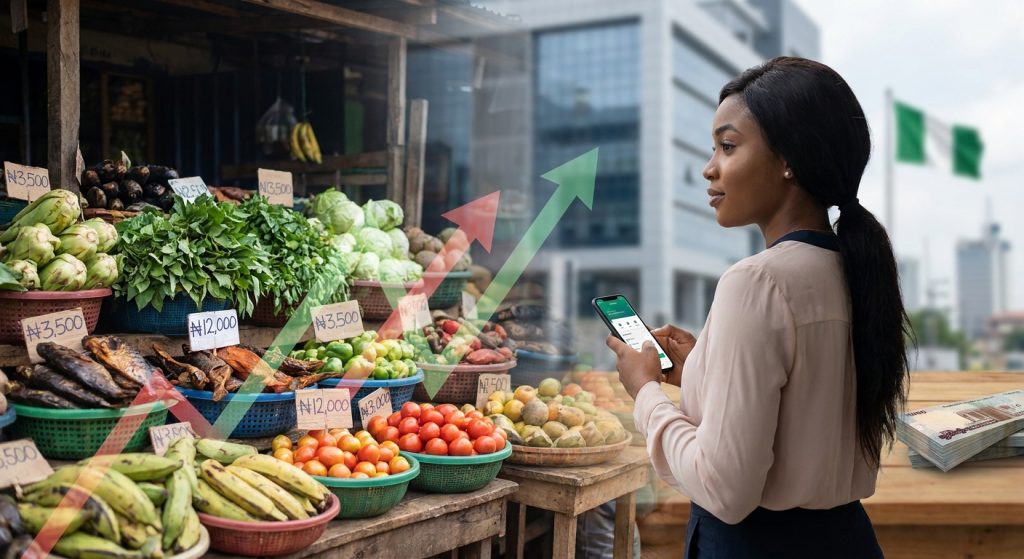
Nigeria is grappling with a severe food affordability crisis in 2026, as the cost of a healthy diet (CoHD) continues to surge at a rate significantly higher than both headline and food inflation. As of February 2026, the average daily CoHD reached ₦1,513 per adult, marking a 12.4% year-on-year increase. This disparity, driven by persistent Naira depreciation, fuel subsidy removal, insecurity, and supply chain inefficiencies, is eroding household purchasing power, worsening food insecurity, and posing severe health risks. Urgent, coordinated policy interventions from the CBN, Ministry of Agriculture, and other relevant bodies are critically needed to stabilize prices and ensure access to nutritious food for all Nigerians.
Quick Answer: What This Means
The “Cost of a Healthy Diet” (CoHD) in Nigeria is rising faster than general inflation because the specific food items required for a nutritious diet are disproportionately affected by economic shocks. While headline inflation measures a broad basket of goods and services, CoHD focuses on nutritionally adequate and diverse food groups. Factors like Naira depreciation impacting imported food inputs, increased transportation costs from fuel subsidy removal, and insecurity disrupting local food production directly inflate the prices of these healthy staples more acutely than the overall economy. This means that even if general inflation appears to be moderating, the cost of feeding oneself and one’s family healthily is becoming increasingly unaffordable for many Nigerians in 2026.
The Alarming Disparity Between Healthy Diet Costs and Inflation in Nigeria
Nigeria is currently facing a deepening affordability crisis as the cost of a healthy diet (CoHD) continues its relentless ascent, outpacing both headline and food inflation. This alarming disparity is not just an economic statistic; it’s a stark reality eroding the purchasing power of millions, worsening food insecurity, and carrying severe health implications for households across the nation.
The primary culprits behind this surge are multifaceted and interconnected. Persistent Naira depreciation, a challenge that has plagued the economy for over a year, significantly drives up the cost of imported food components and agricultural inputs. The lingering effects of the fuel subsidy removal, which took effect back in 2026, continue to inflate transportation costs for food distribution, making local produce more expensive. Furthermore, pervasive insecurity in key food-producing regions disrupts agricultural activities and supply chains, leading to scarcity and higher prices. Broader supply chain inefficiencies, from storage to market access, exacerbate these issues.
The impact is most acutely felt by low-income households and vulnerable populations, who are increasingly finding it impossible to afford nutritious meals. This situation demands urgent and coordinated policy interventions from key institutions such as the Central Bank of Nigeria (CBN), the Federal Ministry of Agriculture and Food Security, and other relevant bodies to stabilize prices and ensure that access to nutritious food is not a luxury but a fundamental right for all Nigerians.
The Data Speaks: Unpacking the ‘Cost of a Healthy Diet’ (CoHD) vs. Headline Inflation
To truly grasp the severity of Nigeria’s food affordability crisis in 2026, it’s crucial to understand the nuances between the “Cost of a Healthy Diet” (CoHD) and traditional inflation metrics. The CoHD, a vital indicator tracked by the National Bureau of Statistics (NBS) using a framework developed by the FAO/WFP, measures the least expensive combination of locally available food items that meet globally consistent food-based dietary guidelines for nutritional adequacy and diverse food groups. Unlike the broader Consumer Price Index (CPI), which tracks a general basket of goods and services, the CoHD specifically focuses on the actual nutritional needs of an individual, emphasizing diverse food groups like fruits, vegetables, legumes, and protein sources. This methodology involves detailed local food basket analysis, making it a more precise gauge of food access for healthy living.
Recent data paints a grim picture. As of February 2026, the average daily CoHD for an adult in Nigeria reached a staggering ₦1,513. This represents a 3.76% month-on-month increase from January 2026, when the cost stood at ₦1,458. Looking at the year-on-year figures, the CoHD in February 2026 was 12.4% higher than in February 2026, when it was ₦1,346.
Comparing this to the CBN’s official inflation rates reveals a widening gap. While headline inflation remains a concern, food inflation has been particularly aggressive. In April 2026, for the first time in eight months, Nigeria’s food inflation rate surpassed the all-item inflation rate, reaching 16.06%. This means that the prices of food items in general are rising faster than the overall cost of living. However, the CoHD’s 12.4% year-on-year increase (February 2026 to February 2026) highlights that the rate of increase for specific healthy foods often outpaces even this elevated food inflation, especially for nutrient-dense items. This creates a “hidden” inflation for essential, nutritious items, making it increasingly difficult for families to afford a balanced diet even if they can still afford basic staples. For instance, while yam or garri prices might rise steadily, the cost of protein sources like fish or eggs, or fresh vegetables, might be skyrocketing at an even faster pace, directly impacting the CoHD.
Comparison Table: CoHD vs. Official Inflation Rates (Q4 2026 – Q1 2026)
| Metric | Period (Year-on-Year) | Rate (%) | Notes |
|---|---|---|---|
| Cost of Healthy Diet (CoHD) | Feb 2026 – Feb 2026 | 12.4% | From ₦1,346 to ₦1,513 per adult/day |
| Food Inflation | April 2026 – April 2026 | 16.06% | Surpassed headline inflation in April 2026 |
| CoHD (Month-on-Month) | Jan 2026 – Feb 2026 | 3.76% | From ₦1,458 to ₦1,513 per adult/day |
Behind the Numbers: Key Drivers of Nigeria’s Soaring Healthy Food Prices
The alarming escalation in Nigeria’s Cost of a Healthy Diet (CoHD) is not an isolated phenomenon but rather the culmination of several deeply entrenched economic and systemic challenges. Understanding these drivers is crucial for formulating effective interventions.
Naira Depreciation & FX Volatility
The persistent depreciation and volatility of the Naira against major international currencies remain a primary culprit. While the CBN has implemented various measures to stabilize the FX market, the impact on food prices is profound:
- Imported Food Components: Many fortified foods, certain grains not adequately produced locally, processing inputs like specialized oils, and even specific spices are imported. A weaker Naira means these items become significantly more expensive in Naira terms.
- Agricultural Inputs: A substantial portion of agricultural machinery, spare parts, fertilizers, pesticides, and improved seeds are imported. The soaring cost of these inputs directly inflates the production costs for Nigerian farmers. For instance, a bag of NPK fertilizer, which might have cost ₦25,000 in early 2026, could now be retailing for upwards of ₦45,000-₦50,000 in 2026, largely due to FX rates. This cost is inevitably passed on to the consumer in the form of higher food prices.
- Uncertainty: The continuous instability of the Naira in 2026 and into 2026 makes planning and pricing extremely difficult for farmers, processors, and suppliers, often leading them to factor in higher risk premiums.
Fuel Subsidy Removal (Pre-2026 Context)
The removal of the fuel subsidy back in 2026, while a necessary economic reform, has had a cascading effect on food prices that continues to reverberate in 2026:
- Transportation Costs: Food distribution across Nigeria, from farms in rural areas to markets in urban centers, relies heavily on road transport. The significant increase in the price of petrol and diesel has directly translated into higher freight charges. A truckload of tomatoes from Kano to Lagos, for example, now costs substantially more to transport than it did a year ago.
- Operational Costs for Farmers: Farmers who rely on fuel-powered machinery for irrigation, tillage, and harvesting face higher operational costs. This directly increases their cost of production.
- Cold Chain Logistics: For perishable healthy foods like fruits, vegetables, and animal proteins, maintaining a cold chain is vital. The increased cost of powering generators for cold storage and refrigerated trucks adds another layer of expense.
Insecurity in Food-Producing Regions
The escalating insecurity, particularly in the North-Central and North-West regions which are Nigeria’s breadbaskets, has severely hampered food production:
- Displacement of Farmers: Attacks, kidnappings, and banditry have led to the displacement of countless farmers, forcing them to abandon their lands.
- Reduced Cultivation: Even farmers who remain face significant risks, leading to reduced acreage under cultivation and lower yields. Fear of attacks prevents them from accessing their farms, especially during critical planting or harvesting seasons.
- Supply Chain Disruptions: Insecurity disrupts the smooth flow of goods, making it dangerous for transporters to ply certain routes. This creates artificial scarcity and drives up prices in accessible markets.
- Increased Cost of Production: Farmers in insecure areas often have to pay protection fees or face higher insurance costs, which are ultimately passed on to consumers.
Broader Supply Chain Inefficiencies
Beyond insecurity and fuel costs, systemic inefficiencies plague Nigeria’s food supply chain:
- Poor Infrastructure: Inadequate road networks, especially in rural areas, make it difficult and costly to transport produce to markets.
- Storage Losses: Lack of proper storage facilities leads to significant post-harvest losses, particularly for perishable healthy foods like fresh fruits and vegetables. Estimates suggest up to 40-50% of some fresh produce is lost before reaching the consumer. This scarcity drives up the price of the remaining produce.
- Multiple Middlemen: A long chain of intermediaries between the farmer and the consumer often adds mark-ups at each stage, inflating the final price.
- Market Access Issues: Farmers, particularly smallholders, often lack direct access to larger markets, forcing them to sell to aggregators at lower prices, which are then significantly hiked for urban consumers.
These interwoven factors create a perfect storm, disproportionately impacting the cost of a healthy diet. While general food inflation reflects price increases across the board, the specific vulnerabilities of nutrient-dense foods to these shocks mean their prices are often the first and fastest to rise, making healthy eating an increasingly unattainable goal for millions of Nigerians in 2026.
The Human Cost: Health and Economic Implications for Nigerians
The relentless increase in the Cost of a Healthy Diet (CoHD) in Nigeria in 2026 is not merely an economic statistic; it poses severe health and economic implications for millions of Nigerians, particularly vulnerable households. The inability to afford nutritious food has far-reaching consequences that threaten the nation’s human capital development and economic stability.
Health Implications:
- Malnutrition and Stunting: When healthy foods become unaffordable, households resort to cheaper, less nutritious alternatives, often high in carbohydrates and low in essential vitamins and minerals. This leads to increased rates of malnutrition, particularly among children. Stunting, a chronic form of malnutrition, impairs physical and cognitive development, trapping individuals in a cycle of poor health and reduced productivity throughout their lives. According to UNICEF data from previous years, Nigeria already had one of the highest rates of child stunting globally, and the current CoHD crisis is likely to exacerbate this.
- Increased Morbidity and Mortality: A diet lacking essential nutrients weakens the immune system, making individuals more susceptible to infectious diseases. This can lead to increased hospital visits, higher healthcare expenditures, and, tragically, higher mortality rates, especially among infants and young children.
- Non-Communicable Diseases (NCDs): Paradoxically, a diet heavy in processed, unhealthy, and calorie-dense but nutrient-poor foods can contribute to the rise of NCDs such such as diabetes, hypertension, and obesity in the long run. These conditions place a significant burden on individuals and the healthcare system.
- Reduced Productivity and Cognitive Function: Adults who are poorly nourished experience reduced energy levels, impaired cognitive function, and decreased physical stamina. This directly impacts their ability to work productively, leading to lower incomes and perpetuating the cycle of poverty. For students, poor nutrition affects concentration and academic performance, hindering educational attainment.
Economic Implications:
- Erosion of Purchasing Power: The CoHD rising faster than general inflation means that even if nominal incomes increase, the real purchasing power of households for essential healthy foods is declining. Families are forced to spend a larger proportion of their income on food, leaving less for other critical needs like education, healthcare, and housing.
- Increased Poverty and Inequality: The crisis disproportionately affects low-income households, pushing more people into extreme poverty. The gap between those who can afford a healthy diet and those who cannot widens, exacerbating social and economic inequalities.
- Strain on Social Safety Nets: As more families struggle to afford food, there is increased pressure on government social safety net programs and humanitarian aid, which may already be underfunded or inadequately scaled.
- Impact on Economic Growth: A malnourished and unhealthy population is less productive, less innovative, and less able to contribute effectively to the economy. This has long-term negative effects on national economic growth and development. Businesses face higher healthcare costs for employees and a less efficient workforce.
- Food System Vulnerability: The crisis highlights the fragility of Nigeria’s food system. Over-reliance on specific regions for food production, coupled with inadequate storage and distribution infrastructure, makes the system susceptible to shocks, leading to price volatility and food insecurity.
The human cost of an unaffordable healthy diet is immense, manifesting as a silent crisis of malnutrition, disease, and reduced human potential. Addressing this challenge is not just about economic stability but about safeguarding the health and future of Nigeria’s population.
What the CBN, Government, and Financial Institutions Can Do
Addressing Nigeria’s escalating Cost of a Healthy Diet (CoHD) requires a multi-pronged, coordinated approach involving the Central Bank of Nigeria (CBN), various government ministries, and financial institutions. No single entity can solve this complex problem alone.
Role of the Central Bank of Nigeria (CBN):
The CBN’s primary mandate of price stability is directly challenged by the current food crisis. Its actions are crucial for stabilizing the macroeconomic environment that impacts food prices:
- FX Market Stabilization: The CBN must continue its efforts to stabilize the Naira and improve liquidity in the foreign exchange market. This includes implementing consistent and transparent FX policies, clearing FX backlogs, and fostering confidence to attract foreign investment. A more stable Naira will reduce the cost of imported agricultural inputs (fertilizers, machinery, pesticides) and critical food components, thereby easing pressure on local production costs.
- Targeted Agricultural Interventions: While the CBN has historically engaged in various agricultural financing schemes (e.g., Anchor Borrowers’ Programme), a re-evaluation and recalibration are necessary. Future interventions should focus on:
- Input Subsidies: Collaborating with the Ministry of Agriculture to ensure timely and efficient distribution of subsidized fertilizers, improved seeds, and other essential inputs to genuine farmers, particularly those producing nutrient-dense foods.
- Credit Access: Providing accessible, low-interest credit facilities to smallholder farmers and agro-processors through commercial banks and microfinance institutions. This could involve innovative financing models that de-risk agricultural lending.
- Storage and Processing Infrastructure: Incentivizing investment in post-harvest storage facilities (e.g., cold storage for perishables) and basic processing units to reduce post-harvest losses and add value to produce.
- Inflation Management: The CBN’s monetary policy decisions, such as interest rate adjustments, must be carefully balanced to curb overall inflation without stifling productive sectors, especially agriculture. Clear communication of policy direction is also vital to manage expectations.
Role of the Government (Federal & State):
Beyond monetary policy, fiscal and structural interventions from various government tiers are indispensable:
- Security in Food-Producing Regions: This is paramount. The Federal Government, in collaboration with state governments, must intensify efforts to restore peace and security in agricultural belts. This includes deploying adequate security forces, intelligence gathering, and community engagement strategies to protect farmers and their farmlands. Without security, all other interventions will yield limited results.
- Infrastructure Development:
- Road Networks: Investing heavily in the construction and rehabilitation of rural and inter-state roads to facilitate the efficient and cost-effective transportation of food from farms to markets.
- Energy Infrastructure: Improving access to reliable and affordable electricity (including renewable energy solutions) in rural areas to power irrigation systems, processing units, and cold storage facilities, reducing reliance on expensive diesel generators.
- Agricultural Policy Reforms:
- Input Accessibility: Streamlining the distribution of agricultural inputs, making them readily available and affordable to farmers.
- Extension Services: Strengthening agricultural extension services to provide farmers with modern farming techniques, climate-resilient practices, and market information.
- Land Tenure Reforms: Addressing land tenure issues that hinder large-scale farming and investment.
- Strategic Food Reserves: Establishing and maintaining strategic food reserves for key staples and nutrient-dense foods to act as a buffer against price shocks and ensure availability during lean seasons.
- Targeted Social Safety Nets: Expanding and improving the efficiency of social safety net programs (e.g., conditional cash transfers, school feeding programs) to provide direct support to vulnerable households, enabling them to afford nutritious food. This requires robust identification mechanisms like BVN/NIN integration to ensure funds reach the intended beneficiaries.
Role of Financial Institutions (Commercial Banks & Fintechs):
Financial institutions play a critical role in facilitating access to finance and improving payment systems within the agricultural value chain.
- Specialized Lending Products: Commercial banks like Access Bank, Zenith Bank, and First Bank should develop and expand specialized, flexible lending products tailored for farmers and agro-processors, with realistic repayment schedules that align with agricultural cycles.
- Digital Financial Services for Farmers: Fintech companies like Paga, OPay, and PalmPay can innovate by providing digital payment solutions, micro-lending, and insurance products specifically designed for rural farmers. This can enhance financial inclusion, reduce transaction costs, and provide farmers with better access to markets.
- Value Chain Financing: Banks can engage in value chain financing, working with aggregators and processors to provide credit to farmers within their networks, ensuring better market linkages and reduced post-harvest losses.
- Data-Driven Lending: Utilizing data analytics (e.g., satellite imagery, weather data, market prices) to assess creditworthiness and de-risk agricultural lending, making it more attractive for financial institutions.
A concerted effort across these sectors, with clear policy frameworks and robust implementation, is essential to bring down the cost of a healthy diet and ensure food security for all Nigerians.
Impact on Your Wallet: Savings, Loans, FX, and Returns
The surging Cost of a Healthy Diet (CoHD) has profound and often detrimental effects on the average Nigerian’s personal finances, impacting everything from daily spending to long-term financial planning. Here’s how:
Savings:
- Erosion of Savings: The primary impact is on your ability to save. As a larger portion of your income is diverted to food, particularly healthy food, there’s less left to put aside. For a family of four, if the daily CoHD for adults is ₦1,513 and for children is, say, ₦800, their minimum healthy food bill could easily exceed ₦70,000-₦80,000 per month. This significantly eats into discretionary income.
- Negative Real Returns: Even if you manage to save, the high inflation rates, especially food inflation (16.06% in April 2026), mean that the real value of your savings is constantly eroding. If your savings account offers, for example, 5% interest, you are effectively losing money in real terms. Even high-yield savings accounts or money market funds from providers like Cowrywise or Risevest, which might offer 12-15% annual returns, are barely keeping pace with food inflation, let alone the CoHD.
- Forced Savings Depletion: Many households are being forced to dip into their existing savings to meet daily food needs, jeopardizing their financial security and future goals.
Loans:
- Increased Demand for Loans: The struggle to afford basic necessities, including healthy food, drives many to seek loans – often high-interest short-term loans from digital lenders like Carbon or FairMoney, or salary advances from banks like GTBank or Sterling Bank. This can trap individuals in a cycle of debt.
- Higher Interest Rates: The CBN’s efforts to combat inflation often involve raising the Monetary Policy Rate (MPR), which was at 18.75% as of Q4 2026 (though it has been adjusted since). This translates to higher lending rates from commercial banks, making loans more expensive for individuals and businesses. Personal loan rates from banks can range from 20% to 35% annually, while digital loans can be even higher.
- Credit Risk: As financial strain increases, the risk of loan default rises for borrowers, which in turn makes lenders more cautious or leads them to charge even higher rates.
Foreign Exchange (FX):
- Indirect Impact on Local Prices: Even if you don’t directly deal in FX, the Naira’s depreciation profoundly affects the cost of local food. As discussed, imported agricultural inputs and food components become more expensive, and these costs are passed on to consumers. This means your Naira buys less food than before.
- Reduced International Purchasing Power: For those who do engage in international transactions, the weakened Naira means that any goods or services purchased abroad (including educational fees, medical tourism, or online subscriptions) are significantly more expensive.
- Investment Decisions: For investors, the FX volatility influences decisions on whether to invest in Naira-denominated assets (which are exposed to depreciation risk) or seek opportunities in dollar-denominated assets or international markets through platforms like Risevest or Bamboo, which offer some hedge against Naira depreciation. However, accessing FX for such investments remains a challenge.
Returns on Investments:
- Erosion of Real Returns: Similar to savings, the high inflation rate significantly erodes the real returns on most Naira-denominated investments. An investment yielding 15% annually might seem good, but if food inflation is 16.06% and CoHD is rising at 12.4% (year-on-year for Feb 2026), your purchasing power for food is barely maintained or even declining.
- Shift to Inflation-Hedged Assets: Investors are increasingly looking for assets that can provide a hedge against inflation. This might include:
- Real Estate: Historically seen as an inflation hedge, though liquidity can be an issue.
- Commodities: Investing in agricultural commodities (if accessible) could offer some protection.
- FX-denominated Investments: Platforms offering dollar-denominated mutual funds or stocks provide a way to preserve value against Naira depreciation.
- Treasury Bills/Bonds: While offering relatively safe returns, their rates often struggle to significantly outpace inflation. For example, Nigerian Treasury Bills might offer around 10-12% in 2026, which is below food inflation.
- Impact on Business Profitability: Businesses, especially those in the food sector, face higher input costs due to FX and fuel prices. While they pass some of this to consumers, their profit margins can be squeezed, affecting their ability to reinvest and grow, and ultimately impacting stock market returns for investors.
In essence, the rising CoHD acts as a constant drain on personal finances, making it harder to save, increasing reliance on loans, devaluing existing wealth, and challenging the ability of investments to generate real returns. Navigating this environment requires careful financial planning and a strategic approach to managing income and assets.