
This article provides an in-depth analysis of Nigeria’s financial landscape, focusing on the bad loans crisis. While we strive for accuracy and offer actionable advice, KudiCompass is not a financial advisor. Always consult with a certified financial professional before making significant financial decisions. Our content may contain references to financial products or services, but these are for informational purposes only and do not constitute endorsements.
Nigeria’s financial sector faces a growing bad loans crisis, with Non-Performing Loans (NPLs) reaching alarming levels due to high inflation (28.9% as of April 2024), Naira devaluation (₦1,450/$ at official market), and rising interest rates (CBN MPR at 24.75%). The CBN has ordered full provisioning for bad loans and implemented severe stress tests, directly impacting banks like UBA, Access Bank, and FCMB holding Nestoil’s ₦2.9 trillion debt. For everyday Nigerians, this means higher loan rejection rates (up 40% Q1 2024), increased banking fees, and tighter credit access. Here’s how to protect your finances.

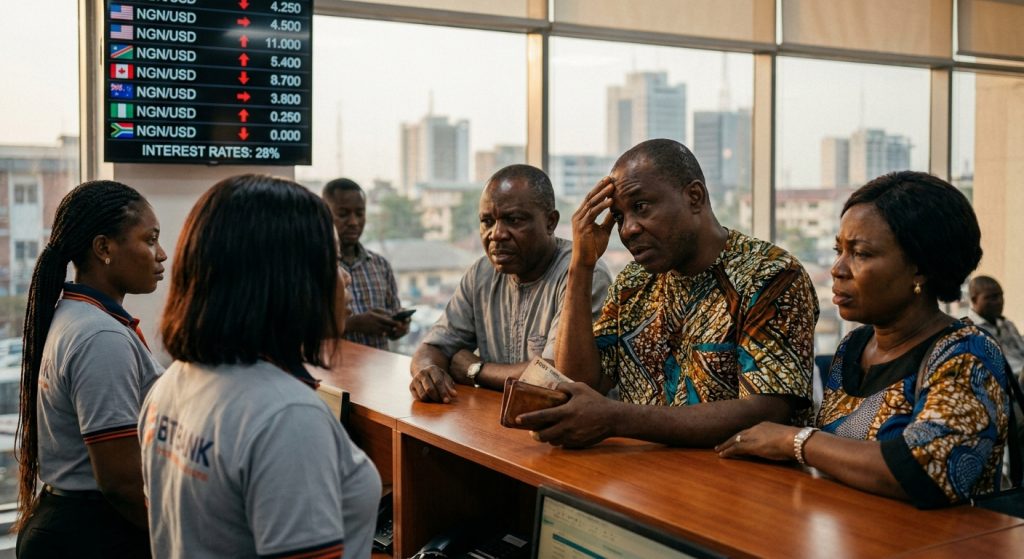
Image: Rising loan defaults are putting pressure on Nigerian banks. Photo credit: BusinessDay
Breaking News: CBN’s Latest Warning on Non-Performing Loans (NPLs)
15/05/2024 Update: The Central Bank of Nigeria (CBN) has issued its sternest warning yet about Nigeria’s bad loans crisis, revealing that:
- NPL ratio rose to 6.1% in Q1 2024 from 4.8% in Q4 2023 (CBN Financial Stability Report). This significant jump indicates a rapid deterioration in loan quality across the banking sector, surpassing the CBN’s prudential limit of 5%.
- ₦2.9 trillion debt owed by Nestoil to UBA, Access Bank, and FCMB now classified as non-performing. This single exposure highlights the systemic risk posed by large corporate defaults, particularly in capital-intensive sectors like oil and gas.
- New 2026 policy expands restrictions on defaulters to include trade finance instruments (Circular BSD/DIR/GEN/LAB/12/049). This move aims to close loopholes and ensure that all forms of credit exposure are subject to the same rigorous default management protocols, preventing serial defaulters from accessing new credit lines through different financial instruments.
“We will no longer tolerate serial defaulters. Full provisioning means banks must set aside 100% of bad loan values immediately.”
– CBN Governor, Yemi Cardoso (Bankers’ Committee Meeting, 10/05/2024)
Why This Matters:
When loans turn bad, banks have less money to lend, impacting economic growth and credit availability. We’re already seeing tangible effects across the economy:
- Average loan approval rates dropped from 68% to 41% for SMEs (NBS Q1 2024). This drastic reduction means small and medium-sized enterprises, often the engine of job creation, are struggling to access the capital needed for expansion and even day-to-day operations.
- Personal loan interest rates spiked to 28-35% (from 22-28% in 2023). This makes borrowing significantly more expensive for individuals, further straining household budgets already battling high inflation.
- Banks are recalling “high-risk” loans, especially in oil/gas and manufacturing sectors. This proactive measure by banks aims to de-risk their portfolios but can trigger liquidity crises for affected businesses.
🔴 Red Flag: The CBN’s new “severe stress tests” simulate 100% default rates on insider loans – a clear signal that more cracks may emerge within the banking system, particularly concerning loans granted to related parties or bank executives. This scrutiny aims to uncover hidden risks and ensure robust corporate governance.
Understanding the ‘Bad Loans Crisis’: What Are Non-Performing Loans (NPLs)?
An NPL is any loan where the borrower hasn’t made payments for 90 days or more. Under CBN guidelines (BSD/DIR/GEN/LAB/08/059), banks must:
- Classify loans as Substandard (90-180 days late), Doubtful (180-360 days), or Lost (>360 days). This classification dictates the level of provisioning required.
- Provision funds to cover potential losses (now 100% for Lost category). This means banks must set aside capital equivalent to the full value of loans deemed unrecoverable, directly impacting their profitability and capital adequacy.
- Write-off unrecoverable debts after 365 days. While written off, banks may still pursue recovery efforts, but the loan is removed from their active balance sheet.
Common Nigerian Scenarios Creating NPLs:
| Situation | Example | Typical Victims |
|---|---|---|
| Forex-linked loans | Business took $500k loan at ₦450/$ now repaying at ₦1,450/$ | Importers, manufacturers, businesses with foreign currency-denominated debt but Naira revenue. |
| Inflation squeeze | Trader’s costs rose 40% but can’t raise prices sufficiently to cover increased operational expenses and maintain profit margins. | Retailers, SMEs, service providers whose pricing power is limited. |
| Interest rate hike | Mortgage payment jumped from ₦120k to ₦185k/month due to a variable interest rate tied to the Monetary Policy Rate (MPR). | Homeowners with variable-rate mortgages, businesses with floating-rate loans. |
| Economic shock | Oil servicing firm lost 60% contracts due to reduced oil production or global price volatility, leading to a sharp decline in revenue. | Nestoil-type companies, businesses in sectors heavily reliant on government spending or commodity prices. |
| Insecurity & Supply Chain Disruptions | Farmer’s harvest destroyed by insecurity or unable to transport goods to market, leading to revenue loss and inability to repay agricultural loans. | Farmers, agricultural cooperatives, logistics companies operating in affected regions. |
| Infrastructure Deficit | Manufacturer’s production costs soar due to reliance on expensive alternative power sources (generators) amidst unreliable national grid. | Manufacturing sector, small-scale industries heavily dependent on stable power. |
Bank Impact:
For every ₦1 billion in NPLs, banks must set aside ₦1 billion in provisions – money that could have been lent to new borrowers or used for other productive investments. This capital erosion explains why:
- Access Bank’s profit before tax fell 18% Q1 2024. This decline is largely attributable to increased loan loss provisions and the challenging operating environment.
- UBA increased loan loss provisions by ₦227 billion. Such substantial provisioning directly reduces distributable profits and impacts shareholder returns.
- FCMB suspended dividend payments. This is a direct consequence of needing to conserve capital to absorb potential loan losses and meet regulatory capital adequacy ratios.
- Overall banking sector profitability is under pressure, leading to a more cautious lending approach and a general tightening of credit conditions.
The Key Players: Who’s Affected and Who’s Responding?
A. Central Bank of Nigeria (CBN)
The CBN, as the primary regulator, is at the forefront of managing this crisis. Its actions directly influence the operational environment for banks and the broader economy.
Actions Taken:
- 45% Cash Reserve Ratio (CRR): Banks must keep nearly half of deposits idle with CBN. While intended to mop up excess liquidity and curb inflation, this also reduces the funds available for lending, potentially exacerbating credit scarcity.
- Loan-to-Deposit Ratio (LDR) at 65%: Forcing banks to lend despite risks. This policy aims to stimulate credit growth but can push banks to take on more risk, especially in a high NPL environment.
- Global Standing Instruction (GSI): Automatically deducts from defaulters’ other bank accounts. Introduced to improve loan recovery, the GSI has been a powerful tool, but also raises concerns about its impact on individual financial stability.
- Increased Capital Requirements: The CBN is reportedly considering raising the minimum capital base for banks, which would force some banks to seek fresh capital or merge, strengthening the overall financial system.
Upcoming Measures:
- Credit Risk Management System 2.0 launching Q3 2024 will blacklist chronic defaulters. This advanced system will integrate data from various sources to provide a comprehensive view of borrowers’ creditworthiness, making it harder for serial defaulters to obtain new loans.
- Stricter BVN/NIN linkage requirements for all loans above ₦500,000. This aims to enhance borrower identification and reduce instances of identity fraud, improving the integrity of the credit system.
- Enhanced Supervision: The CBN plans to intensify its oversight of banks’ risk management frameworks and internal controls to prevent future NPL surges.
B. Commercial Banks
Nigerian commercial banks are directly bearing the brunt of the NPL crisis, impacting their profitability, liquidity, and lending capacity.
Most Exposed Banks (NPL Ratios):
| Bank | NPL Ratio (Q1 2024) | Major Bad Loan Exposure |
|---|---|---|
| UBA | 7.2% | ₦1.1trn (Nestoil, others in Oil & Gas, Manufacturing) |
| Access Bank | 6.8% | ₦890bn (Oil & Gas, Trade Finance) |
| FCMB | 5.9% | ₦420bn (Agriculture, SMEs) |
| Zenith Bank | 4.3% | ₦310bn (Real Estate, General Commerce) |
| GTBank | 3.7% | ₦280bn (SMEs, Consumer Loans) |
| Fidelity Bank | 5.5% | ₦350bn (Energy, Public Sector) |
| First Bank of Nigeria | 6.5% | ₦700bn (Manufacturing, Oil & Gas) |
Bank Survival Tactics:
- Recalling loans: Especially to sectors like oil/gas and construction, which are deemed high-risk. This can lead to business closures if borrowers cannot find alternative financing.
- Higher rates: New SME loans now 28-32% vs 22-25% in 2023. This makes borrowing prohibitively expensive for many businesses, stifling growth.
- Collateral demands: Even personal loans now require 150% collateral value. Banks are demanding more security to mitigate risk, making it harder for individuals and small businesses to access credit.
- Focus on government securities: Banks are increasingly investing in high-yielding FGN bonds and treasury bills, which are considered risk-free, rather than lending to the private sector.
- Digital transformation: Investing in technology to streamline operations, reduce costs, and improve risk assessment models.
C. Borrowers in Distress
The ultimate impact of the NPL crisis is felt by individuals and businesses struggling to repay their loans, often through no fault of their own, but due to the challenging economic climate.
Most Vulnerable Groups:
- SMEs: 63% report difficulty servicing loans (SMEDAN Survey). Small and medium enterprises are particularly vulnerable due to limited financial buffers and sensitivity to economic shocks.
- Mortgage holders: 42% behind on payments (MBAN). Rising interest rates and inflation erode disposable income, making mortgage repayments increasingly difficult.
- Airtime lenders: 80% of operators defaulted (CBN). This niche sector, often reliant on high-volume, low-margin transactions, has been severely impacted by economic downturns.
- Importers and Manufacturers: Heavily exposed to Naira devaluation, as their input costs are often foreign currency-denominated, while their revenues are in Naira.
- Individuals with Consumer Loans: Rising cost of living means less discretionary income, making it harder to meet personal loan and credit card obligations.
Case Study:
A Lagos-based food processor took a ₦50 million loan at 18% in 2022 to expand operations. With costs up 45% due to inflation and Naira devaluation making imported ingredients significantly more expensive, monthly payments now consume 70% of revenue. The business is facing liquidation, highlighting the severe pressure on local industries. This scenario is replicated across various sectors, leading to job losses and reduced economic activity.
Why Now? Unpacking the Drivers of Nigeria’s Current NPL Surge
The current NPL surge is not an isolated event but a culmination of several interconnected economic and policy factors.
A. Economic Triggers
| Factor | 2023 Level | 2024 Level | Impact on Loans |
|---|---|---|---|
| Inflation | 21.3% | 28.9% (April 2024) | Erodes repayment capacity for individuals and businesses, as real income decreases and operational costs rise. |
| Naira/$ (official) | ₦750 | ₦1,450 (May 2024) | Forex loans now 93% more expensive to service in Naira terms, crippling businesses with foreign currency debt. |
| MPR (Monetary Policy Rate) | 18.75% | 24.75% (May 2024) | Debt servicing costs surge for variable-rate loans, making them unaffordable for many borrowers. |
| Unemployment Rate | 4.2% (Q4 2023) | Expected to rise in 2024 | Job losses directly impact individuals’ ability to repay personal and consumer loans. |
| GDP Growth | 2.98% (2023) | Projected 3.3% (2024) | While positive, growth is not strong enough to offset high inflation and currency depreciation, leading to a ‘jobless growth’ scenario for many. |
B. Government Borrowing Crowding Out Private Sector
The government’s increasing reliance on domestic borrowing to finance its budget deficit has significant implications for the private sector and NPLs.
- ₦159 trillion total public debt (DMO, Q4 2023). A substantial portion of this is domestic, competing with the private sector for available funds.
- ₦8.1 trillion borrowed Jan-Apr 2024. This rapid pace of borrowing absorbs liquidity from the financial system.
- ₦31 trillion projected 2024 deficit. This indicates continued high borrowing needs, which will likely sustain upward pressure on interest rates.
This leaves less credit for businesses and individuals, while higher government bond yields (18-22%) make banks prefer risk-free lending to the state. This ‘crowding out’ effect means that even when banks have funds, they prefer to lend to the government at attractive rates rather than take on the higher risk associated with private sector loans, especially in the current economic climate. This further restricts credit access for productive sectors of the economy.
C. Sector-Specific Timebombs
Certain sectors are disproportionately affected, acting as potential flashpoints for further NPL accumulation.
- Oil & Gas: 38% of corporate NPLs (Nestoil crisis). This sector is highly capital-intensive and exposed to global commodity price volatility and regulatory changes. The Nestoil case is a prime example of how large exposures in this sector can significantly impact bank balance sheets.
- Manufacturing: 22% NPL ratio due to energy costs, forex scarcity for raw materials, and import competition. Local manufacturers struggle with high operational costs and an inability to compete with cheaper imports, leading to reduced profitability and loan repayment difficulties.
- Agriculture: 18% default rate from flooding, insecurity, and inadequate infrastructure. Despite government efforts to boost agriculture, farmers face significant risks from climate change, insecurity in food-producing regions, and poor access to markets.
- Real Estate: 15% unsold properties choking developers. High construction costs, coupled with reduced purchasing power among consumers, have led to a glut of unsold properties, making it difficult for developers to repay construction loans.
- General Commerce/Trade: This sector is highly sensitive to consumer spending power and import costs. With inflation eroding purchasing power and Naira devaluation increasing import costs, many traders are facing reduced sales and higher operating expenses, leading to loan defaults.
Regulatory Shift:
CBN’s COVID-19 forbearance (allowing loan restructuring) ended 31/12/2023. This means banks can no longer offer extended grace periods or lenient restructuring terms without incurring full provisioning requirements. This shift removes a critical safety net for struggling borrowers and forces banks to be more aggressive in managing their NPLs.
How This Affects YOUR Wallet: Direct Consumer Impacts
The bad loans crisis isn’t just a banking sector problem; its ripple effects are directly impacting the financial well-being of every Nigerian.
A. For Loan Seekers
- Higher rejection rates: 6 in 10 applications now declined. Banks are becoming extremely risk-averse, making it significantly harder for individuals and businesses to secure new loans.
- Collateral demands: Even ₦500k personal loans need property docs. The requirement for substantial collateral, even for relatively small loans, is a major barrier for many.
- Rate hikes:
- Personal loans: 25-35%
- SME loans: 28-32%
- Mortgages: 22-28%
- Shorter Tenors: Banks are offering shorter repayment periods to mitigate risk, increasing the monthly repayment burden on borrowers.
- Increased Scrutiny: Loan applications are subjected to more rigorous credit checks, background verification, and financial analysis.
B. For Depositors
- Lower savings rates: Fixed deposits now 8-12% vs 12-15% in 2023. While inflation is high, banks are not passing on the full benefit of high MPR to depositors, as they need to conserve funds for provisioning.
- Bank charges rising: GTB increased transfer fees by 40% in April. Banks are seeking alternative revenue streams to offset losses from NPLs and reduced lending income.
- Dividend cuts: UBA, Access Bank may slash payouts. Shareholders of banks with high NPLs may see reduced or suspended dividend payments as banks prioritize capital preservation.
- Reduced Branch Services: Some banks may scale back on physical branches or staff to cut costs, impacting customer service.
C. For Investors
- Bank stocks risk: ETI down 18% YTD, Access -12%. Investors in banking stocks face significant headwinds due to NPLs, increased provisioning, and regulatory uncertainty.
- Bond opportunities: FGN bonds now yield 18-22%. For risk-averse investors, government bonds offer attractive returns compared to other asset classes, drawing capital away from the equity market.
- Alternative assets: Consider treasury bills (14-17%) or commercial papers. These short-term instruments offer competitive returns with lower risk than equities.
- Real Estate Market Slowdown: Reduced credit access and high interest rates for mortgages will likely dampen activity in the real estate sector, affecting property values and rental yields.
What to Do Now: 7-Step Survival Plan
In these uncertain times, proactive financial management is crucial. Here’s a practical, actionable plan to safeguard your finances:
-
Audit Your Debts
Thoroughly list all your outstanding loans, including personal loans, mortgages, business loans, and credit card debts. For each, note the exact amount owed, the interest rate (fixed or variable), and the monthly due date. Use the CBN’s loan amortization calculator to project future payments, especially if your loan has a variable rate. Understanding your total debt burden and repayment schedule is the first step to effective management.
-
Restructure Early
If you anticipate or are already experiencing difficulty in meeting your loan obligations, do not wait until you default. Contact your bank immediately to discuss restructuring options. Banks are generally more flexible and willing to negotiate before a loan becomes non-performing. Potential options include tenor extension (spreading payments over a longer period to reduce monthly installments) or a temporary rate reduction (a possible 2-5% cut, depending on the bank and your relationship). Early engagement demonstrates good faith and can prevent your loan from being classified as an NPL, which has severe consequences for your credit score.
-
Build Multiple Income Streams
Diversifying your income sources is a powerful hedge against economic instability. Explore side hustles that require minimal startup capital (less than ₦50,000). Examples include:
- POS agency banking: With a startup cost of ₦15,000-₦30,000 for a POS machine, you can earn ₦15,000-₦30,000 profit monthly by providing cash withdrawal and deposit services in your community.
- Freelancing: If you have skills in writing, graphic design, web development, or social media management, platforms like Upwork or Fiverr can connect you with clients. A single project can fetch upwards of ₦25,000.
- Online Tutoring: Leverage your academic strengths to teach students online, earning per hour.
- E-commerce (Dropshipping): Start an online store without holding inventory, selling products directly from suppliers to customers.
-
Move Savings to Safer Havens
Re-evaluate where your savings are held. In a high-inflation environment, traditional savings accounts often yield negative real returns. Consider:
- For ₦5 million+: Look into FGN bonds, which currently offer attractive yields of 18%+ and are considered sovereign-backed, hence very low risk.
- For ₦100,000-₦5 million: Treasury bills (T-bills) are an excellent option, offering 14-17% yields for short-term investments (91, 182, or 364 days). They are also government-backed and highly liquid.
- For less than ₦100,000: Digital banks like Opay or Palmpay offer fixed deposit options with competitive rates (9-12%) and easy access. Ensure these platforms are licensed by the CBN and insured by NDIC.
-
Diversify Currency Exposure
Given the volatility of the Naira, allocating a small portion (10-15%) of your savings to dollar-denominated assets can provide a hedge against further devaluation. This can be done through CBN-approved channels such as:
- Dollar-denominated mutual funds: Offered by reputable asset management companies.
- Eurobonds: Issued by Nigerian corporations or the Federal Government in foreign currency.
- Diaspora bonds: If you have foreign contacts or are eligible, these bonds offer dollar-denominated returns.
- Domiciliary accounts: While not an investment, holding a portion of your funds in USD can protect against local currency depreciation.
-
Monitor Your Credit Report
Your credit report is a crucial financial health indicator. Obtain a free annual check from the CRC Credit Bureau. Review it meticulously for any inaccuracies or unauthorized loans. If you find errors, dispute them within 14 days to ensure your credit score remains healthy. A good credit score is vital for accessing future loans at favorable rates.
-
Prepare for Job Market Shifts
The economic downturn and NPL crisis may lead to job losses in vulnerable sectors. Future-proof your career by acquiring skills in recession-proof or high-demand industries:
- Healthcare: Roles like medical coding, nursing, and allied health professions are consistently in demand. Medical coding salaries, for instance, have seen a 35% increase in demand.
- Technology: Cloud computing, cybersecurity, data analytics, and AI are booming. Certifications in these areas can lead to salaries of ₦450,000+ monthly.
- Digital Marketing: Businesses always need to reach customers, making digital marketing skills valuable.
- Renewable Energy: As Nigeria transitions, skills in solar installation, maintenance, and energy efficiency will be highly sought after.
Red Flags: What to Watch Out For
As the bad loans crisis unfolds, certain indicators can signal increased risk or potential trouble. Being aware of these red flags can help you make informed financial decisions and protect yourself.
- Sudden Changes in Bank Policies: Be wary of your bank suddenly increasing fees, reducing transaction limits, or making it harder to access funds. These could be signs of liquidity stress or efforts to conserve capital.
- Aggressive Loan Recovery Tactics: While banks are within their rights to recover loans, overly aggressive or unethical tactics (e.g., public shaming, harassment) could indicate desperation or a high volume of NPLs.
- Unusually High Investment Returns Promises: Be extremely cautious of investment schemes promising unrealistic returns (e.g., 50% monthly). These are often Ponzi schemes, and the current economic climate makes people more vulnerable to such scams. Always verify the legitimacy and regulatory status of any investment platform with the SEC.
- Rumors of Bank Mergers or Acquisitions: While not always negative, persistent rumors of bank mergers or acquisitions, especially involving smaller or struggling banks, could signal underlying financial weaknesses. Keep an eye on official announcements from the CBN and NDIC.
- Difficulty Accessing Credit from Multiple Sources: If you find it increasingly difficult to get loans from various banks or lending platforms, even with a good credit history, it might indicate a systemic tightening of credit across the industry, not just an issue with your profile.
- Increased Default Rates in Your Industry: If you operate a business, pay attention to news and reports about default rates in your specific sector. A rise in NPLs among your peers could signal broader challenges that might soon affect your business.
- Unexplained Delays in Bank Transactions: While occasional delays can happen, consistent or unexplained delays in processing transactions, withdrawals, or transfers could be a subtle sign of operational or liquidity issues within a financial institution.
Key Takeaways
- Nigeria’s NPL ratio has risen to 6.1% in Q1 2024, exceeding the CBN’s 5% prudential limit, driven by high inflation, Naira devaluation, and rising interest rates.
- The CBN is enforcing strict provisioning rules and stress tests, impacting major banks with significant corporate loan exposures like Nestoil’s ₦2.9 trillion debt.
- Borrowers face higher loan rejection rates, increased interest rates (25-35% for personal loans), and stricter collateral requirements.
- Depositors may experience lower savings rates and increased bank charges, while investors in bank stocks face volatility.
- Proactive steps include auditing debts, early restructuring, diversifying income, moving savings to higher-yield, lower-risk instruments (e.g., FGN bonds, T-bills), and monitoring credit reports.
- The crisis is expected to last 18-24 months, necessitating a long-term financial resilience strategy.
FAQ: Nigeria’s Bad Loans Crisis Explained
Q: Can the CBN seize my assets for defaulting?
A: Yes, through the Global Standing Instruction (GSI). If you default on any loan (personal, business, or even a credit card) with a participating financial institution, the GSI allows banks to automatically debit funds from all your other accounts across different banks in Nigeria to recover the outstanding debt. This policy was implemented by the CBN to improve loan recovery rates and discourage serial defaulters. It’s crucial to understand that this applies to all accounts linked to your BVN/NIN.
Q: Which banks are safest for deposits now?
A: While all licensed banks in Nigeria are regulated by the CBN and deposits are insured by the NDIC up to ₦5 million per depositor per bank, some banks exhibit stronger financial health. Based on Q1 2024 NPL ratios, Zenith Bank (4.3%) and GTBank (3.7%) have the lowest non-performing loan ratios, indicating a healthier loan portfolio. However, it’s always prudent to spread your funds across multiple banks, ensuring that no single bank holds more than the NDIC’s ₦5 million coverage limit for your deposits. This diversification provides an extra layer of security.
Q: Should I take new loans during this crisis?
A: Taking new loans during a bad loans crisis should be approached with extreme caution and only if absolutely necessary. If you must borrow, prioritize loans with fixed interest rates. Variable-rate loans are highly risky in the current environment, as the CBN’s Monetary Policy Rate (MPR) could continue to rise, potentially pushing your interest payments to unaffordable levels (e.g., if MPR hits 30%). Ensure you have a robust repayment plan, a stable income source, and a clear understanding of all terms and conditions before committing to new debt.
Q: How long will this crisis last?
A: Economists and financial analysts project that the current bad loans crisis and associated economic instability could persist for 18-24 months. This timeline is contingent on several factors, including the effectiveness of CBN policies, global economic conditions, and the government’s ability to stabilize inflation and the Naira. A significant turnaround is expected only when inflation consistently drops below 20% and the Naira stabilizes against major foreign currencies. Therefore, it’s advisable to plan your finances with a 2-year financial buffer and a long-term perspective.
Q: Can my salary account be garnished for business loans?
A: Your salary account can only be garnished for business loans if you signed as a personal guarantor for that business loan. In such a scenario, your personal assets, including your salary account, can be used to recover the debt if the business defaults. However, if you are merely an employee or a director without a personal guarantee, corporate debts generally do not affect your personal accounts. Always be extremely cautious when signing personal guarantees for business loans, as it blurs the line between personal and corporate liability.
Q: What is the role of the NDIC in this crisis?
A: The Nigeria Deposit Insurance Corporation (NDIC) plays a crucial role in maintaining financial system stability by insuring deposits in licensed banks. In the event of a bank failure, the NDIC guarantees to pay depositors up to a maximum of ₦5 million per depositor per bank. This provides a safety net for small depositors and helps prevent bank runs. During a bad loans crisis, the NDIC’s role becomes even more critical in reassuring the public about the safety of their deposits and managing potential bank distress.
Q: How does the NPL crisis affect foreign direct investment (FDI) in Nigeria?
A: A high NPL ratio signals financial instability and increased risk within the banking sector, which can deter Foreign Direct Investment (FDI). Foreign investors look for stable and predictable financial environments. When banks are burdened with bad loans, their capacity to lend to new businesses (including foreign-backed ventures) is reduced, and the overall perception of economic risk increases. This can lead to a decline in FDI, impacting job creation and economic growth.