
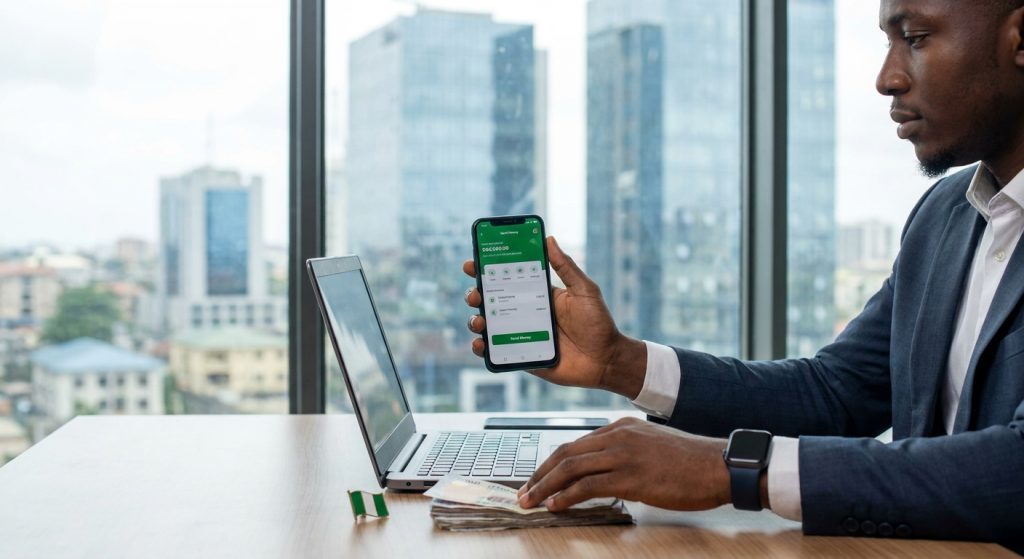
Quick Guide: How To Send Money To Nigeria
This guide explains the key costs, trade-offs, and practical steps Nigerian readers should know.
How to Send Money to Nigeria Safely: Fees, Exchange Rates, Limits, and Pickup Options (2026 Guide)
Quick Guide: How To Send Money To Nigeria
Sending money to Nigeria in 2026 is easier and more competitive than ever, but navigating fees, exchange rates, and regulations can be complex. This comprehensive guide from KudiCompass breaks down the best methods, outlines crucial CBN requirements like BVN and NIN, and provides step-by-step instructions for safe, cost-effective transfers. We’ll cover everything from popular digital services like Wise and Remitly to the emerging role of stablecoins, ensuring you get the best value for your Naira.
What You Need First
To send money to Nigeria in 2026, the most efficient and cost-effective methods are typically online money transfer services such as Wise, Remitly, WorldRemit, and Sendwave. These platforms offer competitive exchange rates (around ₦1370.73 per USD as of May 2026), low fees, and fast delivery, often within minutes to Nigerian bank accounts. Recipients will need a valid ID, BVN, and/or NIN, and payouts are generally in Naira due to CBN regulations. Always compare providers using live tools to find the best deal.
Introduction: Your Essential Guide to Sending Money to Nigeria in 2026
For millions of Nigerians living abroad, sending money home is more than just a transaction; it’s a lifeline. Remittances fuel family support, drive local businesses, and contribute significantly to Nigeria’s economy. However, the journey of these funds from your pocket in the diaspora to your loved ones’ hands in Nigeria can be fraught with challenges. High fees, fluctuating exchange rates, and ever-evolving regulatory requirements can make what should be a straightforward process feel like a maze.
That’s where this KudiCompass guide comes in. As your trusted Nigerian financial educator, we understand these challenges intimately. This comprehensive, up-to-date (2026) roadmap is designed to equip you with all the information you need to send money to Nigeria safely, efficiently, and cost-effectively. We’ll cut through the jargon, highlight the best methods available this year, and focus specifically on Nigerian-centric details – from CBN regulations to the local providers you can trust, all priced in Naira. Our goal is to empower you to make informed decisions, ensuring your hard-earned money gets home with maximum value and minimal hassle.
Understanding the Basics: Key Factors When Sending Money to Nigeria
Before you hit “send,” it’s crucial to understand the fundamental elements that impact your money transfer. These factors directly influence how much your recipient gets and how quickly they get it.
Exchange Rates (FX)
This is arguably the most critical factor. The exchange rate determines how many Naira your foreign currency (e.g., USD, GBP, EUR) will convert into.
- Mid-Market Rate: This is the “true” exchange rate you see on Google or Reuters – the midpoint between the buy and sell prices on the global market.
- Customer Rate: This is the rate offered by money transfer services. Most providers add a small margin to the mid-market rate to cover their costs and make a profit. Some services, like Wise, are known for offering very close to the mid-market rate and charging a separate, transparent fee.
- Hidden Margins: Be wary of services advertising “zero fees” or “0% commission.” They often embed their profit into a less favourable exchange rate. Always compare the Naira amount your recipient will receive for a given foreign currency amount.
As of May 2026, the Xe.com benchmark rate for 1 US Dollar is approximately ₦1370.7328. Use this as a reference point when comparing provider rates.
Transfer Fees
Fees are what providers charge for their service. They can come in different forms:
- Fixed Fees: A flat amount charged regardless of the transfer size (e.g., $3, £5). These tend to be more cost-effective for larger transfers.
- Percentage-Based Fees: A percentage of the total amount being sent (e.g., 1%, 2%). These can add up quickly for larger transfers but might be cheaper for smaller amounts.
- Hidden Charges: Some banks or older services might have intermediary bank fees or receiving bank fees that are not disclosed upfront by the sending platform. Always check the total amount your recipient will get. Based on trends from 2026, typical fixed fees for online money transfer services range from $0 to $5 USD, with percentage-based fees often between 0.5% and 3%.
Transfer Limits
Providers and Nigerian regulations impose limits on how much you can send:
- Daily, Weekly, Monthly Limits: These are set by the money transfer service based on your verification level and their internal policies.
- CBN Regulations: The Central Bank of Nigeria (CBN) also sets limits, particularly for cash pickups or transactions involving specific account types. For instance, some mobile money wallets might have lower transaction limits than full bank accounts.
Speed of Transfer
How quickly the money reaches your recipient is crucial, especially for urgent needs:
- Instant/Minutes: Many online services now offer near-instant transfers to Nigerian bank accounts, often within minutes.
- Same-Day: Funds arrive on the same business day.
- 1-3 Business Days: More common for traditional bank wire transfers or if there are verification delays.
Pickup/Delivery Options
How your recipient accesses the funds:
- Bank Deposit: The most common and convenient method, directly credited to a Nigerian bank account (e.g., GTBank, Zenith Bank, Access Bank, UBA, First Bank).
- Mobile Money/Wallet: Funds sent to a mobile money account (e.g., OPay, PalmPay, Paga).
- Cash Pickup: Recipient collects cash from a designated agent location (e.g., bank branch, specific remittance partner). Requires valid ID and a reference number.
- Home Delivery: A less common but available option with some services, where cash is delivered to the recipient’s address.
Security & Regulation
Your peace of mind is paramount:
- Licensed Providers: Always use services licensed and regulated in both the sending country and Nigeria. In Nigeria, the CBN regulates international money transfer operators (IMTOs).
- Anti-Fraud Measures: Reputable services employ robust security protocols to protect your funds and personal data.
- Recipient Verification: Nigerian regulations, especially those from the CBN, require recipients to provide valid identification like BVN (Bank Verification Number) and NIN (National Identification Number) to receive funds, enhancing security and preventing illicit financial flows.
Top Methods to Send Money to Nigeria: A Detailed Breakdown
Choosing the right method depends on your priorities: speed, cost, convenience, and the amount you’re sending. Here’s a detailed look at the most popular and emerging options in 2026.
3.1 Online Money Transfer Services
These digital platforms have revolutionized remittances, offering competitive rates, lower fees, and faster delivery than traditional methods. They are typically the best choice for most diaspora remitters.
How they work: You sign up online or via an app, link your bank account or debit/credit card, enter recipient details (bank name, account number, BVN, NIN), and initiate the transfer. The service converts your foreign currency to Naira and deposits it directly into the recipient’s Nigerian bank account.
Key Players in 2026:
- Wise (formerly TransferWise):
- Pros: Known for transparent pricing and using the mid-market exchange rate, with a separate, low fee. Excellent for larger transfers. Offers multi-currency accounts.
- Cons: Not always the absolute cheapest for very small transfers.
- Speed: Usually same-day or instant to Nigerian bank accounts.
- Fees: Low, transparent fixed fee (e.g., $5 for a $1,000 transfer, plus a small percentage of the amount).
- Nigerian Bank Partners: Works with virtually all Nigerian commercial banks (e.g., GTBank, Zenith, Access, UBA, First Bank, Stanbic IBTC).
- Remitly:
- Pros: Offers an “Express” option for delivery within minutes to Nigerian bank accounts. Competitive rates and often has promotional offers for new users. Loyalty program available.
- Cons: Exchange rate margin might be slightly higher than Wise for some corridors, especially for their “Economy” option.
- Speed: “Express” option delivers within minutes; “Economy” takes 1-3 business days.
- Fees: Fixed fee, often lower for larger amounts or specific payment methods.
- Nigerian Bank Partners: Extensive network, including GTBank, Zenith, Access, UBA, First Bank, Polaris Bank, Union Bank, etc.
- WorldRemit:
- Pros: Very versatile, offering bank deposits, mobile money transfers, and cash pickup options. Strong presence across Africa.
- Cons: Fees can sometimes be slightly higher than Remitly or Sendwave for specific corridors.
- Speed: Minutes to 1 business day for bank deposits; instant for mobile money and cash pickup.
- Fees: Low, often fixed fee depending on the method and amount.
- Nigerian Bank Partners: Broad network for bank transfers and cash pickup locations (e.g., Access Bank, Fidelity Bank, First Bank, GTBank, UBA, Zenith Bank). Also supports mobile money wallets like Paga.
- Sendwave:
- Pros: Extremely popular for African remittances due to its focus on low fees (often zero for certain corridors) and fast delivery. Very user-friendly app.
- Cons: May have slightly less competitive rates than some larger players for very large transfers.
- Speed: Often within minutes.
- Fees: Very low, sometimes zero for specific sending countries and payment methods.
- Nigerian Bank Partners: Major banks supported.
- Xe.com:
- Pros: Reliable, strong reputation in currency exchange. Good for larger transfers.
- Cons: Interface might be less intuitive than some app-first competitors.
- Speed: Same-day or instant once funds are received.
- Fees: Low, often fixed.
- Nigerian Bank Partners: Supports direct bank deposits to most Nigerian banks.
- LemFi:
- Pros: Specifically designed for the African diaspora, offering local currency accounts in sending countries. Competitive rates and low fees.
- Cons: Still growing its global footprint compared to established giants.
- Speed: Minutes.
- Fees: Low.
- Nigerian Bank Partners: All major banks.
- Taptap Send:
- Pros: Simple, fast, and often offers zero fees for transfers to Nigeria. Focuses on making remittances easy for diaspora communities.
- Cons: Exchange rates might vary.
- Speed: Minutes.
- Fees: Often zero.
- Nigerian Bank Partners: Broad support for Nigerian bank accounts.
- Raenest:
- Pros: An emerging player offering competitive rates and a focus on digital convenience.
- Cons: Newer to the market, so less established track record than some.
- Speed: Fast.
- Fees: Competitive.
- Nigerian Bank Partners: Supports major Nigerian banks.
3.2 Traditional Bank Wire Transfers (SWIFT)
While reliable, these are generally less cost-effective and slower for personal remittances compared to online services.
How they work: You initiate the transfer through your bank. Your bank sends the money via the SWIFT network to a correspondent bank, which then forwards it to the recipient’s Nigerian bank.
- Pros: Very secure, ideal for very large corporate transfers or when other options aren’t available.
- Cons: High fees (often fixed plus intermediary bank charges), less competitive exchange rates, and slower (2-5 business days).
- Required Details: Recipient’s full name, address, bank name, account number, and the Nigerian bank’s SWIFT/BIC code.
3.3 Cash Pickup Services (e.g., Western Union, MoneyGram)
These services are useful if your recipient doesn’t have a bank account or needs immediate cash.
How they work: You send money online or at an agent location. The recipient goes to a designated pickup point in Nigeria with a reference number and valid ID.
- Pros: Widely available, instant cash for recipients without bank accounts.
- Cons: Generally higher fees and less favourable exchange rates compared to online bank transfers.
- Required Documents for Recipient: Valid government-issued ID (NIN, BVN, Driver’s License, International Passport), and the unique Money Transfer Control Number (MTCN for Western Union) or reference number.
- Pickup Locations: Major Nigerian banks (e.g., Access Bank, First Bank, UBA, Zenith Bank), and dedicated agent locations.
3.4 Mobile Money/Wallet Transfers
While primarily domestic, some international services integrate with Nigerian mobile money platforms.
How they work: Funds are sent directly to a recipient’s mobile money wallet (e.g., OPay, PalmPay, Paga). The recipient can then use the funds for payments, withdrawals, or transfer to a linked bank account.
- Pros: Instant, convenient for smaller amounts, lower fees, especially for domestic use. Growing rapidly in Nigeria as highlighted by Moniepoint Blog in May 2026.
- Cons: Lower transaction limits compared to bank accounts, not all international services support direct mobile money transfers.
- Nigerian Providers: OPay, PalmPay, Paga, Chipper Cash.
3.5 Cryptocurrency (e.g., Binance P2P for USDT)
This method is gaining traction among tech-savvy users but comes with significant risks and regulatory complexities in Nigeria.
How it works: You buy a stablecoin (e.g., USDT – Tether) with your foreign currency, then use a Peer-to-Peer (P2P) platform like Binance P2P to sell the USDT to a Nigerian buyer who pays Naira directly into your recipient’s bank account.
- Pros: Can offer exchange rates closer to the parallel market, potentially yielding more Naira. Lower transaction fees for the crypto transfer itself.
- Cons: High volatility risk, complex for beginners, significant counterparty risk (risk of fraud from the P2P trader), and regulatory uncertainty in Nigeria. The CBN has maintained a stance against cryptocurrency transactions involving regulated financial institutions, making direct bank transfers to crypto exchanges difficult. While P2P circumvents this, it operates in a grey area. KudiCompass advises extreme caution and recommends this only for experienced users who understand the risks.
- Current Reality (May 2026): Many diaspora Nigerians still use Binance P2P for off-ramping stablecoins to local currency.
3.6 Informal Channels (e.g., ‘Bureau de Change’ or ‘Black Market’)
WARNING: KudiCompass strongly advises against using informal channels.
- Risks: High risk of fraud, no consumer protection, potential for receiving counterfeit currency, and illegality. While they might offer seemingly better rates, the risks far outweigh any perceived benefits. You have no recourse if something goes wrong.
3.7 NEW: NGN eNaira (Digital Currency)
Nigeria’s Central Bank Digital Currency (CBDC), the eNaira, is an emerging option.
- Current Status (May 2026): While the eNaira is primarily for domestic transactions, the CBN has plans to integrate it into international remittances. This could potentially offer another direct, low-cost, and instant channel for sending money from abroad directly into eNaira wallets.
- Future Potential: Keep an eye on developments here. If successful, it could become a game-changer for remittances, offering a direct, government-backed digital channel.
Comparison Table: Top Online Money Transfer Services to Nigeria (2026)
| Service | Typical Exchange Rate (vs. mid-market) | Typical Fees (to NGN) | Speed to Bank Account | Key Features |
| :————- | :————————————- | :——————– | :——————– | :————————————————- |
Wise | Mid-market rate + small transparent fee | Low, transparent | Same-day/Instant | Transparent pricing, multi-currency accounts
Remitly | Competitive, often slightly above mid-market | Low, fixed/percentage | Minutes (Express) | Express & Economy options, loyalty program
WorldRemit | Competitive | Low, fixed/percentage | Minutes to 1 business day | Bank deposit, cash pickup, mobile money
Sendwave | Competitive | Very low/Zero for some corridors | Minutes | Focus on Africa, simple app
Xe.com | Competitive | Low, often fixed | Same-day/Instant | Reliable, good for larger transfers
LemFi | Competitive | Low | Minutes | Focus on African diaspora, local currency accounts
Taptap Send | Competitive | Low/Zero for some corridors | Minutes | Simple, fast, focus on diaspora
Understanding Nigerian Regulations: BVN, NIN, and CBN Directives
Navigating Nigerian financial regulations is crucial for smooth and compliant money transfers. The Central Bank of Nigeria (CBN) plays a pivotal role in regulating international money transfers to ensure financial stability, combat money laundering, and protect consumers.
Bank Verification Number (BVN)
- What it is: A unique 11-digit identification number issued by the CBN to every bank account holder in Nigeria. It links all your accounts across different banks.
- Why it’s needed: Since 2026, the CBN has mandated BVN for almost all financial transactions in Nigeria. For receiving international remittances, your recipient’s BVN is often a mandatory requirement. It helps verify identity, prevent fraud, and comply with anti-money laundering (AML) regulations.
- How to get one: If your recipient doesn’t have a BVN, they can enroll at any commercial bank in Nigeria. It involves biometric capture (fingerprints, facial image) and takes about 24-48 hours for the number to be generated.
National Identification Number (NIN)
- What it is: A unique 11-digit number issued by the National Identity Management Commission (NIMC) to every Nigerian citizen and legal resident.
- Why it’s needed: The Nigerian government is increasingly making NIN mandatory for various services, including financial transactions. Some international money transfer operators (IMTOs) may require the recipient’s NIN in addition to or as an alternative to BVN, especially for higher value transactions or for new bank account openings.
- How to get one: Enrollment is done at NIMC centers across Nigeria. It involves biometric data capture and takes varying times for issuance.
CBN Directives on International Money Transfers
- Payment in Naira: Since 2026, the CBN has directed that all international money transfers to Nigeria must be paid out in Naira. Recipients cannot receive foreign currency cash or foreign currency deposits for remittances. This was a move to boost Naira liquidity and manage foreign exchange.
- Licensing of IMTOs: Only CBN-licensed International Money Transfer Operators (IMTOs) are permitted to facilitate remittances to Nigeria. This ensures that operators meet strict regulatory and financial stability requirements. All the reputable online services mentioned above are either licensed IMTOs or partner with licensed IMTOs in Nigeria.
- Reporting Requirements: IMTOs are required to report all transactions to the CBN, especially those exceeding certain thresholds, to monitor flows and prevent illicit activities. This is why providers ask for detailed information about the sender and recipient.
- Beneficiary Account Verification: The CBN mandates that recipient bank accounts must be valid and linked to the correct BVN/NIN. This means if the name on the remittance doesn’t exactly match the name on the bank account and BVN, the transfer might be delayed or rejected.
What this means for you:
- Ensure your recipient has a BVN and NIN: Confirm these details before initiating a transfer to avoid delays.
- Verify recipient details carefully: Double-check names, account numbers, and BVN/NIN to match bank records.
- Expect Naira payout: Your recipient will always receive Naira, regardless of the currency you send.
- Use licensed providers: Stick to reputable services like Wise, Remitly, WorldRemit, Sendwave, etc., to ensure compliance and security.
Step-by-Step Guide: How to Send Money to Nigeria Today (2026)
Ready to send money? Follow these simple steps to ensure a smooth and successful transfer.
Step 1: Choose Your Preferred Service
Based on the comparison table and detailed breakdown, select an online money transfer service that best fits your needs for fees, exchange rates, speed, and convenience. For most people, Wise, Remitly, WorldRemit, or Sendwave are excellent choices for direct bank deposits.
Step 2: Register and Verify Your Account
- Sign Up: Visit the service’s website or download their mobile app. You’ll need to provide your personal details (name, address, date of birth, phone number, email).
- Verification (KYC – Know Your Customer): This is a mandatory step for regulatory compliance. You will typically need to upload:
- A valid government-issued ID (e.g., passport, driver’s license, national ID card from your country of residence).
- Proof of address (e.g., utility bill, bank statement from the last 3 months).
- Some services might require a selfie or video verification.
- Timeline: Verification can take anywhere from a few minutes to 2 business days, depending on the service and the clarity of your documents. It’s best to do this before you need to send money urgently.
Step 3: Enter Transfer Details
- Sending Amount & Currency: Specify how much foreign currency you want to send. The service will immediately show you the equivalent Naira amount your recipient will receive, including all fees and the exchange rate. This transparency is key.
- Recipient’s Country: Select “Nigeria.”
- Delivery Method: Choose “Bank Deposit” for direct transfers, “Mobile Money” if applicable, or “Cash Pickup” if preferred.
Step 4: Provide Recipient Information
This is where accuracy is paramount to avoid delays or rejected transfers.
- Full Name: Ensure it exactly matches the name on their Nigerian bank account and BVN/NIN.
- Bank Name: Select the correct Nigerian bank (e.g., GTBank, Access Bank, Zenith Bank).
- Account Number: Double-check the 10-digit account number.
- Bank Verification Number (BVN): This is often a mandatory field.
- National Identification Number (NIN): Some services or higher amounts might require this.
- Phone Number & Email: For notifications.
- Address: Recipient’s physical address in Nigeria.
Step 5: Choose Your Payment Method
Select how you want to pay for the transfer:
- Bank Transfer (ACH/SWIFT): Often the cheapest option, but can take 1-3 business days for the funds to reach the service.
- Debit Card: Faster than bank transfer, usually instant, but may incur a slightly higher fee.
- Credit Card: Fastest option, often instant, but typically carries the highest fees (due to credit card processing charges and potential cash advance fees from your card issuer).
- Apple Pay/Google Pay: Convenient, usually instant, fees similar to debit cards.
Step 6: Review and Confirm
- Carefully review all the details: sender information, recipient information, amount to send, Naira amount to receive, fees, and exchange rate.
- Confirm you agree with the terms and conditions.
Step 7: Send Money and Track Your Transfer
- Click “Send” or “Confirm.”
- You will receive a confirmation email or SMS with a tracking number.
- Use this tracking number on the service’s website or app to monitor the status of your transfer.
- Your recipient will also receive an SMS notification once the money is credited to their account or is ready for pickup.
Step 8: Inform Your Recipient
It’s good practice to let your recipient know that money is on the way, especially if they need to provide additional details or pick up cash. Tell them the exact amount they should expect in Naira and any reference numbers if it’s a cash pickup.
By following these steps, you can confidently send money to Nigeria, knowing you’ve used a reliable method and complied with all necessary regulations.
Tips for Getting the Best Exchange Rates and Lowest Fees
Maximizing the Naira your recipient receives is key. Here’s how to ensure you’re always getting the best deal:
- Compare, Compare, Compare! This is the golden rule. Never assume one service is always the cheapest. Exchange rates and fees fluctuate daily, even hourly. Use comparison tools like KudiCompass’s own comparison engine, or sites like Monito or Exiap, which provide real-time comparisons of multiple providers.
- Look Beyond “Zero Fees”: As mentioned, “zero fees” often means a worse exchange rate. Always focus on the total Naira amount your recipient will receive. A service with a small fee but a better exchange rate might deliver more Naira.
- Understand the Mid-Market Rate: Know the mid-market rate (e.g., from Xe.com) before you check providers. This gives you a benchmark to evaluate how much margin a service is adding.
- Consider Transfer Size:
- Small Transfers (e.g., below ₦50,000 equivalent): Services like Sendwave or Taptap Send, which sometimes offer zero fees, can be very competitive. Remitly’s “Express” option might also be good for speed, even with a small fee.
- Medium to Large Transfers (e.g., ₦50,000 to ₦500,000 equivalent): Wise, Remitly, and WorldRemit often provide excellent value with competitive rates and transparent fees.
- Very Large Transfers (e.g., above ₦500,000 equivalent): Wise and Xe.com are often preferred for their close-to-mid-market rates and reliability for substantial amounts.
- Choose Your Payment Method Wisely:
- Bank Transfer (ACH/SWIFT): Generally the cheapest way to fund your transfer, but slower.
- Debit Card: A good balance of speed and cost.
- Credit Card: Most expensive due to higher processing fees and potential cash advance charges from your bank. Avoid if possible for cost savings.
- Look for Promotional Offers: Many services offer fee-free first transfers or enhanced exchange rates for new customers. Take advantage of these, but remember to compare for subsequent transfers.
- Sign Up for Rate Alerts: Some services and comparison sites allow you to set up email alerts for when the exchange rate reaches a certain level, helping you send money when the market is favourable.
- Avoid Weekend Transfers: Exchange rates can sometimes be less favourable on weekends when forex markets are closed, as providers might use a wider margin to protect themselves against market fluctuations.
- Check for Loyalty Programs: If you send money frequently, some services like Remitly offer loyalty benefits or reduced fees for repeat customers.
By being diligent and comparing options, you can significantly increase the Naira value of your remittances to Nigeria.
Common Challenges and How to Overcome Them
Even with the best intentions, you might encounter some hurdles. Here’s how to navigate common issues:
- Recipient Doesn’t Have BVN/NIN:
- Solution: Advise your recipient to visit any commercial bank (for BVN) or NIMC office (for NIN) to enroll. This is a one-time process and essential for all financial transactions in Nigeria.
- Prevention: Always confirm your recipient has these IDs before initiating a transfer.
- Incorrect Recipient Details (Name Mismatch, Wrong Account Number):
- Problem: The most common reason for delays or rejected transfers. The name on the transfer MUST exactly match the name on the bank account and BVN.
- Solution: Immediately contact the money transfer service’s customer support. They might be able to correct the details or reverse the transfer, but this can cause significant delays (days or even weeks) and sometimes incur fees.
- Prevention: Double-check, triple-check, and even quadruple-check all recipient details before confirming the transfer. Ask your recipient to send you their full name, bank name, account number, and BVN/NIN in writing to avoid typos.
- Transfer Limits Exceeded:
- Problem: You try to send more than the daily/weekly/monthly limit set by the provider or CBN.
- Solution: For provider limits, you might need to increase your verification level by providing more documents. For CBN limits, you may need to send the money in smaller installments over time or use a different method suitable for larger amounts (e.g., traditional bank wire for corporate funds, though less ideal for personal remittances).
- Prevention: Be aware of your chosen service’s limits and plan accordingly.
- Payment Method Issues (Card Declined, Bank Transfer Delay):
- Problem: Your debit/credit card is declined, or your bank transfer to the remittance service takes longer than expected.
- Solution: Check with your bank or card issuer for reasons for the decline. Ensure you have sufficient funds. For bank transfers, remember they are not instant and can take 1-3 business days to clear.
- Prevention: Inform your bank about large international transactions to prevent fraud flags. Use a payment method with sufficient funds.
- Regulatory Scrutiny/Holds:
- Problem: Your transfer is put on hold for additional review by the service or Nigerian financial authorities. This can happen for large amounts, unusual transaction patterns, or if details are unclear.
- Solution: Cooperate fully with the service by providing any requested additional documentation or information.
- Prevention: Use a reputable, licensed service. Ensure all your details and recipient details are accurate and truthful. Avoid sending money for others or using your account for third-party transactions.
- Fraud and Scams:
- Problem: You are targeted by fraudsters asking you to send money.
- Solution: NEVER send money to someone you don’t know personally or haven’t verified. Be suspicious of requests for money for emergencies you cannot verify, online dating scams, lottery winnings, or job offers that require upfront payments.
- Prevention: If in doubt, don’t send. If you suspect fraud, report it to the money transfer service and relevant authorities.
By being proactive and informed, you can significantly reduce the chances of encountering these common challenges and ensure your remittances reach their intended recipients without stress.
What to Do Next
Now that you’re equipped with this comprehensive guide, here’s your action plan:
- Identify Your Needs: Determine the amount you want to send, how quickly it needs to arrive, and your recipient’s preferred pickup method (bank deposit, cash pickup, mobile money).
- Gather Recipient Information: Contact your recipient and confirm their full legal name, bank name, 10-digit account number, BVN, and NIN. Double-check everything for accuracy.
- Compare Providers: Use a real-time comparison tool (like the one on KudiCompass.com) to compare exchange rates and fees from Wise, Remitly, WorldRemit, Sendwave, and other top services for your specific transfer.
- Register and Verify: Choose your preferred service and complete the registration and identity verification process. Do this before you need to send money urgently.
- Initiate Your First Transfer: Follow the step-by-step guide above to send your money safely and efficiently.
- Stay Informed: Bookmark KudiCompass.com for future updates on Nigerian financial regulations and the best remittance options.
By taking these steps, you’ll ensure your remittances to Nigeria are always smooth, secure, and offer the best value for your hard-earned money.
Frequently Asked Questions (FAQ)
Q1: Can I send money to Nigeria without a BVN or NIN?
A1: No, not reliably through official channels. For bank deposits and most cash pickups, the recipient’s BVN is mandatory. NIN is increasingly required as well. Using services that don’t ask for these details is risky and likely non-compliant with CBN regulations, potentially leading to lost funds or legal issues. Ensure your recipient obtains these IDs.
Q2: What is the cheapest way to send money to Nigeria in 2026?
A2: The cheapest way often depends on the amount you’re sending and the current exchange rates/fees. For most transfers, online money transfer services like Wise, Remitly, WorldRemit, Sendwave, LemFi, and Taptap Send are the most cost-effective. Always use a comparison tool to check live rates and fees for your specific transfer amount, as they fluctuate. Bank transfers are generally cheaper to fund your remittance than credit cards.
Q3: How long does it take for money to reach Nigeria?
A3: Most online money transfer services offer instant or near-instant (within minutes) delivery to Nigerian bank accounts. Some “economy” options or traditional bank wires can take 1-3 business days. Cash pickups are often available within minutes of the transfer being sent.
Q4: Can I send money to Nigeria using PayPal?
A4: No, directly sending money to a Nigerian PayPal account for withdrawal to a local bank account is not supported for international remittances. PayPal in Nigeria primarily functions for making online payments and receiving funds from certain international merchants, but not for direct peer-to-peer international money transfers for withdrawal.
Q5: What are the limits for sending money to Nigeria?
A5: Limits vary by provider and your verification level. Most online services have daily, weekly, and monthly limits that can range from a few hundred to several thousand US dollars (or equivalent). The CBN also has regulatory oversight on transaction limits. For higher limits, you typically need to provide more identity verification documents to the service.
Q6: Can I send money to Nigeria for cash pickup?
A6: Yes, services like WorldRemit, Western Union, and MoneyGram offer cash pickup options in Nigeria. Your recipient will need a valid government-issued ID (NIN, BVN, Driver’s License, or International Passport) and the unique reference number from your transfer to collect the cash at designated agent locations (often major banks).
Q7: Is it safe to send money to Nigeria using cryptocurrency?
A7: While some individuals use cryptocurrency (e.g., Binance P2P for USDT) to send money to Nigeria, KudiCompass advises extreme caution. It carries significant risks, including high volatility, potential for fraud from P2P traders, and regulatory uncertainty in Nigeria. The CBN has a restrictive stance on crypto in the traditional financial system. It is generally not recommended for beginners or those seeking maximum security and consumer protection.
Q8: Why does my recipient need a BVN/NIN to receive money?
A8: The CBN mandates BVN and increasingly NIN for all financial transactions in Nigeria, including international remittances. This is a critical measure for identity verification, combating money laundering, preventing fraud, and ensuring compliance with anti-terrorism financing regulations. Without these, transfers will likely be rejected or delayed.