
Quick Summary
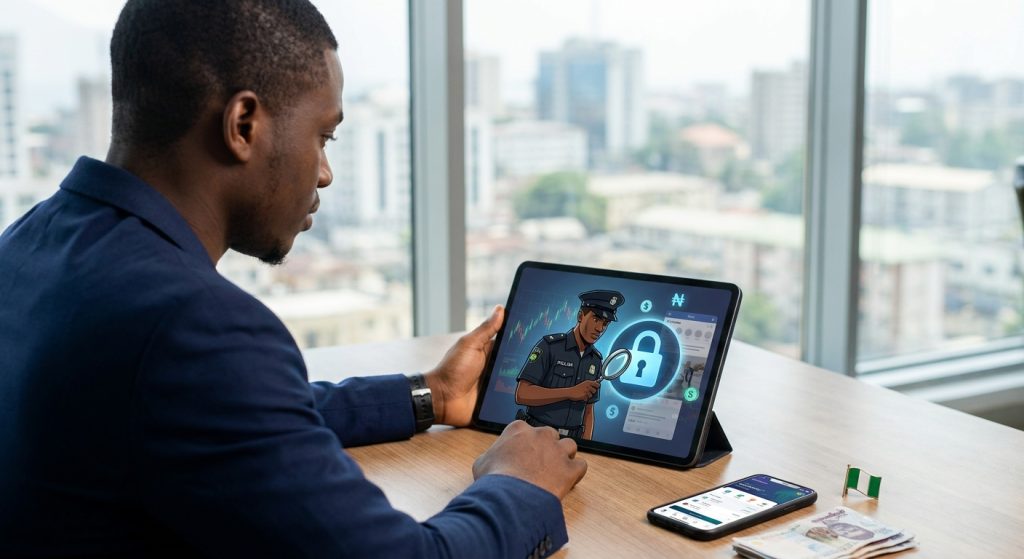
The Nigeria Police Force (NPF) has recently made significant strides against cybercrime, apprehending Aliyu Muhammed for a ₦5.7 million fraud involving a fake Facebook marketplace and extraditing Samuel Ugberease to the US for a $1.5 million romance scam. These 2026 developments highlight the persistent threat of online fraud, from social engineering to sophisticated wire fraud, impacting individual finances and the broader Nigerian financial ecosystem. KudiCompass analyzes the methods, regulatory responses, and crucial steps Nigerians must take to protect their digital assets amidst these evolving threats.
Quick Answer
The NPF’s recent arrests and extradition of cyber fraud suspects, including a ₦5.7 million fake marketplace scam and a $1.5 million romance fraud, underscore the critical need for enhanced digital security. These incidents demonstrate that cybercriminals exploit social media and online communication channels, posing significant risks to personal savings, investments, and overall financial stability. Regulatory bodies like the CBN and financial institutions are intensifying efforts, but individual vigilance, strong digital hygiene, and prompt reporting are paramount for every Nigerian digital user to safeguard their finances.
NPF Nabs Suspects in Multi-Million Naira Cyber Fraud – The Full Story
In a significant push against the escalating tide of cybercrime, the Nigeria Police Force (NPF), through its National Cybercrime Centre (NPF-NCCC), has announced notable successes in May 2026. These breakthroughs underscore the relentless efforts of Nigerian law enforcement to protect citizens from digital predators, both domestically and internationally.
One of the most prominent recent arrests is that of Aliyu Muhammed, a 27-year-old suspect apprehended in May 2026. Muhammed is alleged to be behind a sophisticated computer-related fraud amounting to a staggering ₦5.7 million. His modus operandi involved creating a fake Facebook marketplace page, which he then used for identity theft, obtaining money by false pretense, and subsequent money laundering. This incident serves as a stark reminder of the dangers lurking on popular social media platforms.
Further demonstrating Nigeria’s commitment to international cooperation in combating cybercrime, the NPF, working with the INTERPOL National Central Bureau (NCB) Abuja, successfully extradited Samuel Ugberease, also known by aliases such as “Putsammy,” “Putput,” and “Sammy.” Ugberease was extradited to the United States on May 14, 2026, to face charges related to an online romance scam and wire fraud that defrauded victims of over $1.5 million. Prior to his arrest and extradition, Ugberease had been operating from South Africa, highlighting the cross-border nature of modern cyber criminality.
These recent actions, widely reported by leading Nigerian media outlets such as Blueprint Newspapers, Leadership, TheGuildNG, GazetteNGR, TheEagleOnline, SpyeTV, Technology Times, TheCable, and The Guardian, send a clear message: the NPF and its international partners are actively pursuing cybercriminals. Initial statements from the NPF emphasize their unwavering commitment to leveraging intelligence and collaboration to dismantle cybercrime networks and bring perpetrators to justice. The timeline of these investigations, culminating in arrests and extradition in May 2026, showcases a proactive and decisive approach to safeguarding Nigeria’s digital space.
Key Figures in Recent NPF Cybercrime Actions
- Aliyu Muhammed: Arrested May 2026 for ₦5.7 million fake Facebook marketplace fraud.
- Samuel Ugberease (aka “Putsammy”): Extradited May 14, 2026, to the US for $1.5 million online romance scam and wire fraud.
- NPF-NCCC: Nigeria Police Force National Cybercrime Centre, leading domestic investigations.
- INTERPOL NCB Abuja: International Criminal Police Organization National Central Bureau in Abuja, facilitating international cooperation and extraditions.
The Multi-Million Naira Heists: Unpacking the Modus Operandi and Their Financial Fallout
The recent arrests by the NPF-NCCC offer a chilling glimpse into the evolving tactics of cybercriminals and the devastating financial and emotional toll they inflict. The cases of Aliyu Muhammed and Samuel Ugberease exemplify two prevalent forms of online fraud: sophisticated social engineering through fake platforms and emotional manipulation in romance scams.
Aliyu Muhammed’s ₦5.7 Million Facebook Marketplace Scam: Muhammed’s method was a classic example of identity theft and obtaining by false pretense, cloaked in the guise of a legitimate online marketplace. He allegedly created a deceptive Facebook marketplace page, mimicking authentic vendors. Victims, believing they were engaging in genuine transactions for goods, would transfer funds, only to find themselves defrauded. The ₦5.7 million loss highlights how easily unsuspecting individuals can fall prey to well-crafted digital deceptions. The funds, once obtained, were then subjected to money laundering, likely moved through various accounts to obscure their illicit origin, making recovery a complex process. This scheme thrives on the trust users place in familiar platforms like Facebook and the allure of good deals.
Samuel Ugberease’s $1.5 Million Romance Scam and Wire Fraud: Ugberease’s operation, leading to a $1.5 million loss, represents the insidious nature of romance scams. These frauds target individuals’ emotions, building false relationships online, often over months, before fabricating crises that require urgent financial assistance. Victims, emotionally invested, are then persuaded to send money, typically via wire transfers, to accounts controlled by the scammers. Ugberease’s base in South Africa, while targeting victims in the US, underscores the global reach of these criminals and the challenges in cross-border law enforcement. The sheer scale of the $1.5 million loss points to multiple victims and the profound psychological damage inflicted by such betrayals of trust.
Both cases share a common thread: sophisticated social engineering. Whether it’s creating a convincing fake marketplace or weaving an elaborate romantic narrative, these criminals exploit human psychology – the desire for a good deal, companionship, or the willingness to help someone in need. The financial fallout extends beyond the reported figures; victims often incur additional debts, suffer severe emotional distress, and the reputational damage to online platforms can be significant. While specific financial institutions weren’t named in these arrests, it’s clear that various banking and fintech channels were exploited for moving and laundering the illicit funds, posing ongoing challenges for financial service providers. These incidents echo historical cyber fraud trends in Nigeria, such as past SIM swap frauds and Business Email Compromise (BEC) scams, which also relied heavily on deception and exploiting digital vulnerabilities, albeit with different technical approaches.
Major Cyber Fraud Incidents in Nigeria (Last 5 Years)
| Incident | Estimated Loss (Naira/USD) | Method | Outcome |
|---|---|---|---|
| Aliyu Muhammed Arrest (May 2026) | ₦5.7 million | Fake Facebook marketplace, identity theft, obtaining by false pretense, money laundering | Arrested, investigation ongoing |
| Samuel Ugberease Extradition (May 2026) | $1.5 million | Online romance scam, wire fraud, emotional manipulation | Extradited to US |
| Major BEC Scam (2026) | ₦150 million (estimated) | Business Email Compromise, impersonation of executives, fraudulent invoices | Several arrests, funds recovery limited |
| Large-scale Phishing Campaign (2026) | ₦80 million (estimated) | SMS/Email phishing links, credential harvesting from bank customers | Ongoing investigations, some accounts frozen |
| SIM Swap Fraud (2026) | ₦25 million (estimated) | Exploiting telco vulnerabilities to gain control of phone numbers, access bank accounts | Regulatory directives, enhanced KYC |
CBN, SEC, and Banks React: Regulatory Scrutiny and Enhanced Security Measures
The recent high-profile arrests and extraditions by the NPF-NCCC and INTERPOL are not just isolated law enforcement actions; they signify a deepening regulatory scrutiny and a renewed push for enhanced security measures across Nigeria’s financial ecosystem. These incidents serve as critical stress tests for the existing frameworks, notably the Cybercrime Act 2026, and prompt a re-evaluation of how financial institutions and regulators combat digital fraud.
The active involvement of the NPF-NCCC and INTERPOL highlights the robust legal framework already in place, with the Cybercrime Act 2026 providing the legislative teeth for prosecuting such offenses. However, the sophistication of these crimes, particularly those involving social media platforms and cross-border transactions, necessitates continuous adaptation and enforcement.
The Central Bank of Nigeria (CBN), as the apex financial regulator, is expected to issue or reinforce directives concerning increased vigilance. This will likely focus on transactions originating from or linked to social media activities, as seen with the fake Facebook marketplace scam. The CBN’s Consumer Protection Framework, designed to safeguard customers, will be under pressure to demonstrate its effectiveness in preventing and resolving such complex fraud cases. We anticipate the CBN to push for stricter monitoring of suspicious transaction patterns, especially those involving rapid transfers to multiple accounts or unusual international remittances. Banks might be mandated to enhance their fraud detection algorithms specifically for social media-driven schemes. For more on CBN’s regulatory efforts, you can refer to CBN Regulations on Fintech.
While the Nigerian Securities and Exchange Commission (SEC) might not be directly involved in these specific cases, any instance of money laundering through investment vehicles or capital market instruments could bring them into the fold. The SEC’s role in ensuring market integrity means they would be keenly watching for any attempts by fraudsters to legitimize illicit gains through the capital markets.
Major Nigerian banks, including Access Bank, GTBank, Zenith Bank, and First Bank, are already at the forefront of combating cyber fraud. These incidents will undoubtedly prompt them to further bolster their cyber defenses, invest in advanced AI-driven fraud detection systems, and intensify customer education campaigns. Banks are expected to enhance their fraud reporting mechanisms, making it easier for customers to quickly flag suspicious activities. There’s also an ongoing push for stronger digital identity verification, potentially leveraging the National Identity Number (NIN) and Bank Verification Number (BVN) more comprehensively for all significant online financial interactions, especially those involving new accounts or high-value transactions. For insights into how banks are adapting, see Digital Banking Trends in Nigeria.
Looking ahead in 2026, these cases could catalyze new regulations or stricter enforcement, particularly concerning the accountability of social media platforms in preventing fraudulent activities on their sites. The CBN might explore mandating financial institutions to integrate more robust real-time fraud alerts for customers and to streamline the process for freezing suspicious accounts. The collective efforts of regulators and financial institutions are crucial to building a more resilient and trustworthy digital financial landscape for all Nigerians.
Key Regulatory Bodies and Their Roles in Cybercrime Fight
- Central Bank of Nigeria (CBN): Regulates financial institutions, sets payment system rules, issues directives on fraud prevention, and protects consumers.
- Nigerian Securities and Exchange Commission (SEC): Regulates capital markets, ensures market integrity, and monitors for money laundering through investment channels.
- NPF-NCCC (Nigeria Police Force National Cybercrime Centre): Law enforcement arm, investigates and prosecutes cybercrimes, and coordinates national efforts.
- INTERPOL NCB Abuja: Facilitates international cooperation, intelligence sharing, and extradition of cybercriminals across borders.
Your Digital Wallet at Risk: Impact on Savings, Loans, FX, and Investment Returns
The recent cyber fraud alerts serve as a stark reminder that every aspect of your digital financial life in Nigeria is a potential target for criminals. From the money you save to the loans you take, the foreign exchange transactions you conduct, and the returns on your investments, vigilance is paramount.
Impact on Savings:
The most direct impact of cyber fraud is on your savings. The ₦5.7 million fake Facebook marketplace scam highlights how easily funds can be siphoned from your bank account or digital wallet if you fall for a phishing attempt or a deceptive online offer. Once money leaves your account to a fraudster’s, recovery can be incredibly difficult and often incomplete. For instance, if you use a digital savings platform like PiggyVest or Cowrywise, while these platforms themselves have robust security, the vulnerability often lies in how you access them or interact with external links. A successful phishing attack could compromise your login credentials, giving fraudsters access to your accumulated savings. Even traditional bank savings accounts are at risk if your BVN, NIN, or card details are compromised through social engineering. Banks like GTBank and Access Bank constantly warn customers against sharing OTPs (One-Time Passwords) or PINs, as these are often the final keys fraudsters need to empty accounts. Learn more about best savings apps in Nigeria.
Impact on Loans:
Cyber fraud can indirectly affect your ability to secure or repay loans. If your identity is stolen, fraudsters could take out loans in your name, leaving you with unexpected debt and a damaged credit score. Conversely, if your savings are wiped out by fraud, your ability to meet existing loan obligations from platforms like Carbon or FairMoney could be severely hampered, leading to penalties and a negative credit history. Fintech lenders are increasingly requiring stronger identity verification, often linking to BVN and NIN, but the initial compromise often happens outside their immediate control. Explore loan apps in Nigeria.
Impact on Foreign Exchange (FX) Transactions:
The $1.5 million romance scam, involving cross-border wire fraud, underscores the risks in FX transactions. Fraudsters often request funds in foreign currency, leveraging the perceived urgency and emotional manipulation of their victims. While legitimate platforms like AbokiFX or banks like Zenith Bank offer secure FX services, the point of vulnerability is often the user’s interaction with the scammer, who might direct them to fake payment portals or request transfers to illicit foreign accounts. Once funds are transferred internationally under fraudulent pretenses, recovery becomes even more complex due to jurisdictional challenges. For secure FX options, check best ways to send money to Nigeria.
Impact on Investment Returns:
Your hard-earned investment returns are also at risk. If you invest through platforms like Chaka, Risevest, or I-Invest, a breach of your personal security could give fraudsters access to your investment portfolio. While these platforms have robust security, a compromised email or phone number (often linked to your investment account) could allow a fraudster to initiate withdrawals or even liquidate assets. Furthermore, fraudsters sometimes create fake investment schemes, promising unrealistic returns to lure unsuspecting individuals. These often surface on social media, mimicking legitimate opportunities. The money invested in such schemes is rarely recoverable, resulting in a total loss of principal and any expected returns. Consider best investment apps in Nigeria for secure options.
In essence, these fraud incidents highlight that the weakest link in digital financial security is often the human element. Your vigilance and adherence to security best practices are as crucial as the security measures implemented by financial institutions.
Protecting Your Naira: Concrete Steps to Safeguard Your Digital Finances
The recent cyber fraud alerts are a wake-up call for every Nigerian digital user. Protecting your Naira in this evolving landscape requires proactive measures and a keen understanding of digital hygiene. Here are concrete steps you must take to safeguard your digital finances:
1. Fortify Your Digital Identity and Credentials
- Strong, Unique Passwords: Stop using easy-to-guess passwords like “password123” or your birth date. Create complex passwords (at least 12 characters) combining uppercase and lowercase letters, numbers, and symbols for each of your financial accounts (banks, fintechs, investment platforms). Use a reputable password manager (e.g., LastPass, Bitwarden) to securely store and generate these.
- Enable Two-Factor Authentication (2FA): This is non-negotiable for all your financial accounts, email, and social media. 2FA adds an extra layer of security, typically requiring a code sent to your phone or generated by an authenticator app (like Google Authenticator) in addition to your password. Even if a fraudster gets your password, they can’t access your account without the second factor.
- Guard Your BVN and NIN: Your Bank Verification Number (BVN) and National Identity Number (NIN) are critical identifiers. Never share them with unsolicited callers, emails, or websites. Legitimate financial institutions will rarely ask for your full BVN or NIN via unsecure channels. If in doubt, visit your bank branch or use official channels.
- Regularly Review Account Statements: Make it a habit to check your bank statements, digital wallet transaction history (e.g., OPay, Palmpay), and investment portfolio statements (e.g., Risevest, Chaka) at least weekly. Report any suspicious or unauthorized transactions to your bank or financial provider immediately.
2. Be a Skeptic: Identify and Avoid Scams
- Verify Before You Click or Act: Be extremely wary of unsolicited emails, SMS messages, or social media posts, especially those promising unrealistic returns, urgent actions, or asking for personal financial details. Always verify the sender’s identity and the legitimacy of the request through official channels (e.g., calling your bank’s official customer service number, not a number provided in the suspicious message).
- Beware of Social Media Scams: The Aliyu Muhammed case highlights the danger of fake social media marketplaces. Always verify the authenticity of sellers and products. Opt for platforms with buyer protection and secure payment gateways. If a deal seems too good to be true, it probably is. For romance scams like Ugberease’s, be cautious about online relationships that quickly turn serious and involve requests for money, especially from individuals you’ve never met in person.
- Recognize Phishing Attempts: Phishing emails or texts often contain grammatical errors, generic greetings (“Dear Customer”), and urgent language. They aim to trick you into clicking malicious links that steal your login credentials or download malware. Always hover over links to see the actual URL before clicking, and ensure it matches the legitimate website.
- Understand the “Too Good to Be True” Rule: Investment opportunities promising guaranteed high returns with little to no risk are almost always scams. Legitimate investments carry inherent risks. Consult with a licensed financial advisor before committing funds to any investment scheme.
3. Leverage Security Features and Report Incidents Swiftly
- Utilize Bank Security Features: Most Nigerian banks (e.g., UBA, First Bank) offer features like transaction limits, temporary card blocking, and real-time transaction alerts. Activate these to add layers of protection. Consider using virtual cards for online purchases to limit exposure of your primary card details.
- Keep Software Updated: Ensure your operating system, web browser, and antivirus software are always up to date. Software updates often include critical security patches that protect against new vulnerabilities exploited by cybercriminals.
- Report Suspicious Activity Immediately: If you suspect you’ve been a victim of fraud or have identified a scam, contact your bank or financial institution’s fraud department immediately. The sooner you report it, the higher the chance of stopping transactions or recovering funds. Also, report cybercrimes to the NPF-NCCC through their official channels. Early reporting is crucial for investigation and potential fund recovery.
By diligently following these steps, you can significantly reduce your vulnerability to cyber fraud and protect your hard-earned Naira in Nigeria’s increasingly digital financial landscape.
FAQ: People Also Ask
Q1: How do I report a cybercrime incident in Nigeria?
A1: If you suspect you’ve been a victim of cybercrime, first contact your bank or financial institution’s fraud department immediately to report unauthorized transactions and potentially freeze your account. Then, report the incident to the Nigeria Police Force National Cybercrime Centre (NPF-NCCC). You can typically find their contact details on the official NPF website or through the police public relations office. Provide all relevant details, including transaction IDs, dates, and any communication with the fraudster.
Q2: What is the Cybercrime Act 2026 and how does it protect me?
A2: The Cybercrime Act 2026 is Nigeria’s primary legal framework for combating cybercrime. It criminalizes various online offenses, including identity theft, phishing, fraud, and unlawful access to computer systems. It provides legal backing for law enforcement agencies like the NPF-NCCC to investigate, arrest, and prosecute cybercriminals. It also outlines provisions for data protection and international cooperation in cybercrime matters, offering a legal basis for your protection and for bringing offenders to justice.
Q3: Can I get my money back if I’m a victim of online fraud in Nigeria?
A3: Recovering money lost to online fraud in Nigeria is challenging but not impossible. The chances of recovery depend heavily on how quickly you report the fraud to your bank and law enforcement. If the funds haven’t been fully disbursed or laundered, banks might be able to freeze the recipient account. However, once funds are transferred, especially internationally or through multiple accounts, recovery becomes significantly more difficult. Prevention through vigilance and strong security practices is always the best approach.
Q4: How can I identify a fake online marketplace or a romance scam?
A4: For fake online marketplaces, look for unusually low prices, pressure to pay outside the platform’s secure payment system, poor website design, generic contact information, and a lack of legitimate reviews. Always verify the seller’s identity and use platforms with buyer protection. For romance scams, be wary of individuals who profess love quickly, avoid meeting in person, request money for emergencies (medical bills, travel, business investments), or ask you to send money to third parties. Always trust your instincts and verify their stories.
Q5: What role do BVN and NIN play in preventing cyber fraud?
A5: Your Bank Verification Number (BVN) and National Identity Number (NIN) are crucial for identity verification in Nigeria’s financial system. They help link all your bank accounts and digital identities, making it harder for fraudsters to open accounts in your name or conduct transactions without being traced. However, if fraudsters gain access to your BVN or NIN along with other personal details, they can attempt identity theft. It’s vital to protect these numbers and never share them with unverified sources. Financial institutions use them to verify your identity, but they will rarely ask for them via unsolicited calls or emails.