
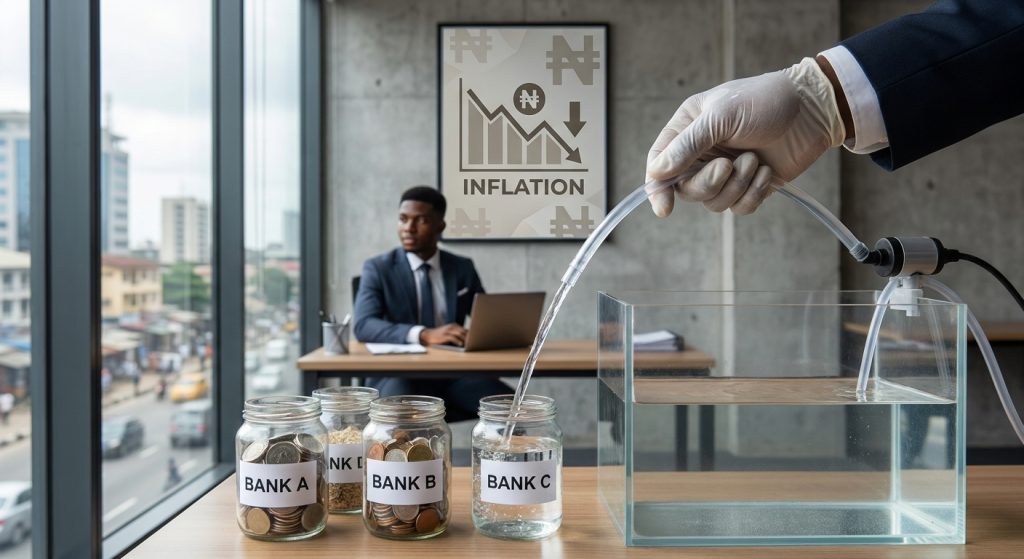
The CBN recently mopped up an estimated ₦2.8 trillion from Nigerian banks using OMO bills and Treasury Bills to curb inflation and stabilize the Naira. This action will likely lead to higher interest rates on savings and loans, tighter credit conditions for individuals and businesses, and increased yields on fixed-income investments. While banks face liquidity pressures, the move aims for long-term economic stability. Nigerians should review their finances, explore higher-yield savings, and prepare for potentially higher borrowing costs.
The Central Bank of Nigeria (CBN) has aggressively mopped up an estimated ₦2.8 trillion from the banking system through Open Market Operations (OMO) bills and Treasury Bills. This significant liquidity withdrawal is primarily aimed at curbing Nigeria’s high inflation rate (29.90% as of January 2026), stabilizing the Naira against foreign currencies, and managing excess liquidity within the financial system. For Nigerians, this means a likely increase in interest rates on savings and fixed deposits, higher costs for personal and business loans, and potentially more attractive yields on government securities. Banks will experience tighter liquidity, which could affect their lending capacity and profitability, while the overall economy is expected to navigate a period of tighter monetary conditions in pursuit of macroeconomic stability.
Breaking Down the ₦2.8 Trillion CBN Mopping: A Deep Dive into Nigeria’s Monetary Policy Shift
The CBN executed one of its most aggressive liquidity mop-ups in recent history, absorbing ₦4.48 trillion within two sessions over six days through OMO auctions. The bulk of this – ₦2.85 trillion – was allocated to 364-day Treasury Bills, signaling the apex bank’s preference for longer-term instruments to lock up liquidity.
This comes on the heels of the March 2026 MPC meeting where the Monetary Policy Rate (MPR) was raised to 18.75%, continuing the hawkish stance adopted since mid-2026. Market reactions were immediate – overnight lending rates between banks spiked to 25-30%, while Treasury Bill yields climbed above 20% for the first time since 2017.
Key instruments deployed:
- OMO Bills: ₦1.63 trillion in short-term instruments (7-364 days)
- Treasury Bills: ₦2.85 trillion, predominantly in 364-day tenors
- CRR Debits: Unspecified additional amounts through Cash Reserve Ratio enforcement
Why the CBN is Mopping Up ₦2.8 Trillion: Understanding the Central Bank’s Objectives
The Central Bank of Nigeria’s decision to withdraw such a significant amount of liquidity from the financial system is driven by several critical macroeconomic objectives, primarily aimed at restoring stability and fostering sustainable growth. This aggressive monetary policy stance is a direct response to prevailing economic challenges.
Inflation Control:
With inflation at 29.90% (January 2026), reducing money supply is CBN’s primary weapon. Every ₦1 trillion removed from circulation theoretically reduces inflationary pressure by 0.8-1.2 percentage points. This direct action aims to cool down an overheating economy by making money scarcer and, consequently, more valuable.
Naira Defense:
By reducing Naira liquidity, the CBN aims to:
- Decrease speculative demand for dollars, which often fuels parallel market activities.
- Narrow the gap between official and parallel market rates (currently ~₦1,500/$), promoting a more unified exchange rate.
- Boost foreign reserves (now at $33.12 billion) by reducing import demand and encouraging foreign investment due to a more stable currency.
Interest Rate Normalization:
The mopping supports higher deposit rates, making savings more attractive than consumption. Fixed deposit rates at GTBank and Zenith Bank have already risen from 11% to 15% for 12-month tenors. This encourages a savings culture and provides a better return for depositors.
Cleaning Up Excess Liquidity:
Money Supply (M3) grew 11.2% to ₦123.15 trillion in January 2026. The CBN aims to bring this growth below 10% to maintain price stability. Excess liquidity can lead to asset bubbles and further inflationary pressures, making its management crucial for economic health.
The Immediate Impact on Nigerian Banks: Liquidity, Lending, and Profitability
Nigerian banks face three immediate challenges as a direct consequence of the CBN’s liquidity mop-up. These challenges will reshape their operational strategies and financial performance in the short to medium term.
Liquidity Squeeze:
With CRR at 32.5%, banks must maintain higher reserves, reducing lendable funds. Tier-1 banks like Access and UBA may weather this better than smaller banks due to their larger capital bases and diversified funding sources. This could lead to increased interbank borrowing rates.
Deposit Wars:
Expect higher fixed deposit rates as banks compete for funds:
- Tier 1 Banks: 15-18% for 12-month deposits
- Tier 2 Banks: 18-22% for similar tenors
- Minimum deposits typically ₦100,000-₦500,000
This competition will increase banks’ cost of funds, potentially impacting their net interest margins.
Loan Contraction:
Banks will:
- Increase loan rejection rates (currently ~40% for SMEs) as they become more risk-averse and have less liquidity to lend.
- Raise lending rates (prime rates may hit 28-30%) to compensate for higher funding costs and increased risk.
- Shorten loan tenors, making long-term financing more difficult to obtain for businesses and individuals.
| Bank Type | New Capital Requirement | Deadline | Impact |
|---|---|---|---|
| International | ₦500 billion | 31/03/2026 | Minimal |
| National | ₦200 billion | 31/03/2026 | Moderate |
| Merchant | ₦50 billion | 31/03/2026 | Significant |
What the ₦2.8 Trillion Mopping Means for Your Naira Savings and Investments
The CBN’s liquidity mop-up has significant implications for how Nigerians manage their money, from basic savings to complex investments and borrowing. Understanding these shifts is crucial for making informed financial decisions.
For Savers:
- Fixed Deposits: Rates are rising, with some banks like Fidelity, Sterling, and Keystone Banks offering 15-25% for fixed deposits. This makes them an attractive option for those looking to earn higher returns on their savings.
- Savings Accounts: Expect 5-8% interest (up from 3-5%) on balances above ₦50,000. While still lower than fixed deposits, this is an improvement for everyday savings.
For Investors:
- Treasury Bills: Primary market yields are now 18-25% for 364-day bills, offering a competitive, low-risk investment option.
- OMO Bills: Secondary market yields are reaching 22-28%, providing even higher returns for those who can access them.
- Equities: Banking stocks may underperform due to liquidity pressures and increased cost of funds. Defensive stocks (FMCG, healthcare) might be preferred as they are less sensitive to economic cycles.
For Borrowers:
- Personal Loans: Rates are climbing to 28-35% from 22-28%, making personal borrowing more expensive.
- Mortgages: Fixed-rate loans are preferable as variable rates may exceed 25%, leading to unpredictable monthly payments.
- SME Loans: More stringent collateral requirements (150-200% LTV) will be imposed, making it harder for small and medium-sized enterprises to access credit.
What Nigerians Should Do Next: Practical Steps to Navigate the Liquidity Crunch
Navigating the current economic climate requires proactive financial planning. Here are practical steps Nigerians can take to mitigate risks and capitalize on new opportunities arising from the CBN’s liquidity mop-up.
Savings Strategy:
- Ladder fixed deposits (3/6/12 months): This strategy allows you to take advantage of rising rates while maintaining some liquidity.
- Consider Treasury Bills via CBN or stockbrokers (minimum ₦50,000): T-bills offer attractive, risk-free returns, especially for longer tenors.
Loan Management:
- Refinance existing variable-rate loans: If possible, convert variable-rate loans to fixed-rate loans to lock in current rates before they rise further.
- Avoid new unsecured loans unless absolutely necessary: The cost of borrowing is high and expected to increase.
Investment Moves:
- Rebalance portfolios towards fixed income (60/40 stocks/bonds): Given the high yields on fixed income, a higher allocation can provide stability and income.
- Explore mutual funds like Stanbic IBTC Money Market Fund (current yield: 18.5%): These funds offer diversification and professional management with competitive returns.
Business Planning:
- Build 6-month cash buffers: This provides a safety net against unexpected expenses and tighter credit conditions.
- Negotiate longer payment terms with suppliers: Improve your cash flow by extending payment periods where possible.
Tip: Always compare rates across different financial institutions. What one bank offers might be significantly different from another, especially in a competitive market.
FAQ: Your CBN Liquidity Mopping Questions Answered
Q: How does this affect my bank account?
A: Your existing deposits remain safe (NDIC insures up to ₦5 million per bank). Expect higher SMS alerts about new fixed deposit rates as banks compete for funds.
Q: Should I move my savings to Treasury Bills?
A: Only if you can lock funds for 91-364 days. T-bills are illiquid before maturity, meaning you cannot easily access your money until the term ends. Consider your liquidity needs before investing.
Q: Will loan apps like FairMoney and Carbon increase rates?
A: Yes, digital lenders typically follow bank rate trends. Expect rates above 30% soon as their cost of funds also increases due to the tighter monetary policy.
Q: How long will these tight conditions last?
A: Likely until inflation falls below 20% (estimated Q3 2025). The CBN will continue its hawkish stance until its primary objective of price stability is achieved.
Q: Are my investments in mutual funds safe?
A: Money market funds are generally safest as they invest in low-risk instruments. Equity funds may see volatility – check your fund’s holdings and risk profile with your fund manager.