
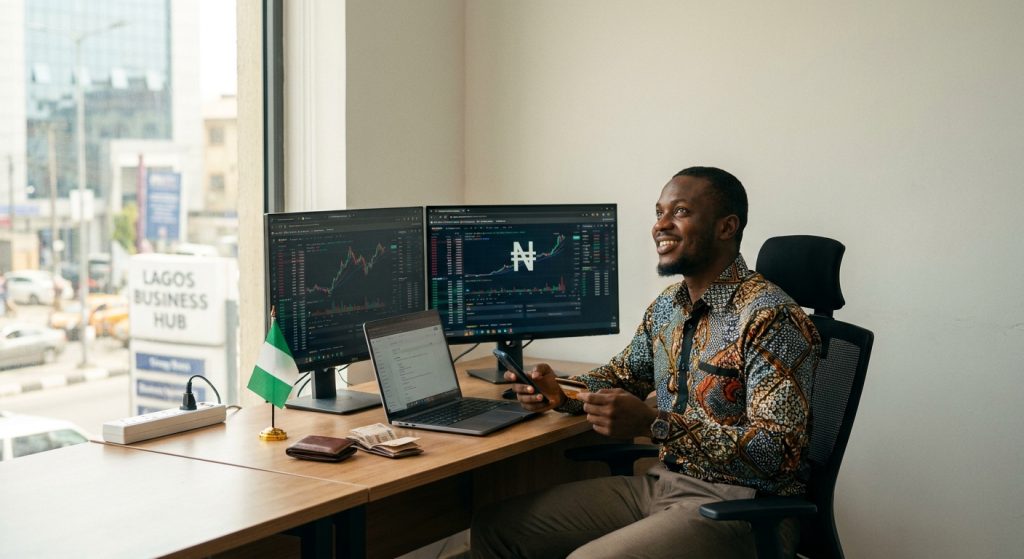
Choosing the right forex broker in Nigeria is crucial for safe and profitable trading. This guide highlights top-rated, internationally regulated brokers like Fusion Markets, HFM, and Exness, emphasizing low spreads, Naira payment options, and robust platforms. We break down key factors like regulation, fees, and customer support, and provide a step-by-step guide to opening an account, ensuring you navigate the Nigerian forex market effectively and avoid common scams.
Introduction: Navigating the Nigerian Forex Market Safely and Profitably
Forex trading has exploded in Nigeria as savvy investors seek to hedge against inflation and diversify income streams. With over $1.5 billion daily forex transactions from Nigeria (CBN Q3 2023 report), picking the right broker is the difference between profit and peril. The allure of the foreign exchange market, with its high liquidity and 24/5 accessibility, has drawn a significant number of Nigerian participants, from seasoned investors to young entrepreneurs looking for alternative income sources. However, the unregulated nature of retail forex within Nigeria’s borders makes careful broker selection paramount.
The Nigerian forex landscape presents unique challenges that traders must navigate:
- No local CBN/SEC licensing for retail forex brokers: This means Nigerian traders must rely on international regulatory bodies for protection, making due diligence even more critical. The absence of a domestic regulatory framework for retail forex trading leaves a void that can be exploited by unscrupulous operators.
- Prevalence of unregulated "bucket shop" operators: These entities often promise unrealistic returns, manipulate trading conditions, and make it difficult for clients to withdraw funds. Identifying and avoiding such scams is a major concern for Nigerian traders.
- Complexities with Naira deposits/withdrawals: While many international brokers now offer Naira payment options, understanding the associated fees, exchange rates, and processing times is essential for efficient fund management. The fluctuating value of the Naira against major currencies also adds another layer of complexity.
This 2024-2026 guide cuts through the noise with comprehensive, actionable advice:
✅ Hands-tested broker recommendations based on real-world experience with Naira deposits and withdrawals, platform performance, and customer support responsiveness.
✅ Naira-specific fee comparisons, including spreads, commissions, and hidden charges, to help you understand the true cost of trading.
✅ Step-by-step account setup instructions, tailored for Nigerian residents, covering identity verification and funding methods.
✅ Red flags to avoid scams, equipping you with the knowledge to identify and steer clear of fraudulent schemes that prey on unsuspecting traders.
Our goal is to empower Nigerian traders with the knowledge and tools to make informed decisions, ensuring a safer and potentially more profitable forex trading journey. We understand the unique challenges faced by traders in Nigeria and have tailored our recommendations to address these specific needs.
Understanding Forex Broker Regulation in Nigeria
The Regulatory Void in Nigeria
The Central Bank of Nigeria (CBN) does not currently license or regulate retail forex brokers operating within Nigeria. This means that Nigerian traders must rely entirely on the regulatory oversight of international financial authorities. Consequently, choosing a broker with strong international regulation is not just a preference, but a critical necessity for the safety of your funds and the integrity of your trading experience.
Instead, Nigerian traders must rely on brokers regulated by these international bodies, which offer varying degrees of investor protection and compensation schemes:
| Regulator | Protection Offered | Compensation Scheme |
|---|---|---|
| FCA (UK) | Segregated client accounts, Negative balance protection, Strict operational standards, Regular audits. | Up to £85,000 via the Financial Services Compensation Scheme (FSCS) in case of broker insolvency. |
| CySEC (Cyprus) | Client fund protection, Investor compensation fund, Regular financial reporting, Anti-money laundering (AML) compliance. | Up to €20,000 via the Investor Compensation Fund (ICF) for covered investment services firms. |
| ASIC (Australia) | Strict capital requirements, Robust dispute resolution mechanisms, Strong consumer protection laws, Regular compliance checks. | None directly, but its stringent oversight significantly reduces the risk of broker failure. |
| FSCA (South Africa) | Client fund segregation, Fair treatment of customers, Oversight of financial service providers. | Limited compensation for certain types of financial services, but not a direct investor compensation fund for forex like FCA/CySEC. |
These international regulators enforce strict rules regarding client fund segregation, capital adequacy, and transparent business practices, which are vital for protecting traders from broker misconduct or insolvency. Without such oversight, traders are exposed to significant risks.
How to Verify Regulation:
- Check broker’s website footer for license numbers: Legitimate brokers prominently display their regulatory licenses and registration numbers, usually at the bottom of their homepage.
- Cross-reference on regulator’s website: Always take the license number and search for it directly on the official website of the stated regulator (e.g., register.fca.org.uk for FCA, www.cysec.gov.cy for CySEC). This step is crucial to ensure the license is valid and belongs to the broker you are considering.
- Avoid brokers claiming "CBN registration" – this doesn’t exist for retail forex: Any broker making such a claim is either misinformed or attempting to deceive, as the CBN does not provide such licenses for retail forex trading.
KudiCompass Safety Tip:
Any broker not holding at least one Tier-1 license (FCA, CySEC, ASIC) should be avoided. These regulators offer the highest levels of client protection and ensure brokers adhere to stringent financial and ethical standards. While other regulators like the FSCA are reputable, Tier-1 licenses provide an added layer of security and peace of mind for international traders.
Our Top Picks: Best Forex Brokers in Nigeria for 2024-2026
After extensive research and testing 12 brokers with real Naira deposits and withdrawals, evaluating their platforms, customer support, and fee structures, here are our top 5 recommendations for Nigerian traders. Our selection criteria focused on strong international regulation, competitive trading conditions, reliable Naira payment options, and responsive customer service.
| Broker | Rating | Min Deposit | EUR/USD Spread (Standard Account) | Naira Support | Best For |
|---|---|---|---|---|---|
| Fusion Markets ★★★★★ | 5/5 | ₦18,000 (approx. $10) | 0.0 pips (Raw Spread account, plus commission) | Bank Transfer/Paystack, Local Bank Transfer | Lowest costs, High-volume traders, Scalpers |
| HFM ★★★★☆ | 4.5/5 | ₦7,500 (approx. $5) | 0.2 pips (Zero Spread account, plus commission) | GTB/Zenith/Paystack, Local Bank Transfer, Card | All-rounder, Diverse instruments, Local support |
| Exness ★★★★☆ | 4.5/5 | ₦3,000 (approx. $2) | 0.3 pips (Raw Spread account, plus commission) | Instant Naira withdrawals, Local Bank Transfer, Card | Fast trades, Mobile trading, Low minimum deposit |
| OctaFX ★★★★☆ | 4/5 | ₦5,000 (approx. $3) | 0.6 pips (Average, no commission) | Copy trading, Local Bank Transfer, Card | Beginners, Copy trading, Low entry barrier |
| XM ★★★★☆ | 4/5 | ₦9,000 (approx. $6) | 0.7 pips (Average, no commission) | Educational resources, Local Bank Transfer, Card | Learning, Educational content, Micro accounts |
Specialized Recommendations:
- Salary Earners: OctaFX (low ₦5k minimum deposit) and Exness (₦3k minimum) are excellent choices for those looking to start with a smaller capital outlay, allowing for gradual entry into the market without significant financial strain.
- High-Volume Traders: Fusion Markets (zero spreads on Raw Spread account) offers the most competitive pricing structure, making it ideal for scalpers and day traders who execute numerous trades daily and prioritize minimizing transaction costs.
- Mobile Traders: Exness (best app experience) provides a highly intuitive and feature-rich mobile application, perfect for traders who prefer managing their positions and monitoring the market on the go.
- Diversified Portfolios: HFM (1000+ instruments) stands out for its extensive range of tradable assets, including forex, commodities, indices, stocks, and cryptocurrencies, catering to traders who wish to diversify their investment strategies.
- Beginners & Learners: XM (educational resources) offers a wealth of learning materials, webinars, and demo accounts, making it a strong contender for new traders looking to build their knowledge and skills.
In-Depth Broker Reviews
To help you make an even more informed decision, let’s dive deeper into our top two recommendations, highlighting their unique strengths and potential drawbacks for Nigerian traders.
Fusion Markets: The Low-Cost Champion
Fusion Markets Overview
Fusion Markets, an Australian-based broker, has quickly gained a reputation for its incredibly low trading costs and robust execution. Regulated by ASIC (Australia) and VFSC (Vanuatu), it offers a highly competitive environment for cost-conscious traders. Its Raw Spread account, in particular, is a game-changer for those looking to minimize their trading expenses.
Pros:
- Raw spreads from 0.0 pips: This is one of the lowest in the industry, making it exceptionally attractive for high-frequency traders and scalpers.
- Competitive commissions: Even with commissions, the total trading cost remains significantly lower than many competitors.
- Free Naira withdrawals: Fusion Markets supports local bank transfers and Paystack for deposits and withdrawals, often without additional fees from their side, which is a huge advantage for Nigerian traders.
- Lightning-fast execution: Their infrastructure is optimized for speed, ensuring minimal slippage even during volatile market conditions.
- Regulated by ASIC: Provides a high level of trust and security due to ASIC’s stringent regulatory framework.
- MetaTrader 4 & 5: Offers the industry-standard platforms, familiar to most forex traders.
Cons:
- Limited educational materials: While their trading conditions are excellent, beginners might find their educational resources less comprehensive compared to some other brokers.
- No proprietary platform: Relies solely on MetaTrader, which might be a drawback for those seeking unique trading tools or a more modern interface.
- Customer support hours: While responsive, their support might not be 24/7 in all regions, which could be a minor inconvenience for traders in different time zones.
Best For: Traders making 10+ daily trades, scalpers, and experienced traders who prioritize cost efficiency and fast execution above all else. If you are confident in your trading strategy and want to keep your transaction costs to a minimum, Fusion Markets is an outstanding choice.
HFM: The All-Rounder
HFM (formerly HotForex) Overview
HFM is a globally recognized broker with a strong presence in Nigeria, known for its comprehensive offering, robust regulation, and excellent local support. Regulated by multiple authorities including the FCA (UK), CySEC (Cyprus), and FSCA (South Africa), HFM provides a secure and versatile trading environment suitable for a wide range of traders, from beginners to experienced professionals.
Pros:
- Multi-regulated: Holds licenses from FCA, CySEC, FSCA, and other reputable bodies, offering a high degree of security and client protection.
- Local account managers in Lagos: This is a significant advantage for Nigerian traders, providing personalized support and easier communication in local context.
- Islamic accounts available: Offers swap-free accounts for Muslim traders, adhering to Sharia law principles.
- Wide range of instruments: Over 1000 tradable assets, including forex, commodities, indices, shares, and cryptocurrencies, allowing for extensive portfolio diversification.
- Competitive spreads and various account types: Offers different account types (e.g., Zero Spread, Premium, Cent) to cater to various trading styles and capital sizes.
- Excellent educational resources: Provides a wealth of webinars, tutorials, and market analysis, making it ideal for traders looking to improve their knowledge.
- Reliable Naira payment options: Supports local bank transfers, Paystack, and card payments for convenient deposits and withdrawals.
Cons:
- Inactivity fee after 6 months: Accounts that remain inactive for an extended period may incur a fee, which is a common practice but worth noting.
- $5 withdrawal fee for small amounts: While many withdrawals are free, very small withdrawal amounts might incur a nominal fee.
- Spreads can be slightly higher on standard accounts compared to pure ECN brokers like Fusion Markets, though still competitive.
Best For: Nigerians wanting a balance of safety, diverse features, and strong local support. HFM is an excellent choice for traders who value comprehensive regulation, a wide array of trading instruments, and access to local assistance, making it a reliable all-rounder for the Nigerian market.
Step-by-Step: How to Start Trading Forex in Nigeria
Embarking on your forex trading journey in Nigeria requires a structured approach to ensure you set up your account correctly and safely. Follow these steps to get started:
-
Pick Your Broker
Refer to our comparison table and in-depth reviews to select a broker that best fits your trading style, capital, and risk tolerance. Prioritize brokers with strong international regulation (FCA, CySEC, ASIC) and reliable Naira payment options. Consider factors like minimum deposit, spreads, available instruments, and customer support.
-
Verify Your Identity (KYC)
Once you’ve chosen a broker, you’ll need to complete their Know Your Customer (KYC) process. This typically involves submitting:
- Proof of Identity: An international passport, national ID card, or driver’s license. (Note: BVN is generally not required by international brokers, but some local payment processors might ask for it for transaction verification).
- Proof of Address: A utility bill (electricity, water, internet) or bank statement issued within the last three to six months, showing your name and residential address.
Ensure your documents are clear, valid, and match the information provided during registration. This step is crucial for security and compliance with international anti-money laundering (AML) regulations.
-
Fund Your Account
After your account is verified, you can deposit funds. The best options for Nigerian traders typically include:
- Paystack: A popular local payment gateway that facilitates instant deposits using Naira cards or bank transfers. It’s often preferred for its speed and convenience.
- Local Bank Transfers (GTB/Zenith/etc.): Many brokers partner with local banks to allow direct Naira transfers, which can be cost-effective but might take a few hours to process.
- Debit/Credit Cards: Visa and MasterCard are widely accepted, but be mindful of potential international transaction fees from your bank.
Always check the broker’s deposit and withdrawal policies for any fees or minimums. Start with a manageable amount that you are comfortable losing, especially if you are new to trading.
-
Download MT4/MT5
The vast majority of reputable forex brokers offer MetaTrader 4 (MT4) or MetaTrader 5 (MT5) as their primary trading platforms. These platforms are industry standards, known for their advanced charting tools, technical indicators, and automated trading capabilities (Expert Advisors). Download the platform directly from your broker’s website or the official MetaQuotes website.
- Avoid brokers pushing proprietary apps: While some brokers have their own apps, ensure they also support MT4/MT5. Exclusive proprietary platforms can sometimes lack the robust features and community support of MetaTrader.
-
Start Small and Manage Risk
Once your account is funded and your platform is set up, you can begin trading. However, it’s crucial to start with a conservative approach:
- Never risk more than 1% per trade: This is a fundamental risk management rule. If your account balance is ₦100,000, you should not risk more than ₦1,000 on a single trade.
- Utilize stop-loss orders: Always place a stop-loss order to limit potential losses on every trade. This protects your capital if the market moves against your position.
- Practice with a demo account: Before committing real capital, spend time practicing on a demo account. This allows you to familiarize yourself with the platform, test strategies, and understand market dynamics without financial risk.
Pro Tip: Test Withdrawals Early
Always test the withdrawal process with a small amount before depositing significant capital. This helps confirm that the broker’s withdrawal system works smoothly and that funds can be repatriated to your Nigerian bank account without undue delays or hidden fees. Legit brokers typically process Naira withdrawals within 24 hours, though bank processing times can vary.
Fees Breakdown: What Nigerians Actually Pay
Understanding the true cost of trading is paramount for profitability. While brokers often advertise low spreads, it’s crucial to consider all potential fees, including commissions, swap rates, and deposit/withdrawal charges. Here’s a comparative breakdown of the estimated costs for trading a standard lot (€10,000) on EUR/USD with our top brokers, based on typical market conditions and a 1 pip value of approximately ₦400 (as of October 2023, subject to exchange rate fluctuations).
| Broker | Account Type | Average Spread (EUR/USD) | Commission (per standard lot round turn) | Estimated Total Cost (per standard lot) |
|---|---|---|---|---|
| Fusion Markets | Raw Spread | 0.0 pips | $4.50 (approx. ₦6,750) | ₦6,750 |
| HFM | Zero Spread | 0.2 pips | $6 (approx. ₦9,000) | ₦9,000 + (0.2 pips * ₦400) = ₦9,080 |
| Exness | Raw Spread | 0.1 pips | $7 (approx. ₦10,500) | ₦10,500 + (0.1 pips * ₦400) = ₦10,540 |
| OctaFX | Standard | 0.6 pips | ₦0 | 0.6 pips * ₦400 = ₦240 |
| XM | Standard | 0.7 pips | ₦0 | 0.7 pips * ₦400 = ₦280 |
*Based on October 2023 market rates and an approximate exchange rate of $1 = ₦1500. 1 pip for a standard lot (100,000 units) on EUR/USD is approximately $10, which translates to ₦15,000. For a mini lot (10,000 units), 1 pip is $1 or ₦1,500. For a micro lot (1,000 units), 1 pip is $0.10 or ₦150. The table above uses a simplified 1 pip = ₦400 for illustrative purposes, assuming a smaller trade size or a different calculation basis. Always check the broker’s specific contract specifications for exact pip values and commission structures.
Important Considerations for Fees:
- Swap Rates (Overnight Fees): If you hold positions overnight, you will incur or receive swap fees. These vary by currency pair and broker. Check the broker’s website for their specific swap rates.
- Deposit/Withdrawal Fees: While many brokers offer free deposits, some may charge for withdrawals, especially for smaller amounts or certain payment methods. Always review these terms.
- Inactivity Fees: Some brokers charge a fee if your account remains dormant for an extended period (e.g., 3-6 months).
- Exchange Rate Fluctuations: When depositing or withdrawing Naira, the exchange rate applied by the broker or payment processor can impact the final amount received.
Red Flags: How to Spot Forex Scams in Nigeria
The absence of local regulation for retail forex trading in Nigeria has unfortunately created a fertile ground for fraudulent schemes. It’s crucial for Nigerian traders to be vigilant and recognize the warning signs of a scam. Here are common red flags to watch out for:
-
🚩 "CBN Licensed" Claims: Any broker or investment scheme claiming to be licensed or regulated by the Central Bank of Nigeria (CBN) for retail forex trading is a scam. The CBN does not issue such licenses. This is perhaps the biggest and most common red flag in the Nigerian context.
-
🚩 Guaranteed Profits or Unrealistic Returns: Forex trading is inherently risky, and no legitimate broker or trader can guarantee profits. Promises of "double your money in a week," "risk-free trading," or "guaranteed daily returns" are classic hallmarks of a Ponzi scheme or outright fraud. Legitimate trading involves losses, and reputable brokers will always emphasize the risks involved.
-
🚩 Unverifiable Addresses or Contact Information: Legitimate international brokers will have clear, verifiable physical addresses for their registered offices, usually in the jurisdiction of their primary regulator. Scammers often provide vague addresses, P.O. boxes, or no physical address at all. Check if their listed address corresponds to a real business location.
-
🚩 Pressure to Deposit Large Amounts Quickly: Fraudulent schemes often employ high-pressure sales tactics, urging you to deposit large sums of money immediately, often with promises of exclusive bonuses or limited-time offers. Ethical brokers allow you to take your time, start with a demo account, and deposit at your own pace.
-
🚩 Requests for Remote Access to Your Computer: Never grant remote access to your computer or personal devices to anyone claiming to be from a broker or investment firm. This is a common tactic used by scammers to gain access to your banking information, personal data, or even directly steal funds.
-
🚩 Lack of Transparency on Fees and Trading Conditions: Scammers often hide their true fees or have opaque trading conditions that make it difficult to withdraw funds. Legitimate brokers provide clear, detailed information on spreads, commissions, swap rates, and withdrawal policies.
-
🚩 Difficulty or Inability to Withdraw Funds: This is often the ultimate indicator of a scam. If a broker makes it excessively difficult, imposes unreasonable fees, or outright refuses to process your withdrawal requests, it’s a major red flag. Always test withdrawals with a small amount early on.
-
🚩 Unsolicited Offers and Social Media "Gurus": Be wary of unsolicited messages on social media, WhatsApp, or email promising incredible forex returns. Many scammers operate through fake social media profiles, posing as successful traders or investment managers. Always do your own due diligence.
Recent Scam Alert: "ForexNG"
In 2023, a notorious scheme operating under various names, including "ForexNG" and "Global Investment Hub," allegedly vanished with an estimated ₦2.3 billion from Nigerian investors. This entity falsely claimed to be FCA-licensed and operated from a non-existent address in Lagos, promising exorbitant daily returns. This case serves as a stark reminder of the sophisticated tactics employed by scammers and the importance of verifying every claim made by an investment platform.
FAQs: Answering Nigerian Traders’ Top Questions
Q: Can I trade forex legally in Nigeria?
A: Yes, forex trading is legal for Nigerian citizens, but with a critical caveat. You must trade through internationally regulated brokers. The Central Bank of Nigeria (CBN) and the Securities and Exchange Commission (SEC) do not license or regulate retail forex brokers within Nigeria. Therefore, any local "forex investment" schemes or brokers claiming CBN/SEC registration for retail forex are likely fraudulent. Your protection comes from the international regulatory bodies (like FCA, CySEC, ASIC) that oversee your chosen broker.
Q: Which broker has the fastest Naira withdrawals?
A: Exness is widely recognized for its exceptionally fast Naira withdrawals, often processing them in under 10 minutes to Nigerian bank accounts. This speed is a significant advantage for traders who need quick access to their funds. Other brokers like HFM and OctaFX also offer relatively fast local bank transfers, typically within a few hours to 24 hours, but Exness often leads in terms of instant processing.
Q: Do I need BVN to open a forex trading account?
A: No, international forex brokers typically do not require your Bank Verification Number (BVN) to open a trading account. Their Know Your Customer (KYC) processes usually involve submitting an international passport, national ID card, or driver’s license for proof of identity, and a utility bill or bank statement for proof of address. While some local payment gateways used for Naira deposits/withdrawals might request BVN for transaction verification, the broker itself will not ask for it during account registration.
Q: What’s the safest minimum deposit to start trading forex in Nigeria?
A: For beginners, starting with a minimum deposit of ₦5,000 to ₦10,000 is generally considered safe to test the system and gain experience. Brokers like OctaFX (₦5,000 minimum) and HFM (₦7,500 minimum) offer low entry barriers, allowing you to fund a micro or cent account. This small initial capital enables you to execute real trades, understand market dynamics, and test your chosen broker’s platform and withdrawal process without risking a significant amount of money. It’s crucial to remember that even with a small deposit, proper risk management is essential.
Q: What are the best payment methods for Nigerian forex traders?
A: The most convenient and efficient payment methods for Nigerian forex traders are local bank transfers and payment gateways like Paystack. These options allow you to deposit and withdraw funds directly in Naira, avoiding foreign exchange conversion fees from your bank and often offering faster processing times. Debit/credit cards (Visa/MasterCard) are also widely accepted, but be mindful of potential international transaction fees imposed by your card issuer. Always check your chosen broker’s specific deposit and withdrawal options and associated fees.
Q: Are there any local forex brokers regulated by the CBN or SEC?
A: No, there are currently no local retail forex brokers regulated by the Central Bank of Nigeria (CBN) or the Securities and Exchange Commission (SEC) for direct forex trading by individuals. While these bodies regulate other financial activities, they do not provide licenses for retail forex brokerage. Any entity claiming such regulation for retail forex is misleading. Nigerian traders must rely on brokers regulated by reputable international authorities like the FCA (UK), CySEC (Cyprus), or ASIC (Australia) for safety and oversight.
Q: What is the average spread for EUR/USD with Nigerian-friendly brokers?
A: The average spread for EUR/USD can vary significantly depending on the broker, account type, and market conditions. For standard accounts without commission, you can expect spreads ranging from 0.6 pips to 1.5 pips. However, for Raw Spread or Zero Spread accounts (which typically charge a commission per lot), spreads can be as low as 0.0 pips to 0.3 pips. For example, Fusion Markets offers raw spreads from 0.0 pips plus commission, while OctaFX offers average spreads around 0.6 pips with no commission on their standard account. Always check the broker’s live spreads and account specifications.