
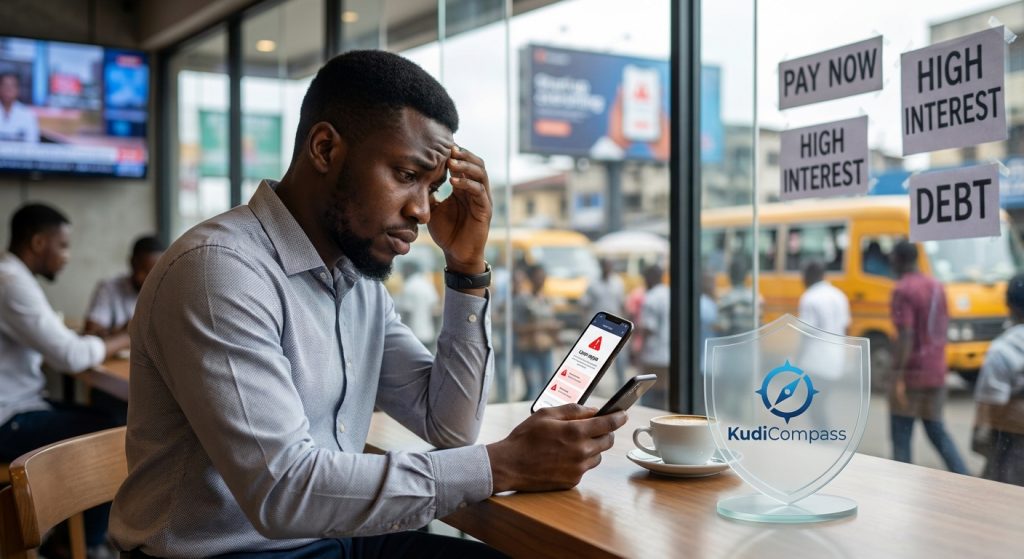
Introduction: The Allure and Peril of Mobile Loans in Nigeria
Mobile lending apps have exploded in Nigeria, promising quick cash for emergencies, businesses, or unexpected bills. With just your phone and BVN, you can get loans in minutes—no collateral, no long bank queues. But this convenience comes with danger: predatory lending practices that trap borrowers in cycles of debt.
Predatory lenders in Nigeria charge exorbitant interest rates (often 365% APR or higher), hide fees in fine print, use aggressive debt recovery (harassing calls, shaming messages to your contacts), and violate data privacy by accessing your photos, contacts, and messages without consent.
This guide will:
- Expose common predatory tactics used by loan sharks
- Explain your rights under new CBN/FCCPC regulations (2025-2026)
- Recommend safe, licensed alternatives
- Show you how to report illegal lenders
What Exactly Are Predatory Mobile Lending Practices in Nigeria?
Predatory mobile lending practices in Nigeria involve tactics designed to trap borrowers in debt. These include charging exorbitant interest rates, imposing hidden fees, using aggressive debt recovery methods, offering short repayment periods, violating data privacy, lacking transparency, and operating without proper licenses.
Exorbitant Interest Rates
- Daily rates as high as 1% (which equals 365% APR—compare that to bank loans at 20-30% APR).
- Example: Borrow ₦50,000 for 14 days, repay ₦70,000 (₦20,000 interest in 2 weeks!).
Hidden Fees & Charges
- "Processing fees" (5-10% of loan amount).
- "Insurance" or "service charges" added without explanation.
- Late payment penalties up to 10% daily after due date.
Aggressive Debt Recovery
- Calling your contacts (family, friends, colleagues) to shame you.
- Threatening messages ("We will publish your name as a fraudster!").
- Fake legal threats ("Pay now or we arrest you"—illegal without court order).
Short Repayment Periods
- Most predatory loans demand repayment in 7-14 days.
- Designed to force defaults so they can charge more fees.
Data Privacy Violations
- Apps request unnecessary permissions (access to contacts, gallery, call logs).
- Sell your data to third parties if you default.
Lack of Transparency
- No physical office or customer service line.
- Terms and conditions buried or unclear.
- No CBN license displayed (check CBN’s official list).
Unlicensed Operations
- Over 200 illegal apps were banned by FCCPC in 2025-2026.
- Many rebrand (e.g., Ease Cash Loan App is rebranded EasyMoni).
The CBN’s Stance: Regulations and Your Rights Against Loan Sharks
The Central Bank of Nigeria (CBN) and the Federal Competition and Consumer Protection Commission (FCCPC) are implementing new regulations (DEON Regulations 2025-2026) to protect Nigerian consumers from predatory mobile lending. These regulations mandate licensing for digital lenders, ban harassment, require clear fee disclosure, and aim to prevent data privacy violations.
Key Protections Under DEON Regulations (2025-2026)
| Regulation | Effective Date | What It Means for You |
|---|---|---|
| Digital Lenders Must Be Licensed | July 21, 2025 | Only CBN-approved apps can operate legally |
| Ban on Harassment/Blackmail | Jan 2026 | Lenders cannot shame you or contact your family |
| Clear Fee Disclosure | Jan 2026 | All charges must be shown upfront |
| BVN "One Device" Rule | April 2026 | Limits fraud by restricting mobile banking to one device |
How to Report Predatory Lenders
- FCCPC Complaint Portal: Visit www.fccpc.gov.ng/complaints to file a formal complaint.
- CBN Consumer Protection Dept: Email [email protected] with details of the predatory practice.
- Google Play/App Store: Flag abusive apps directly within the app store for review and potential removal.
Ongoing Regulatory Challenges
WASPA Lawsuit (April 2026): A court order temporarily froze FCCPC’s enforcement powers until April 27, 2026. Stay updated on regulatory developments by checking the official FCCPC website.
KudiCompass’s Top Picks: Safe & Reputable Mobile Lending Apps
For safe and reputable mobile lending in Nigeria, KudiCompass recommends CBN-licensed apps like Carbon, FairMoney, Aella Credit, Branch, and Renmoney. These platforms offer transparent terms, competitive interest rates, and adhere to regulatory standards, providing a safer alternative to predatory lenders.
Comparison of Licensed Nigerian Lenders (2026)
| Lender | Interest Rate (APR) | Fees | Min Loan | Best For | KudiCompass Rating |
|---|---|---|---|---|---|
| Carbon | 5-30% | ₦100-₦500 processing | ₦1,500 | Emergency cash | ★★★★☆ |
| FairMoney | 10-30% | 1-5% service fee | ₦1,500 | Quick small loans | ★★★★☆ |
| Aella Credit | 4-29% | None | ₦2,500 | Salary earners | ★★★★☆ |
| Branch | 15-34% | None | ₦1,000 | Flexible repayment | ★★★☆☆ |
| Renmoney | 24-30% | ₦1,000-₦6,000 | ₦50,000 | Larger loans | ★★★★☆ |
Who Should Avoid These Apps?
Consider if:
- You need a quick, small loan from a regulated provider.
- You can comfortably repay within the given terms.
- You value transparency and consumer protection.
Avoid if:
- Carbon: You need more than ₦1 million (max loan is ₦1M).
- FairMoney: You are a first-time borrower sensitive to higher initial rates.
- Aella Credit: You cannot provide proof of a steady salary payment.
- Branch: You require longer repayment terms (often 30 days max).
- Renmoney: You lack a consistent bank account history for eligibility.
How to Spot and Avoid Predatory Loan Apps
Red Flags to Watch For
Be vigilant for these warning signs of a predatory mobile lending app:
- No CBN license: Always verify their license on the CBN’s website.
- Vague terms: Phrases like "Interest as low as…" without clear, upfront total costs.
- Too many permissions: A loan app should not need access to your photos, contacts, or call logs.
- Pressure tactics: "Limited-time offer! Apply NOW!" or other urgent messaging.
- Aggressive marketing: Unsolicited messages or calls promising instant loans.
Safe Borrowing Tips
- Check CBN/FCCPC approval: Only use apps listed as licensed by the relevant Nigerian authorities.
- Calculate total repayment: Always understand the principal, interest, and all fees before accepting a loan.
- Read reviews: Search "[App Name] + scam" or "[App Name] + reviews" on Google and app stores.
- Never share BVN/NIN with unverified apps: Protect your personal identification numbers.
- Borrow only what you need: Avoid taking larger loans than necessary.
- Understand repayment terms: Ensure the repayment schedule aligns with your income cycle.
FAQ: Predatory Lending in Nigeria
1. Are all mobile loan apps illegal in Nigeria?
No, not all mobile loan apps are illegal in Nigeria. Only those operating without proper licensing from the Central Bank of Nigeria (CBN) or the Federal Competition and Consumer Protection Commission (FCCPC) are illegal. Reputable apps like Carbon, FairMoney, and Renmoney are CBN-approved and operate legally.
2. What’s the maximum legal interest rate in Nigeria?
The CBN does not explicitly cap interest rates for digital lenders. However, the FCCPC bans "exploitative" rates. It is crucial for consumers to compare lenders and choose those with transparent and reasonable Annual Percentage Rates (APR), typically ranging from 5% to 35% for legitimate platforms.
3. Can loan apps arrest me for not paying?
No, loan apps cannot directly arrest you for not paying. Only a court of law can issue an arrest warrant. Threats of arrest from loan apps are illegal and should be reported immediately to the FCCPC or law enforcement agencies.
4. How do I remove my data from a predatory app?
To remove your data from a predatory app:
- Uninstall the app from your device.
- If possible, email their customer support to request data deletion (though many predatory apps lack responsive support).
- Report the data privacy violation to the National Data Protection Bureau (NDPB) at ndpb.gov.ng.
5. What’s the safest loan app in Nigeria 2026?
As of 2026, apps like Carbon and Renmoney are generally considered among the safest due to their transparency, regulatory compliance, and established track records. However, it’s always essential to verify their current terms and conditions and ensure they remain CBN-licensed before borrowing.
What to Do Next
Key Takeaways on Avoiding Predatory Mobile Lending in Nigeria
- Verify Licenses: Always confirm a mobile lender is licensed by the CBN or FCCPC before applying.
- Scrutinize Terms: Read the full terms and conditions, focusing on interest rates, hidden fees, and repayment periods.
- Protect Your Data: Be wary of apps requesting excessive permissions (contacts, photos, call logs).
- Know Your Rights: Understand that aggressive debt recovery, harassment, and fake legal threats are illegal.
- Report Violations: Use the FCCPC and CBN channels to report predatory practices and unlicensed operators.
- Choose Reputable Lenders: Opt for established, transparent platforms like Carbon, FairMoney, or Renmoney for safer borrowing.